A Freezer Inventory You'll Actually Keep Up
Spreadsheets and whiteboards for freezer inventory die within a month. Here's a low-effort system that survives, plus real shelf life ranges.
Somewhere in your freezer right now is a bag of something you can't identify. Maybe it's soup. Maybe it's a sauce you made in March. It's wrapped in foil or shoved in a container with no label, and by the time you find it again it'll be freezer-burned enough to toss. This isn't a discipline problem. It's a system problem, and the system most people try first is the wrong one.
Why the usual systems fail
The freezer inventory spreadsheet is a great idea for exactly nine days. You freeze something, open the laptop or the notes app, type in the item, the date, the quantity. Day one, easy. Day four, you're tired and you skip it "just this once." By week three the spreadsheet is wrong, and a wrong inventory is worse than no inventory, because now you trust a document that's lying to you.
Whiteboards on the freezer door fail the same way with an extra step. You have to erase items when they're used, and erasing is even easier to skip than writing. Dedicated inventory apps fix nothing structural. They move the same two-step habit, log it then remove it, onto a phone that's in your pocket, not in your hand, at the moment you're holding a cold bag of chicken thighs.
All three share one design flaw. Each one needs a second action, done later, separate from the act of freezing something. Later is where inventory systems go to die. Anything that waits until dinner's cooked, the dishes are half done, and you want to sit down gets skipped.
Label at the moment you freeze, not after
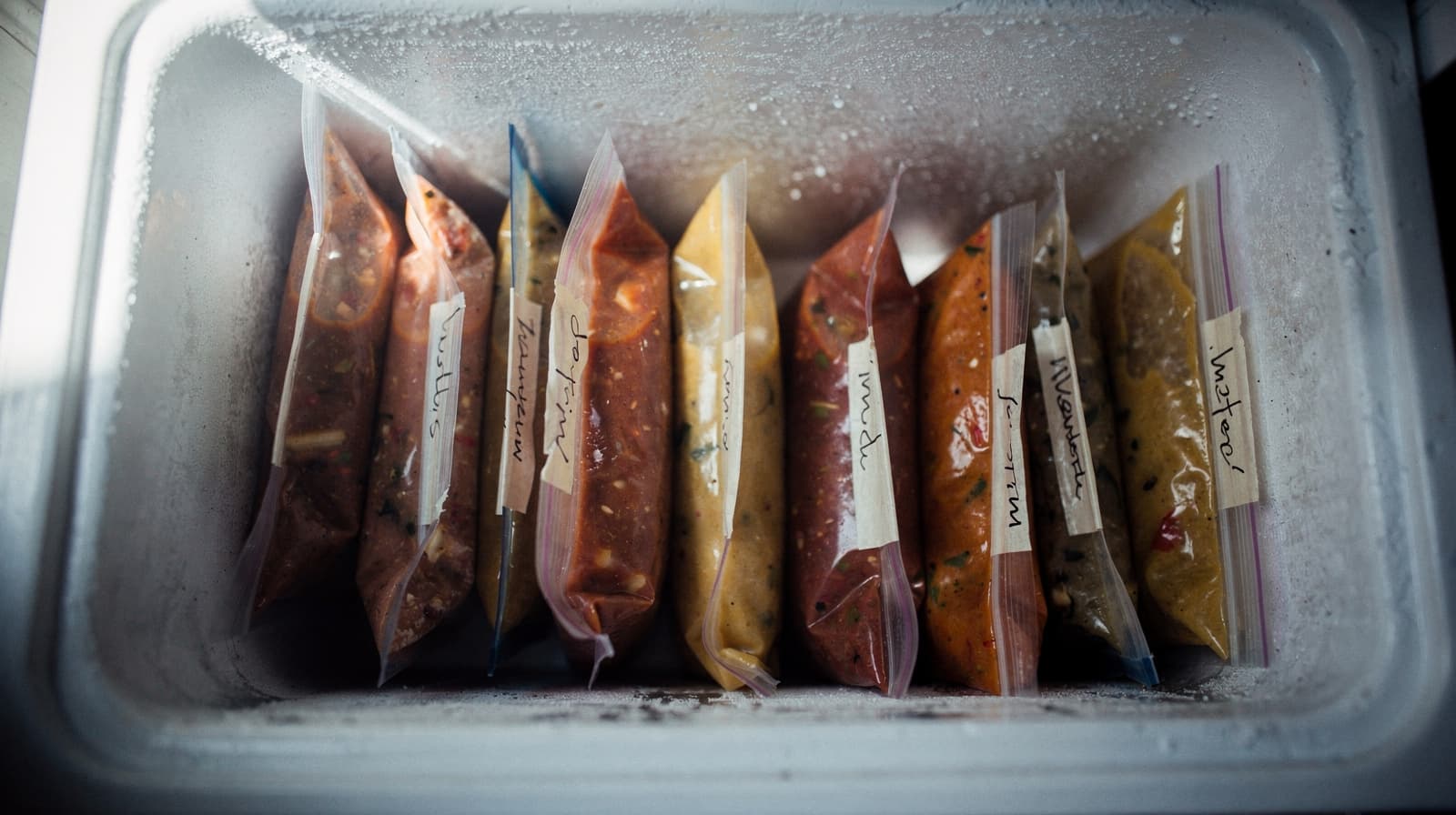
The fix is to collapse the two-step process into one. You don't log inventory later, you write the date and contents on the bag or container the second it goes into the freezer, using a sharpie that lives in the kitchen drawer closest to the freezer, not three rooms away.
Two things, every time: what it is, and the date. "Chili, 9/9" takes four seconds. That's the entire system, and the reason it survives where spreadsheets don't is that it has zero separate steps to forget. The labeling is the freezing. There's no follow-up task hanging over your evening.
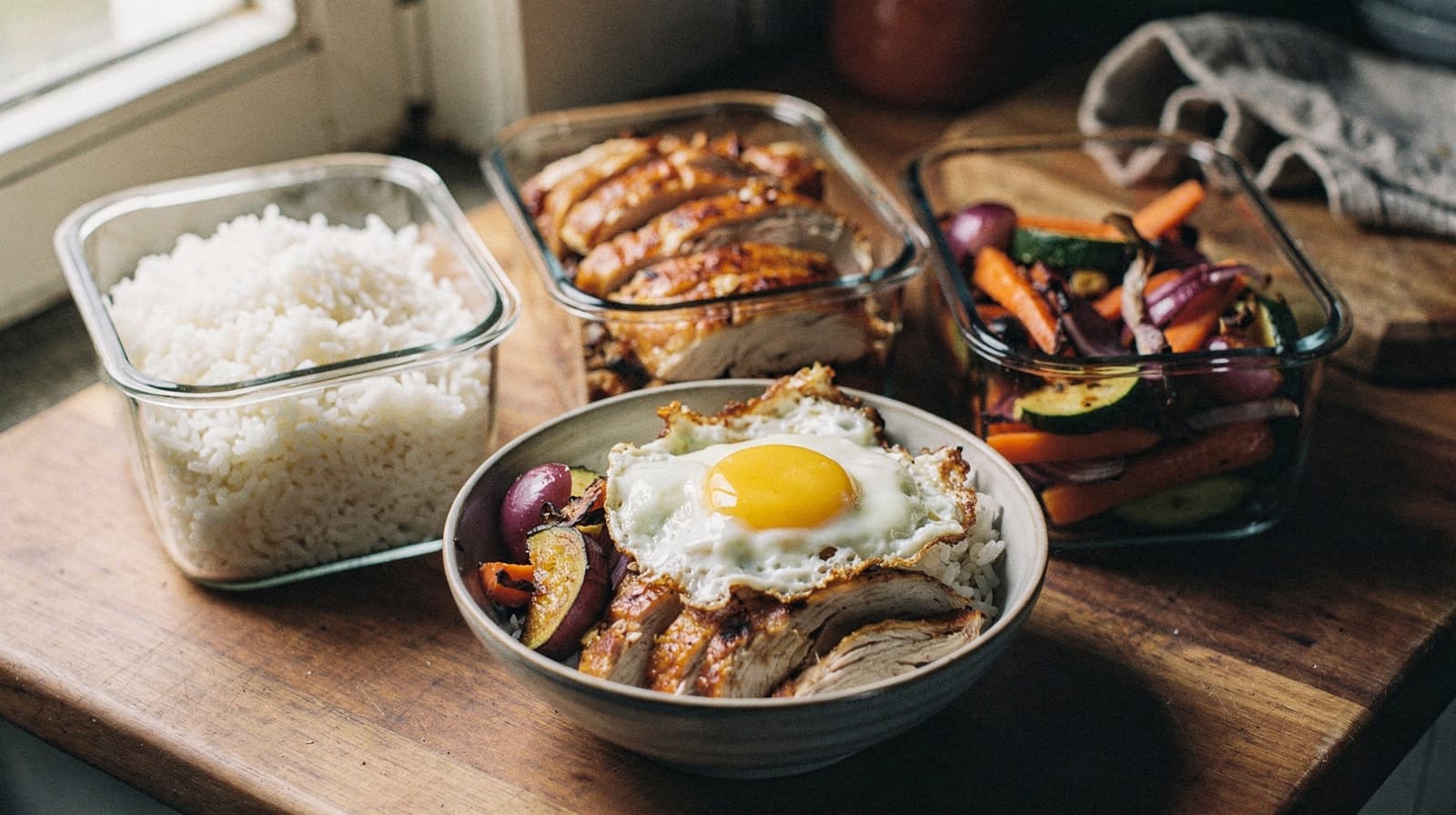
If you batch-cook on Sundays, label as you portion, not after everything's cooled and bagged and stacked. Waiting until the end means you're now trying to remember which of six identical bags is the black bean soup and which is the lentil, and you'll guess wrong on at least one.
Zones instead of a running count
Knowing you have exactly 2.3 lbs of ground beef and 4 servings of marinara at any moment is a fantasy unless you run a restaurant walk-in. Nobody sustains it past a month, and chasing it is what kills the spreadsheet. Aim lower and you hit the target.
Divide the freezer into rough zones and keep the zones honest instead of the count:
- Proteins. Raw meat, poultry, fish, one shelf or drawer.
- Prepped meals. Soups, chilis, casseroles, anything you'd reheat and eat as-is.
- Produce and odds. Frozen vegetables, fruit for smoothies, bread ends, stock.
- Baked goods. Loaves, muffins, pie dough, anything from a baking session.
You don't count what's in each zone. You just need to see, in five seconds with the door open, that the prepped-meals shelf is full or the protein drawer is down to one bag. That's a scan, not a spreadsheet update, which is why it survives.
If you'd rather start further upstream, our freezer-meal-planning guide covers what to batch-cook and how to portion it before any of this comes up.
The monthly eat-the-freezer pass
Once a month, on a day you're low on fresh groceries or out of dinner ideas, spend five minutes going through all four zones before you shop. Pull anything near the edge of its shelf life to the front, or into that night's plan. The pass is what prevents freezer burn. The labeling only gives the pass something to read.
It sticks because it rides an existing routine, the one where you're already deciding what to cook and already about to shop. Pair it with your pantry organization routine if you do a monthly shelf check there, and you're building one habit rather than two.
Don't overthink the pass. You're not auditing every item. You're scanning dates, pulling anything that's been in there more than two months without being touched, and deciding tonight or this week for it.
Realistic shelf life, by category
Freezing doesn't stop time. It slows spoilage to a crawl and lets texture and flavor degrade instead. Food held past these windows is still safe if it stayed at 0°F throughout, it just won't taste like much. The ranges worth working from:
- Raw ground meat: 3-4 months. Fat oxidizes faster in ground meat than in whole cuts, which is why it goes first.
- Raw whole cuts (chicken breasts, steaks, roasts): 6-12 months, depending on fat content. Leaner cuts last longer.
- Cooked meals (soups, stews, casseroles): 2-3 months for best texture, though most are still fine to eat well past that.
- Bread and baked goods: about 3 months, after which a thawed loaf comes back dry in the middle and gummy at the crust.
- Vegetables (blanched and frozen): 8-12 months, which is why store-bought frozen vegetables are such a reliable backbone.
- Soups and sauces heavy on dairy or cream: 2-3 months. Dairy is the first thing to separate and turn grainy on reheat.
None of these are safety cliffs. They're quality cliffs. A pound of ground turkey frozen five months ago won't make you sick, it'll taste dull and dry. That's why the date on the label beats a precise count. "This has been in here too long" is the only judgment the system needs to support.
Where a note-taking habit helps more than an app
If you want somewhere to jot down what's in the freezer beyond the labels themselves, say a running note of "3 bags of chili, 2 lbs ground beef, use by October" that you update during your monthly pass, a plain notes app or a sticky note works fine. If you already keep your recipes somewhere like RecipeClip, its notes field on a recipe or a quick line in a collection description is a reasonable place to park "double batch frozen 9/9, 4 portions left," since it's already open when you're deciding what to cook. It's not a dedicated freezer tracker and doesn't pretend to be one. It's just one more place a two-line reminder can live instead of a system you have to check separately.
The goal was never a perfect running inventory. It's not losing track of things until they're inedible. A sharpie note at the moment of freezing, four rough zones, and one five-minute pass a month gets you there without opening a spreadsheet. If waste across the whole kitchen is the bigger problem, our guide to reducing food waste covers the fridge and pantry side.
Put a sharpie in the drawer nearest the freezer today. Next time you freeze leftovers, write the contents and the date on the container before it goes in.