How to Reduce Food Waste at Home
The average household wastes $1,500 of food per year. Here's how to cut that dramatically with simple changes to how you shop, store, and cook.
The average American household throws away about $1,500 of food annually, roughly $125 per month that gets scraped into the trash. Most of it comes not from bad intentions but from bad systems: buying without a plan, storing things wrong, and not knowing how to use what's about to turn.

Reducing food waste doesn't require a dramatic lifestyle change. It requires a few specific habits that compound.
Why food waste happens
Before fixing it, it helps to understand the mechanism. Food waste in home kitchens typically comes from one of five sources:
- Buying without a plan. You shop from inspiration or impulse and end up with ingredients that don't form meals.
- Poor visibility. Things get pushed to the back of the fridge and forgotten.
- Over-buying produce. Fresh vegetables and herbs are the biggest waste category.
- Not knowing expiration context. "Sell by" vs "best by" vs "use by" mean different things.
- No plan for leftovers. Cooked food that doesn't have a second life.
Each of these has a specific fix.
Fix #1: Shop with a plan
The single most effective way to reduce food waste is to only buy what you're going to use.
That means:
- Decide your meals for the week before you shop
- Write a list of ingredients you need that you don't already have
- Stick to the list at the store (browse at home, execute at the store)
This sounds simple and it is — but most people don't do it. They shop when hungry, when "low on stuff," or based on what looks good. That strategy produces plenty of food but not necessarily meals.
Meal planning takes 20-30 minutes per week once you have a system. The payoff is dramatically less waste and often a significant reduction in grocery spending.
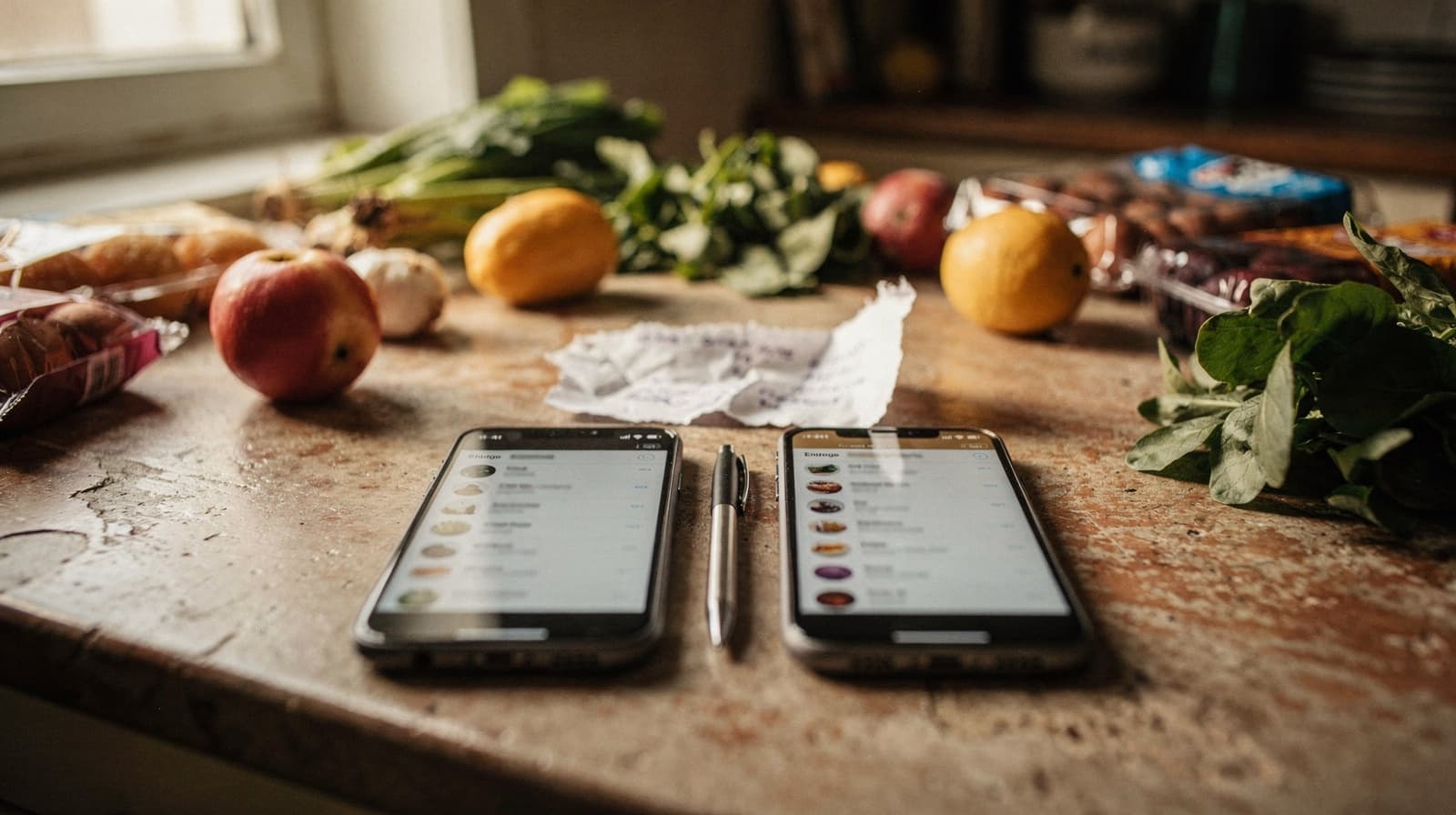
Tools that help: A recipe app where you can plan your week and generate a shopping list directly from your recipes. RecipeClip builds a grocery list from whatever recipes you've planned, so you're only buying what's needed for the meals you've chosen.
Fix #2: Improve fridge visibility
"Out of sight, out of mind" is the most expensive principle in your kitchen. If you can't see something in your fridge, you won't use it.
Practical changes:
Move things to the front. When you unpack groceries, put the newest items behind the older ones (FIFO: first in, first out). What needs to be used first is always at the front.
Use clear containers. If leftovers are in opaque containers, they become mystery boxes you ignore. Clear containers = you see what's there.
Designate a "use first" zone. Pick one shelf or bin in the fridge for things that need to be used within the next 2 days. Every time you open the fridge, your eyes go there first.
Leave produce at eye level. Crisper drawers are where produce goes to die. If you move vegetables to a shelf at eye level, you'll eat them.
Do a fridge scan before shopping. Before you write your grocery list, open the fridge and note what's there that needs to be used. Build at least one meal around it.
Fix #3: Store produce correctly
Most food goes bad before its time because it's stored wrong. A few key storage fixes:
Herbs: Treat them like flowers. Trim the stems, stand them in a glass of water, cover loosely with a plastic bag, refrigerate. They'll last 1-2 weeks instead of 3 days.
Berries: Don't wash until you eat them. Moisture accelerates mold. Store unwashed in the original container with a paper towel tucked in to absorb excess moisture.
Avocados: Unripe = counter. Just turned ripe = fridge to pause the ripening. Cut = press plastic wrap directly onto the flesh (not over the container), refrigerate, use within 1-2 days.
Leafy greens (salad greens): Wash, spin dry, wrap in a dry paper towel, store in a zip-lock bag. The towel absorbs moisture that would otherwise make them slimy.
Apples and bananas: Keep separate. Both emit ethylene gas that speeds ripening of everything nearby. Apples in the fridge, bananas on the counter away from other produce.
Bread: Counter in a bag for fresh-baked. Freezer for store-bought sliced bread (toast directly from frozen in 2 minutes).
Cheese: Wrap in parchment or wax paper, not plastic wrap. Plastic traps moisture; paper lets cheese breathe. Put the wrapped cheese in a loose plastic bag for the fridge.
Fix #4: Understand date labels
Americans throw away enormous amounts of perfectly good food because of misread date labels.
"Use by": The manufacturer's recommendation for when quality is best. For perishables like meat and dairy, treat this as a real deadline. For everything else, it's guidance.
"Best by" or "Best before": Quality, not safety. Cereal that's "best by" last month is still safe to eat; it just might be less crispy. Canned goods are often fine 1-2 years past best by dates.
"Sell by": This is for the store, not you. It tells them when to pull the item from shelves. The food is typically good for several days to a week after the sell-by date if stored correctly.
For meat and poultry: Use-by dates matter more. When in doubt, use the smell test. Spoiled meat has an unmistakable odor.
For everything else: Trust your senses before the label. If it smells fine, looks fine, and tastes fine, it's fine.
Fix #5: Build a "use it up" habit
At least once a week, cook a meal specifically around what needs to be used. Call it fridge cleanout night, leftover remix, or whatever makes it feel intentional rather than desperate.
The pantry-first approach: Before planning the week's meals, look at what's in your fridge and pantry that needs to be used. Build 1-2 meals around those ingredients, then plan the rest.
Versatile "use it up" dishes:
- Frittata: eggs + any vegetables + cheese
- Fried rice: rice + any protein + any vegetables
- Sheet pan dinner: any protein + any vegetables + seasoning
- Grain bowl: any grain + any protein + any vegetables + a sauce
- Soup: literally anything sautéed with broth
These formats work with almost any ingredients. The variety comes from what you have, not from following a specific recipe.
Recipe apps help here: RecipeClip has ingredient-based search — type in what you have, see every recipe in your library that uses those ingredients. It turns "random stuff in my fridge" into actual meal options.
Fix #6: Use your freezer aggressively
The freezer is the best anti-waste tool in the kitchen and the most underused.
When something is about to go bad: freeze it.
- Meat: If you're not cooking it in the next 2 days, freeze it
- Bread: Going stale? Freeze it, toast from frozen
- Bananas: Turning brown? Freeze them for smoothies or banana bread
- Herbs: Chop and freeze in olive oil in ice cube trays — perfect for adding to sauces and soups
- Cooked rice, beans, and grains: Freeze in portions, microwave directly
- Leftover soup, stew, chili: Freeze in portions, reheat any night
The habit: when you unpack groceries, if something won't be used within 3-4 days, freeze it now rather than letting it approach the trash.
Measuring your progress
Food waste is hard to see because it happens a little at a time. To actually measure improvement:
Track your trash: For one week, note what you throw away from the fridge and pantry. Just writing it down increases awareness enough to change behavior.
Track grocery spending: Food waste reduction typically shows up as lower grocery bills (same meals, less waste) or the same bill with more meals (meals that would have been wasted before are now eaten).
The compound effect
Implement all six and $1,500/year in food waste turns into $300-500. That's a real number — hundreds of dollars back in your pocket from habits that take maybe 30 extra minutes per week.
Start with the fridge scan before you shop. It catches more waste than the other five fixes put together, and it costs you two minutes at the fridge door. If you want the rest of it written down for you, RecipeClip's pantry tracking and ingredient search plan meals around what you already have. Try it free.