Stock From the Bag of Scraps in Your Freezer
Onion ends, carrot peels and chicken bones make better stock than you'd expect. Here's how to build a scrap bag and turn it into stock that's worth using.
A gallon freezer bag of onion ends, carrot peels, and celery tops is worth more than most people give it credit for. Simmered for a few hours with some bones, it turns into stock that costs almost nothing and tastes better than the carton version, which is mostly water, salt, and a faint memory of vegetables.
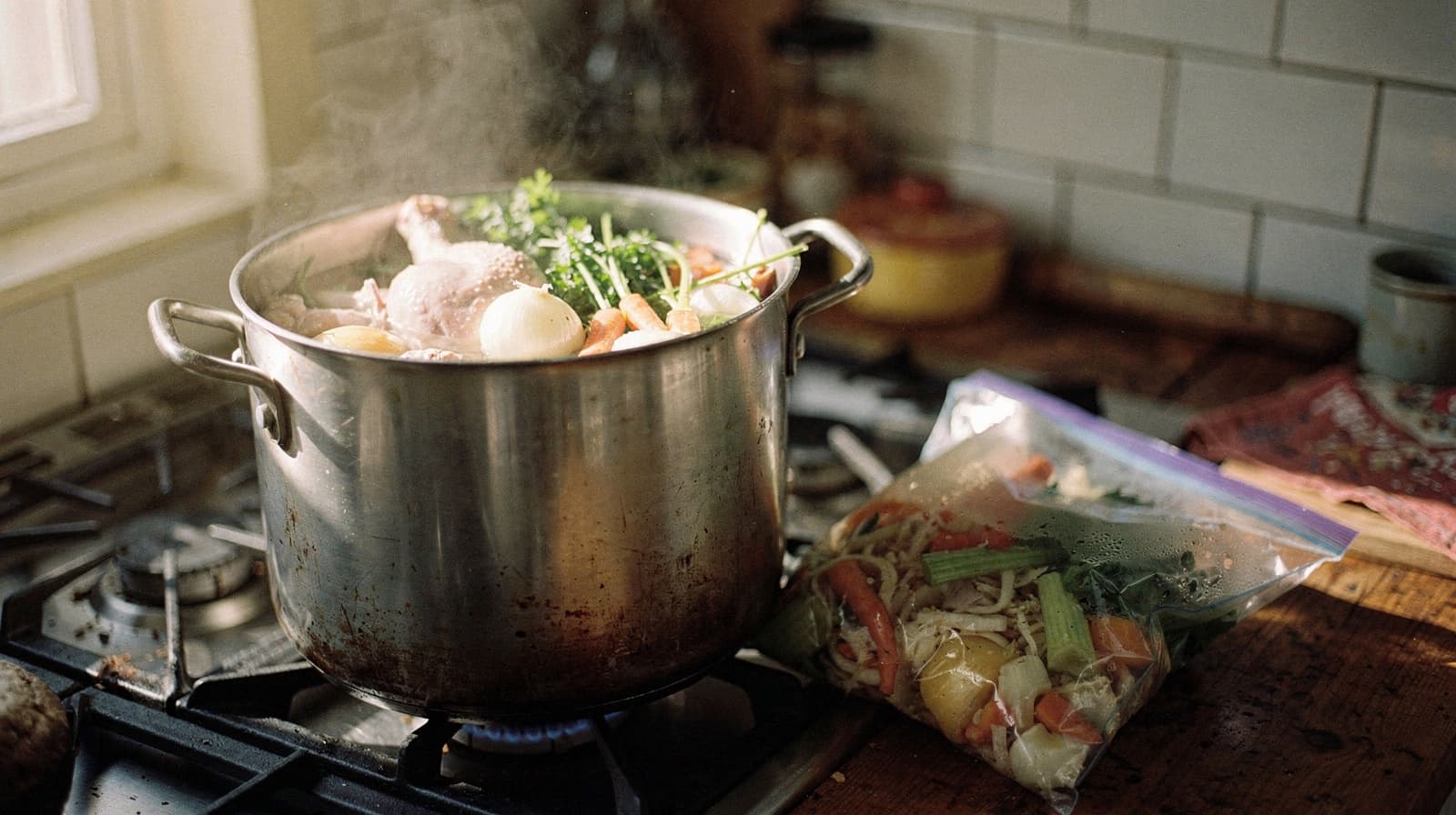
The habit takes almost no daily effort. It just requires keeping a bag going in the freezer and knowing what belongs in it.
What goes in the bag
Onion skins and ends, carrot peels and tops, celery ends and leaves, mushroom stems, the tough outer leaves of leeks, and parsley or herb stems all belong in a stock scrap bag. Save them as you cook instead of composting them. Two or three weeks of ordinary cooking fills a gallon bag, which is enough for one batch.
A few things don't belong. Brassicas are the main one. Broccoli, cauliflower and cabbage release sulfur compounds over a long simmer and the stock comes out smelling like a school canteen; a couple of stalks is fine, half a bag ruins six quarts. Skip anything moldy, since this is about trimmings and not about rescuing spoiled food. Skip beets too, unless you want pink risotto.
Bones make it worth drinking on its own
Vegetable scraps alone make a decent, thin stock. Adding bones, chicken carcasses, beef bones, shrimp shells, turns it into something with real body. Save the carcass from a roast chicken instead of tossing it; one carcass plus a full scrap bag makes a stock rich enough to sip as a broth, not just use as a cooking liquid.
Roasting the bones first changes the result more than any other single step. Twenty minutes at 400°F (200°C), pulled while they're brown and before anything goes black, since burnt bones make bitter stock and there's no fixing it later. Skip the roast if you want something lighter and faster.
The method
Tip the frozen scraps into the pot without thawing, add any bones, and cover everything with cold water by about two inches. Bring it to a bare simmer, a lazy bubble every second or two, and hold it there. A rolling boil emulsifies the fat into the liquid and you get cloudy, greasy stock that never clears.
Skim the grey foam that rises in the first twenty minutes, then leave it alone. Vegetable-only stock is done in 45 minutes to an hour. Chicken bones want 3 to 4 hours. Beef bones want 6 or more, because the connective tissue takes that long to break down into gelatin.
Strain through a fine mesh strainer, pressing lightly on the solids, then throw the scraps out; there's nothing left in them. Cool it fast before it goes in the fridge. A full stockpot left whole can sit above 40°F for six hours, which is exactly the window bacteria want, so split it into quart containers first.
Storage that doesn't take over your freezer
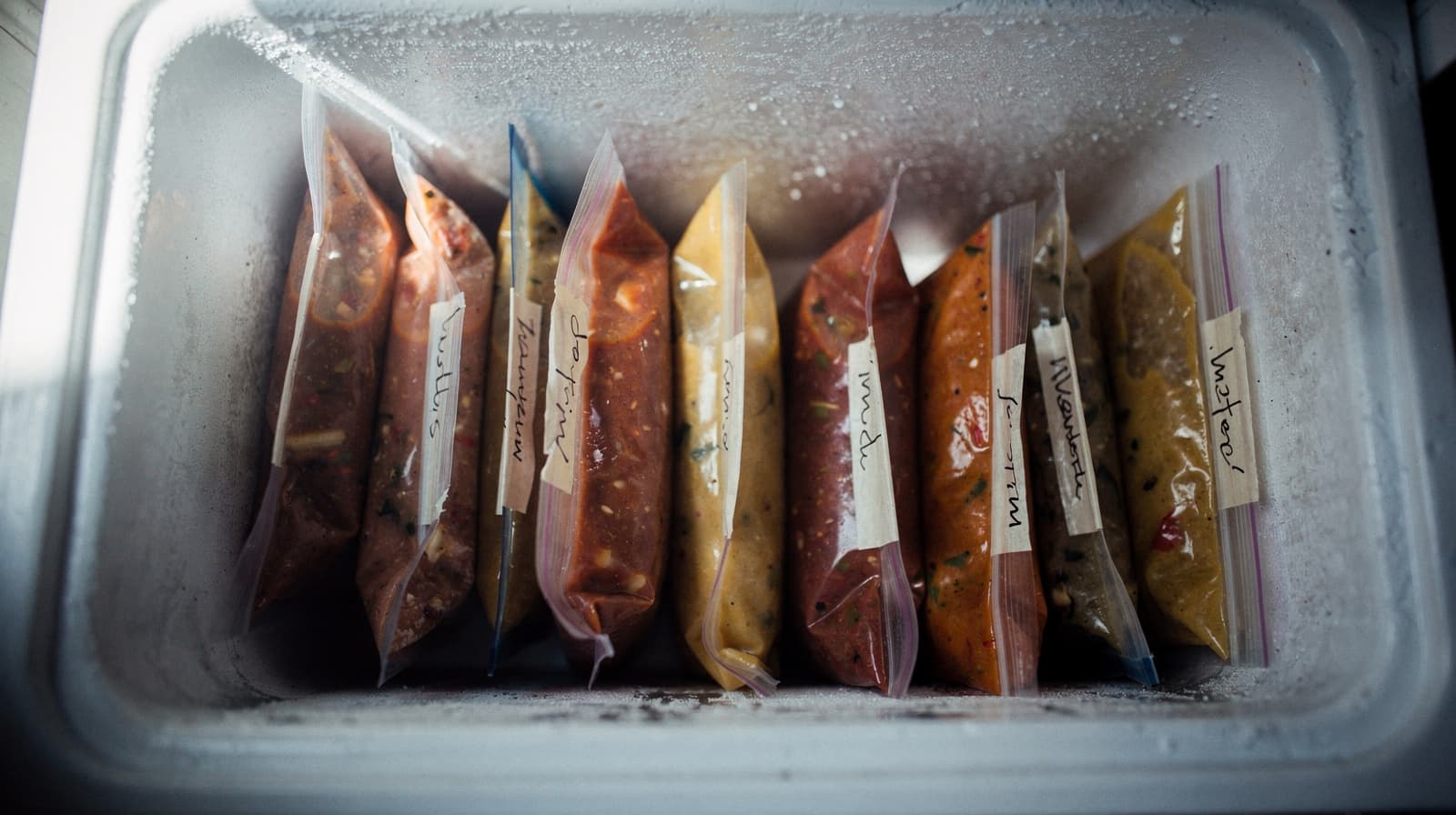
Stock eats freezer space if you store it in containers bigger than you ever use at once. Freeze it in the portions you reach for.
- Ice cube trays, roughly 2 tablespoons each, for deglazing a pan.
- 1-cup containers for a single recipe.
- One or two quart containers, if you make soup often.
Leave half an inch of headroom in anything rigid. Stock expands as it freezes and a filled-to-the-brim jar cracks.
Labeled and dated, stock keeps well in the freezer for about 4 to 6 months. In the fridge, use it within 4 to 5 days. This is one small piece of a bigger freezer strategy; if you're building out freezer meals more broadly, our guide to freezer meal planning covers the rest of that system.
Where this fits into reducing waste generally
Stock from scraps is the highest-return move in a food-waste routine because you already paid for the ingredients. You bought the whole onion and the whole bunch of celery. Six quarts of stock out of the trimmings costs a freezer bag and about four hours of a pot bubbling while you do something else, against roughly $2.50 a quart for the boxed stuff. For the broader picture on cutting waste across a kitchen, reducing food waste covers strategies beyond scraps, including how to plan shopping around what's already close to turning.
A separate bag for shellfish and fish
Shrimp shells, crab shells, and fish bones or heads make excellent stock, fast, but they need their own bag. Seafood stock is done in 20 to 30 minutes at a bare simmer, and past about 45 minutes it turns bitter and faintly ammoniac. That's the reverse of poultry or beef, which get better the longer they go.
Label both bags. A seafood-and-chicken hybrid tastes muddy and you can't take it back out.
Using it once it's made
Homemade stock tastes deeper than boxed and carries no salt of its own, so it changes the seasoning of whatever you pour it into. Commercial stock runs 500 to 900mg of sodium a cup and recipes are written around that. Season at the end and taste before you commit. Use it for soups and risotto, cook rice in it instead of water, or deglaze a pan with a cube or two after searing meat.
If you're keeping track of which recipes benefit most from homemade stock versus which ones don't notice the difference, that's exactly the kind of detail worth a quick note on the recipe itself. RecipeClip keeps notes attached to each saved recipe, so "use homemade stock here, boxed is fine for this one" doesn't have to live in your memory.