Pantry Organization for Smarter Meal Planning
An organized pantry is the secret to faster, cheaper cooking. Here's how to set up your pantry so meal planning becomes automatic.
Meal planning is twice as hard when you don't know what's in your pantry. If you're new to meal planning itself, our beginner's guide to meal planning covers the full workflow before you worry about pantry setup. You plan a recipe, go to cook it, and discover the cumin you thought you had is a ghost, or there are four half-used bags of lentils because you kept buying more without checking.

An organized pantry changes how you cook.
The three goals of pantry organization
- Visibility: you can see everything without digging
- Accessibility: what you use most is easiest to reach
- Freshness: old items don't hide behind new ones
Every system is trying to accomplish these three things. The details (bins, shelves, labels) are just implementation.
Step 1: empty and audit
Before organizing, empty the pantry completely. Yes, all of it.
As you empty it, sort by category and check expiration dates. Throw out what's expired or stale. Be honest: that bag of buckwheat flour from 2023 is not getting used.
While you're at it, note what you have multiples of. Three jars of tahini means you shouldn't buy tahini for a while. This inventory becomes the foundation of your meal planning.
Step 2: group by category (zone your pantry)
Create zones:
Baking zone: Flour, sugar, baking powder, baking soda, vanilla, chocolate chips, cocoa, cornstarch
Grain zone: Rice, pasta, quinoa, farro, oats, breadcrumbs
Canned goods zone: Tomatoes, beans, coconut milk, broth, canned fish, olives
Sauces and condiments zone: Soy sauce, hot sauce, vinegars, oils, nut butters, jams
Spice zone: Separate drawer, rack, or section, grouped by cuisine or alphabetically
Snacks zone: Crackers, nuts, dried fruit, bars
Baking spices: Cinnamon, nutmeg, allspice, cloves (separate from savory spices if space allows)
Keep zones consistent. When you grab soy sauce, it's always in the same spot. This is what makes cooking feel automatic.
Step 3: first in, first out
The classic restaurant principle: new items go behind old items. When you buy more chicken broth, put it behind the existing cans so you use the older ones first.
This alone eliminates most food waste in the pantry. The item you're about to use is always at the front.
Step 4: visible storage
The biggest organization mistake is deep pantry drawers or bins where items hide behind each other. Solutions:
Lazy Susans: Excellent for canned goods and bottles. Rotate to see everything.
Clear bins: Group like items (all dried pasta types in one bin, all baking chocolate in another). Label the bins, not the items.
Tiered shelf risers: Turn a flat shelf into three rows of visibility. Great for spice jars.
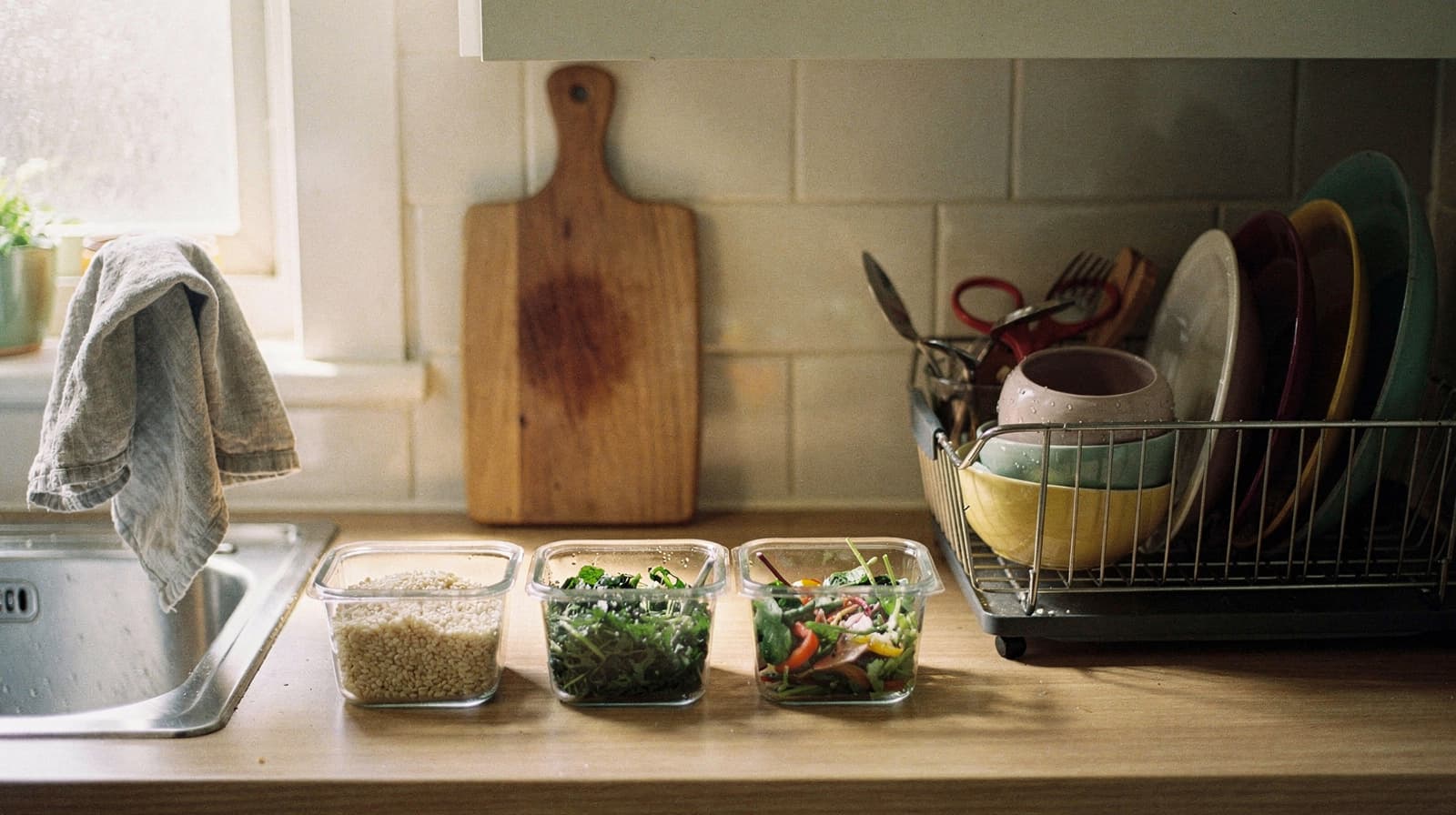
Decanted containers: Transfer bulk items (flour, sugar, rice, oats) into labeled airtight containers. They stack efficiently and you always know how much is left.
The rule: if you can't see it, you'll forget you have it.
Step 5: label everything
Labels seem fussy, but they matter, especially if you decant into matching containers. You will not remember what's in the third clear bin on the left after two weeks.
Masking tape and a marker works fine. Label makers are great but not necessary.
For spices, label the tops of the lids if they're in a drawer — so you can see the name when looking down into the drawer, not just when you grab the jar and flip it around.
The pantry staples worth always having
A well-stocked pantry makes meal planning automatic because you can always build a meal around pantry staples. Here's the base list:
Grains and pasta: Long-grain rice, pasta (2-3 shapes), oats, lentils
Canned goods: Diced tomatoes, crushed tomatoes, coconut milk, chickpeas, black beans, chicken broth, tuna
Oils and vinegars: Olive oil, neutral oil (avocado or vegetable), apple cider vinegar, rice vinegar, soy sauce
Baking staples: All-purpose flour, baking powder, baking soda, salt, sugar, brown sugar, vanilla extract
Nuts and nut butters: Peanut butter, almond butter, almonds or cashews for cooking
Spices (the essentials): Salt, black pepper, garlic powder, onion powder, cumin, coriander, smoked paprika, chili powder, dried oregano, dried thyme, red pepper flakes, cinnamon
Sweeteners: Honey, maple syrup
Other: Dijon mustard, capers, anchovies or fish sauce, Worcestershire sauce, hot sauce
With this base, you can make hundreds of different meals — you're just adding fresh protein and whatever vegetables you have.
Pantry + recipe app = meal planning superpower
Here's where a pantry inventory meets technology: if your recipe app tracks your pantry, it can tell you what you can make right now with what you have.
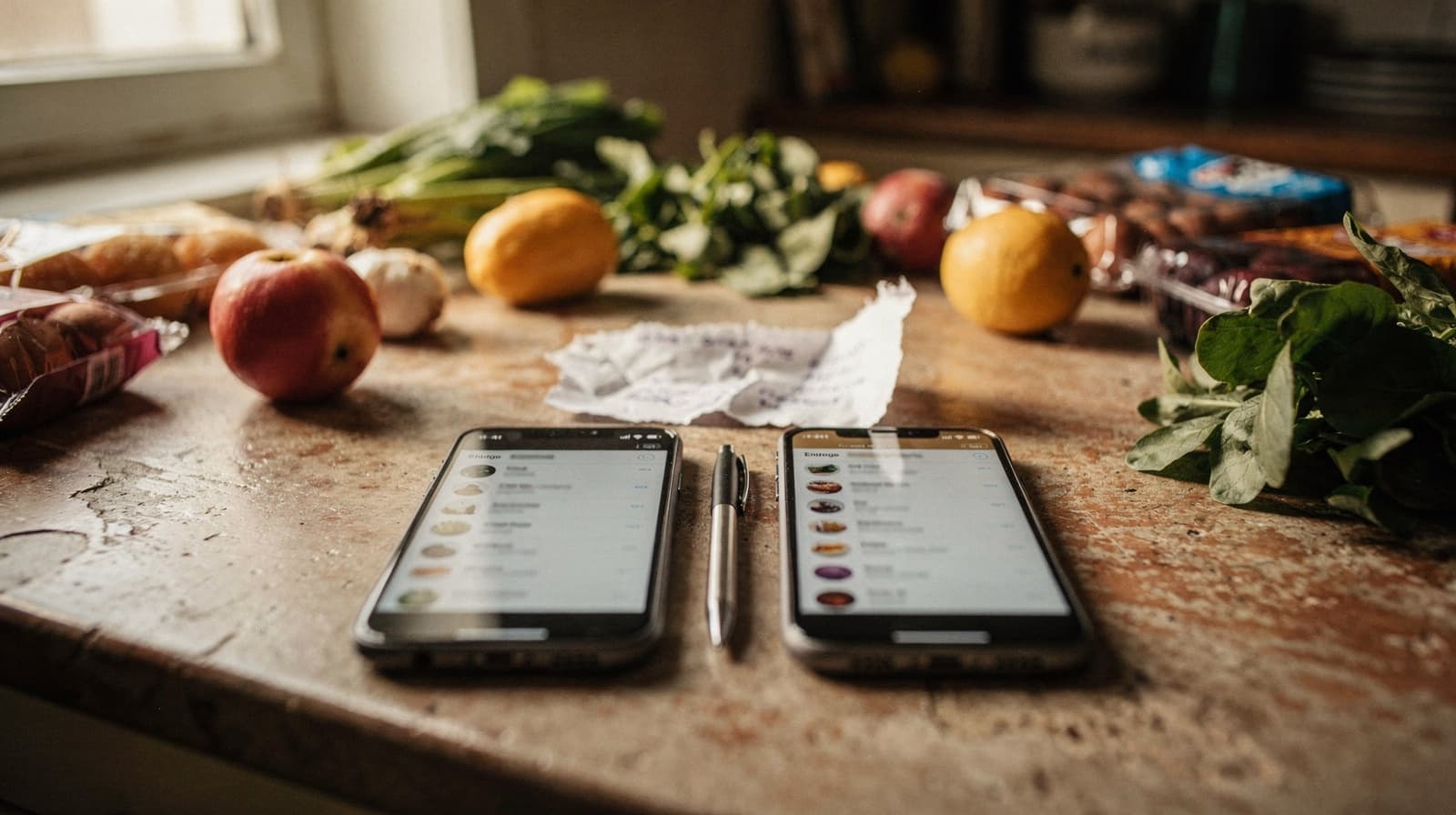
RecipeClip has a pantry feature — you add what you have on hand, and it shows you recipes in your library that match. This connects directly to cooking with what you have, our full guide on finding recipes from whatever's in your kitchen. On Sunday evening, check your pantry against your recipe library and you've got a meal plan built around what you already own. No unnecessary grocery shopping.
This is especially useful for the end of a grocery cycle, when you have random bits of things and need to figure out dinner without going to the store. Combine a stocked pantry with a weekly meal prep routine to make the most of your Sunday cooking time.
Monthly pantry maintenance
Once a month, spend 10 minutes:
- Pull everything to the front to check what's hiding
- Check expiration dates on anything older-looking
- Note what you've run out of (add to your next grocery list)
- Restock staples that are running low
This prevents the "empty pantry" crisis and the "expired tahini" surprise.
The digital pantry inventory
For serious meal planners, a digital pantry inventory is worth maintaining. This is a simple list of what you have, by category, that you update as you use things up and restock.
You can do this in:
- A notes app (simple, but no meal-matching)
- A spreadsheet (more structured, still manual)
- RecipeClip's pantry feature (updates your recipe matches automatically)
The time investment is small: about 5 minutes per week to update. The payoff is never buying a fourth can of chickpeas when you already have three.
Common pantry organization mistakes
Organizing without auditing first. You end up organizing old stuff you should have thrown away.
Buying storage containers before deciding on a system. Figure out your zones and groupings first, then buy containers that fit what you have.
Too many categories. Eight sub-categories of spice storage is harder to maintain than two. Start broad and add subcategories only if needed.
Storing things where they look good, not where they're used. Oils go near the stove. Baking supplies go near where you bake. Convenience beats aesthetics.
Not labeling decanted containers. You will forget. Label them.
A few hours now, 10 minutes a month after
Setting the pantry up takes an afternoon. Keeping it that way takes 10 minutes a month. After that, it runs itself.
Track your pantry in RecipeClip. Add what you have, and RecipeClip shows you recipes you can make right now — no wasted groceries, no last-minute store runs. Try it free.