Air Fryer Dinners Worth the Counter Space
What an air fryer actually earns its counter space for on weeknights, with real temps, times, and capacity numbers, not marketing claims.
An air fryer is a small convection oven with a marketing department. That's not an insult, it's the whole value proposition. A compact oven that preheats in 3 minutes instead of 15 and pushes hot air hard enough to crisp food on a tablespoon of oil. It won't replace your stove. For one specific slice of weeknight cooking, it beats everything else on the counter.
What it's good at
The honest case for an air fryer comes down to three things: speed, crisping, and small portions.
Speed first. A full-size oven takes 12-15 minutes to hit 400°F, and you're paying to heat a box big enough to roast a turkey just to cook two chicken thighs. An air fryer basket is a fraction of that volume, so it preheats in 2-3 minutes and cooks faster once it's hot because the air is moving instead of just sitting around the food. For a Tuesday dinner where you got home at 6:15, that difference is real.
Crisping is the second thing, and it's why people buy these. Frozen fries, fish sticks, chicken wings, and tater tots come out shatter-crisp, which an oven can't quite match even with a flip halfway through. The basket lets hot air hit the food from underneath as well as above, so there's no flip and no soft patch where the fry sat on the pan. Vegetables get the same treatment on a tablespoon of oil, doing what a sheet pan does at 425°F, faster and without a puddle of oil in the corner.
Third is scale, and this one cuts the other way for big households. An air fryer beats an oven at cooking small. Heating a full oven for one salmon fillet and a handful of asparagus wastes 15 minutes and a lot of gas, and in August it turns the kitchen into a sauna. The basket does the same job in half the time.
Real numbers for the dishes you'll make
Times vary by model and basket size, but these are solid starting points. Check at the lower end of the range the first time you make something in a new machine, since air fryers vary more than ovens do.
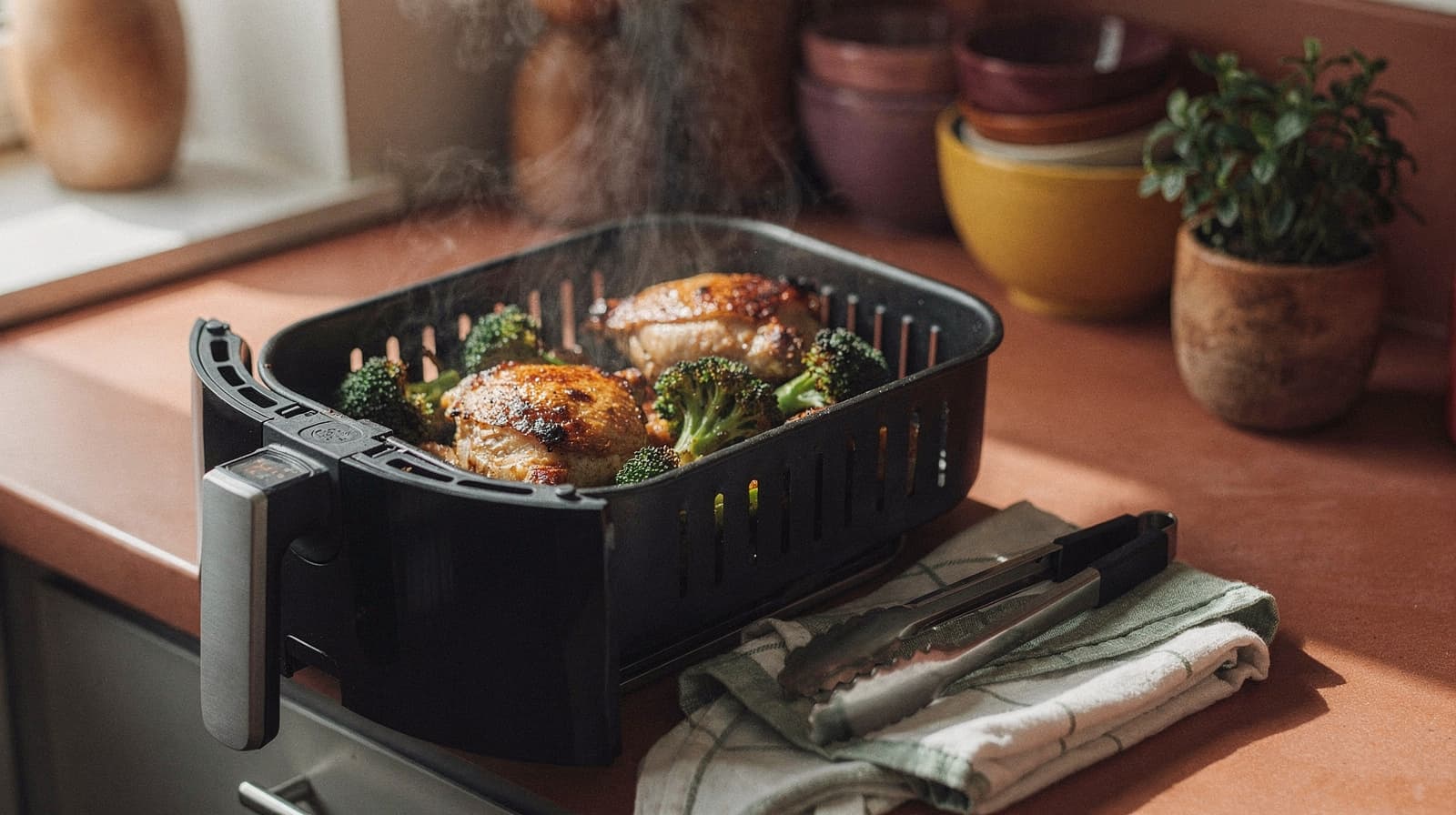
- Chicken thighs (bone-in, skin-on): 380°F for 18-20 minutes, flipping once at the halfway point. Skin comes out crackly without deep-frying.
- Salmon fillets: 400°F for 8-10 minutes, no flip needed. Check for 125-130°F internal if you like it medium.
- Frozen French fries: 400°F for 15-18 minutes, shaking the basket once or twice. Skip the oil entirely; there's already enough on the fries.
- Roasted vegetables (broccoli, carrots, brussels sprouts): 400°F for 12-15 minutes, tossed in a tablespoon of oil, shaken halfway through.
- Bone-in pork chops: 375°F for 12-14 minutes, flipping once. Rest for 5 minutes before cutting.
- Shrimp: 400°F for 6-8 minutes. Easy to overcook, so pull them at the low end and check.
Salmon and shrimp are the two where a minute or two of overcooking really shows, so set a timer instead of guessing.
What it's mediocre at
The basket is small on purpose. A standard model holds 3 to 5 quarts, which is one to two servings of protein before the pieces start touching. Crowd it and you've thrown away the only reason to own one, because hot air needs space around each piece and packed food steams. Cooking for four or five means running two batches, which erases the speed advantage, or going back to the oven.
Wet batter is the other dead zone. Beer-battered fish or funnel cake drips straight through the basket and onto the heating element before it sets. Dry breading works fine (flour, egg wash, panko) because that crust firms up fast in moving air. A wet batter needs the still heat of oil to hold its shape, so a recipe that dredges in liquid batter is a stovetop job.
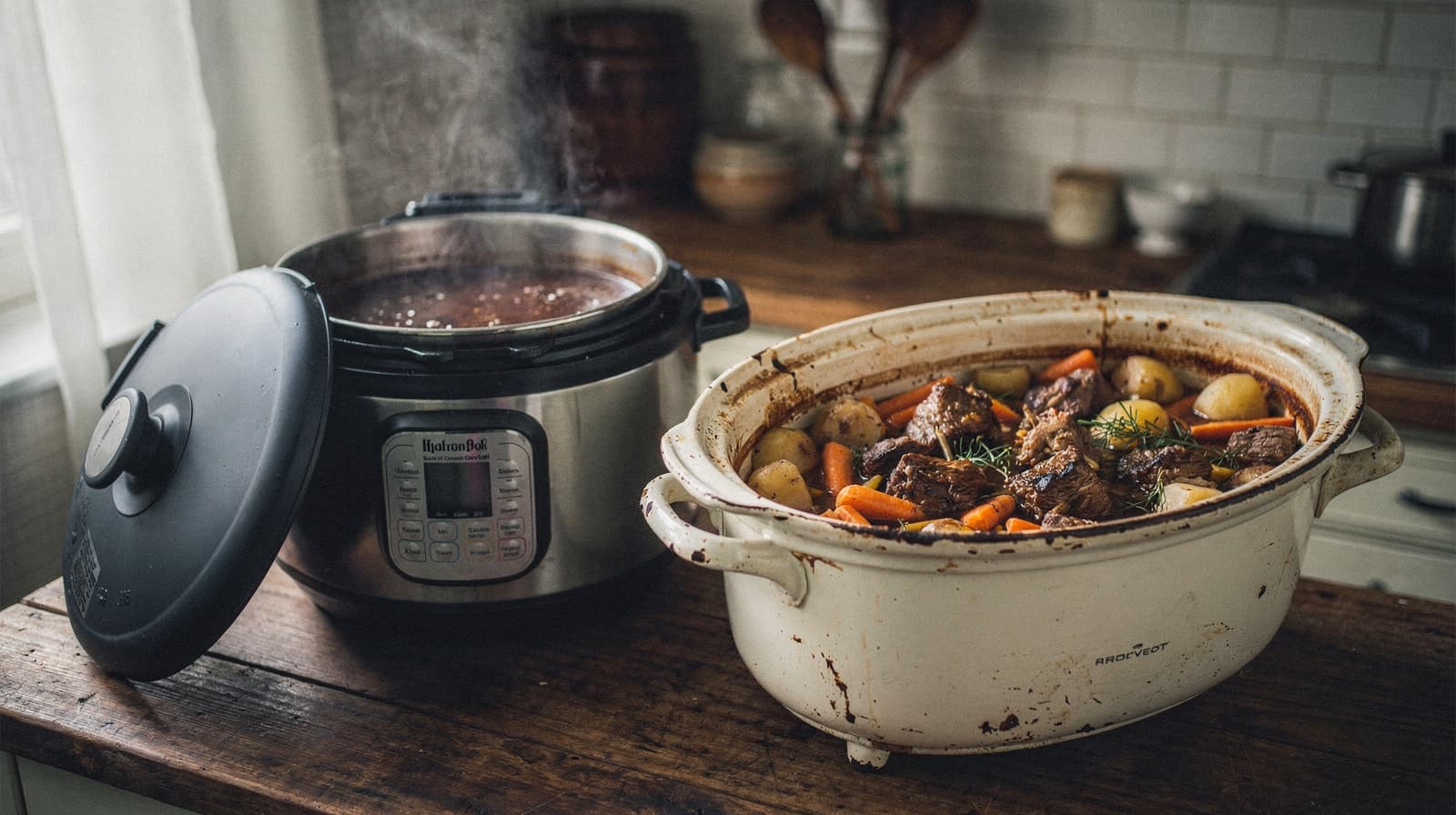
Large cuts are the third gap. A whole chicken fits in the bigger baskets, but a pot roast, a brisket, or a pork shoulder needs low moist heat for hours to turn connective tissue into gelatin. High airflow in a small chamber dries the outside out long before the middle gives up. If that's the meal on your mind, a slow cooker does that job properly: low temperature, hours of time, and a sealed pot that keeps moisture in instead of pulling it out.
Where it fits next to what you already own
Think of the air fryer as the fast, small-batch tool in a three-appliance rotation rather than a replacement for any one of them. The oven still wins for anything that needs to feed more than two people or bakes in a pan the basket can't fit. The stovetop still wins for anything that needs active stirring or a sauce coming together in real time. The air fryer wins specifically when the job is crisping a small amount of food, fast, without heating the whole kitchen.
That's a bigger category than it sounds:
- Weeknight chicken thighs for two
- Leftover pizza, reheated so the crust snaps instead of flopping
- A quick batch of roasted vegetables to go with pasta
- Frozen dumplings on a night you don't want to cook at all
None of those need the oven. All of them are faster in a basket.
One-pan dinners solve a similar problem from a different angle. If you want the low-cleanup logic but need a full protein-and-vegetable dinner in one go rather than two basket runs, one-pan dinner ideas for busy weeknights covers the sheet-pan version at a scale that feeds four.
Making it work on a night you didn't plan for
The appliance only pays off if you aren't standing in front of an open fridge at 6:15 trying to remember whether there are chicken thighs in there or just breast, and whether the broccoli went in Sunday's stir-fry. That's a tracking problem, not a cooking problem, and it's where air fryer routines die after three weeks.
A running list of what's in the fridge and freezer is the difference between a 20-minute dinner and a delivery order. RecipeClip's pantry feature tracks what's on hand, and the meal-plan calendar lets you drag a saved air fryer recipe onto Tuesday days ahead instead of deciding under pressure. Cook mode keeps the time and temp on your phone next to the basket, so you're not wiping oil off a laptop trackpad.
For a broader version of this, how to meal plan when you have no time builds a short rotation of meals you can get on the table in under 30 minutes, air fryer or not.
A short list to start with
If you're new to the appliance, skip the recipes that require multiple batches or careful layering and start with dishes built for a single basket load:
- Chicken thighs with a side of frozen fries (two separate short cooks, same machine)
- Salmon and asparagus, both finishing around the same 8-10 minute mark
- Frozen dumplings or gyoza, which crisp better here than in a pan with less oil
- A tray of mixed vegetables as a side to something you're already making on the stove
Every machine runs a little hot or cool against its dial. Cook the chicken thighs once at 380°F for 18 minutes, note whether they came out early or late, and adjust every other number on this page by that same minute or two.