School Lunches That Still Look Edible at Noon
Lunchbox ideas built around what actually survives four hours unrefrigerated in a backpack, not just what looks good going in that morning.
A sandwich packed at 7am and eaten at noon has sat at room temperature for five hours. A cut apple browns in the first ninety minutes. A crunchy wrap is soggy by second period. Most lunchbox advice is about what looks good going into the container, which is the easy half of the problem.
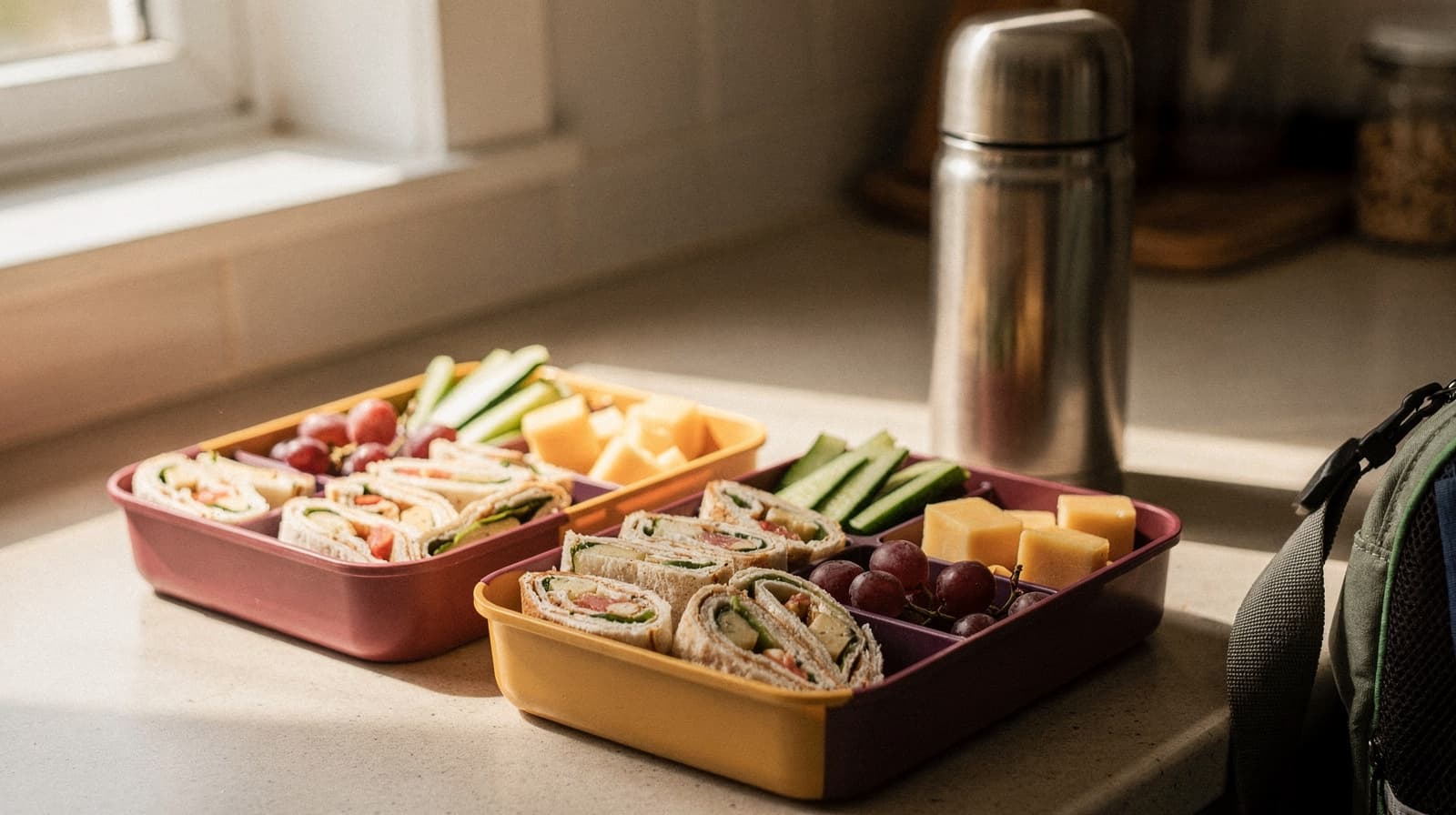
The fix isn't fancier food. Pick things that survive five hours in a backpack, and pack anything wet in its own container so it can't get to the bread until your kid does.
What holds up
Anything cured or cooked firm. Salami, hard cheese, hard-boiled eggs, and roasted chicken all hold their texture at room temperature for hours. This is the backbone of a lunch that doesn't need refrigeration to stay appealing.
Whole fruit over cut fruit. A whole apple, orange, or banana doesn't brown or leak. If cut fruit is the only kind that comes home eaten, squeeze lemon juice over it first, which buys an hour or two before it goes brown.
Dips and sauces packed separately. Hummus, ranch, or dressing packed in a small separate container instead of pre-mixed keeps whatever it's paired with from turning soggy. This single habit fixes more lunchbox complaints than almost anything else on this list.
Crackers and bread packed apart from wet ingredients. Same principle. A sandwich assembled at 7am with a juicy tomato inside is a different sandwich by noon. Pack the tomato on the side, or skip it for lunchbox purposes and save it for dinner.
Pasta and grain salads with a vinegar-forward dressing. Oil and vinegar based dressings hold up far better over several hours than anything cream-based, which can separate or turn unappetizing by lunchtime.
Five lunches built around that logic
- Bento-style box: sliced hard cheese, a handful of crackers, cherry tomatoes, a hard-boiled egg, and a few grapes. Nothing in the box changes in four hours.
- Cold pasta salad: short pasta tossed with olive oil, a splash of vinegar, chopped vegetables, and cubed cheese. Packs well the night before and tastes the same at noon as it did at 7am.
- Wrap, packed unassembled: a tortilla, sliced turkey, cheese, and lettuce packed in separate small containers, assembled by the kid right before eating. Slightly more work going in, considerably better coming out.
- Rice bowl, room temperature: cooked rice, shredded chicken, and roasted vegetables, all of which taste fine cold or at room temperature. Add a small container of soy sauce or a vinaigrette on the side.
- Muffin-tin egg bites: eggs baked in a muffin tin with cheese and vegetables mixed in, made in a batch on Sunday and pulled from the fridge each morning. Eaten cold or reheated if a microwave is available at school.
Batch prep makes weekday mornings shorter
None of this has to be built fresh at 7am. Hard-boiled eggs, cooked grains, roasted chicken, and cut hard cheese all keep four or five days, so one hour on Sunday covers Monday through Thursday. Our guide to batch cooking proteins covers doing the chicken and the eggs in one go.
Don't make lunch-packing its own chore, either. Fold it into the same Sunday session as dinner prep. The weekly meal prep guide covers batching grains, proteins and roasted vegetables that feed both.
What to skip, even if it photographs well
Avocado and cut apple without lemon. Anything breaded that's supposed to be crisp, because it won't be. Sandwiches built the night before around a wet filling. All of it looks fine at 7am and comes home half-eaten with an explanation.
Serve those at dinner instead, where the gap between plating and eating is four minutes.
Keeping food safely cold without a fridge on hand
An insulated bag with a frozen gel pack holds food under 40°F for about four hours, which covers 7am to lunch. For the dairy and the cut fruit, freeze a water bottle instead. It's the ice pack and the drink in one object, so it's one fewer thing to remember at 7am.
Freezing part of the lunch the night before also buys time. A sandwich frozen overnight thaws by lunch and acts as its own ice pack for the hours leading up to that, keeping everything around it cooler for longer. This works well for sandwiches with fillings that freeze cleanly (peanut butter, most deli meat, hard cheese) and poorly for ones that don't (mayonnaise-based fillings, lettuce, fresh tomato).
For a household with more than one kid
A six-year-old and an eleven-year-old don't eat the same lunch, and no single fixed plan survives that. Build a rotating menu of five or six lunches instead, with each kid getting a say in which ones make the list. Meal planning for a family of four covers the same rotation logic at dinner scale.
Then pack at 8pm, not 7am. Everything but the cold items goes in the containers the night before, so the morning is a fridge door and a zip, not a decision.
Getting a picky eater to eat it
A lunch that survives the backpack is no use if it comes home full. Kids who are picky at home are pickier at school, where nobody is sitting across from them talking them into one more bite. The boxes that come back empty are built from food the kid already eats, not from the food you're hoping they'll try.
Introduce anything new at home first, ideally on a low-stakes weekend where there's no pressure to finish it. If it goes over fine a couple of times, it's a reasonable candidate for the lunchbox rotation. If it's a fight at the dinner table, it's very unlikely to fare better alone in a cafeteria at noon.