The Pan the Recipe Wants vs. the Pan You Own
Pan volumes, bake time adjustments, and what actually happens when you swap a 9x13 for a loaf pan or an 8-inch square.
A recipe calls for a 9x13 pan. You own an 8-inch square and a loaf pan. This is where most people either close the recipe or guess, and the guess comes out raw in the middle under a burnt top.
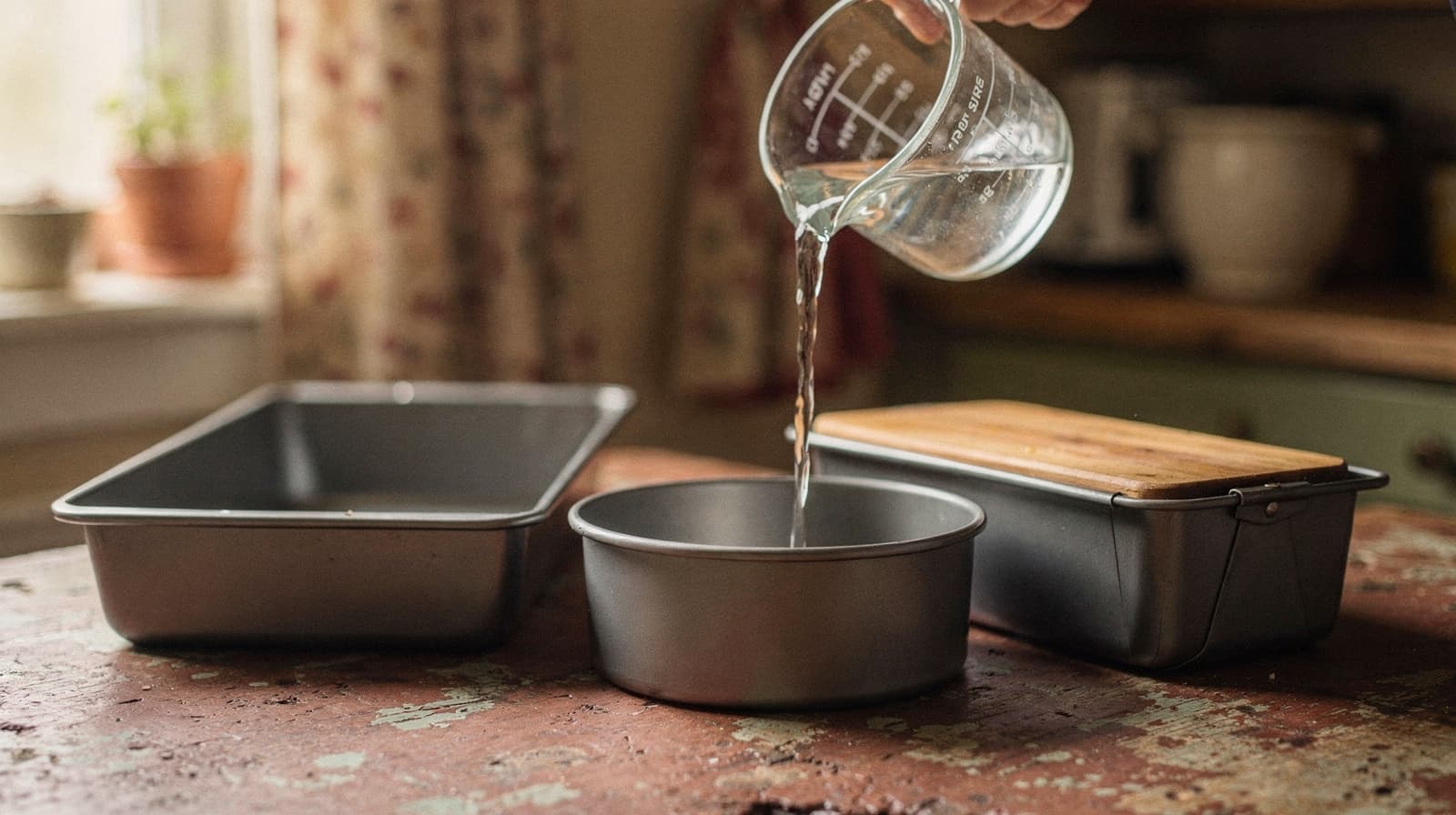
Volume decides the swap, not shape. Learn the numbers for the four pans in your cupboard and the rest is arithmetic.
The volumes that matter
- 9x13 pan: about 3.5 quarts (14 cups)
- 8-inch square pan: about 2 quarts (8 cups)
- 9-inch round pan: about 1.5 quarts (6 cups)
- Standard loaf pan (9x5): about 1.5 quarts (6 cups)
A 9x13 holds more than double an 8-inch square. That's the number that matters, not the fact that both are "baking pans." If a recipe fills a 9x13 about three-quarters full, the same batter fills an 8-inch square nearly to the rim, which changes both the bake time and the odds of overflow.
What happens when batter goes into a smaller, deeper pan
Batter in a smaller pan sits deeper, and heat has farther to travel to reach the middle. The edges hit done while the center is still liquid. Every pan swap comes down to that one tradeoff. Change the depth and you have to change the time, the temperature, or both.
General rule: a pan swap that increases batter depth needs a lower oven temperature (drop 25°F) and a longer bake time. A swap that decreases batter depth needs a shorter bake time and can often keep the original temperature.
Common swaps and what to do
9x13 recipe into an 8-inch square (or two 8-inch pans): the batter is now roughly 75% deeper in a single 8-inch pan. Drop the temperature by 25°F and check for doneness starting about 10 minutes past what feels like the halfway point, using a toothpick rather than trusting the clock. If you have two 8-inch pans, splitting the batter between them keeps the depth closer to the original and the timing closer to the recipe as written.
9x13 recipe into a loaf pan: don't try to fit an entire 9x13 recipe into one loaf pan; the volumes are too far apart (3.5 quarts versus 1.5) and you'll get a raw center under a burnt top well before it's done. Instead, portion the batter across two or three loaf pans, or halve the recipe for a single loaf pan and freeze the rest of the batter or bake a second batch.
8-inch square recipe into a 9-inch round: close enough in volume (2 quarts against 1.5 or so, depending on how tall the sides are) that you can leave the time alone. Start checking five minutes early anyway, since the round pan exposes a little more surface.
Doubling a recipe into a 9x13: if a recipe was written for an 8-inch square and you're doubling it into a 9x13 (roughly the right volume match, 2 quarts doubled is close to 3.5), keep the original temperature and expect a similar bake time, maybe five minutes longer since the pan is larger overall even though depth is similar.
Trust the toothpick, not the clock
Once you change the pan, the stated bake time is an estimate someone else made about a different pan. Start checking at 80% of it, then every 5 minutes.
For cakes and quick breads, the toothpick comes out clean or with a few moist crumbs, never wet batter. For cornbread and denser bakes, press the center: slight give is done, a liquid jiggle is not.
Muffin tins, cupcake pans, and mini versions
The same volume logic scales down. A 12-cup muffin tin holds about 6 cups, the same as a 9-inch round, which is why a single-layer cake recipe and a muffin recipe are usually the same amount of batter wearing different clothes.
Bake that cake batter as muffins and it's done in 18 to 22 minutes instead of 30 to 35, because each portion is an inch deep instead of two. Go the other way, muffins into a loaf pan, and the time roughly doubles. Check it early regardless.
Adjusting for glass and dark metal pans
Material changes the timing on its own, before volume enters into it. Glass and dark metal hold heat harder than light aluminum, so they run a few minutes fast and brown the bottom more. Baking in glass a recipe written for light metal? Drop the oven 25°F, on top of whatever the size swap already asked for.
When volume math doesn't fully solve it
Shape matters on its own for a few things. Brownies, where the whole argument is about corner pieces. Cheesecake, where the springform sides come off and a solid pan's don't. A volume-matched swap there gets you something edible, not the thing the recipe describes. Casseroles, quick breads and most cakes will forgive you almost anything.
If you're halving and doubling recipes every week to fit the pans you own, learn the scaling math instead of eyeballing it. Our guide to scaling a recipe covers the ingredient side of the same problem. The logic runs the other way for dinner too, where a too-small sheet pan crowds the vegetables and steams them, which our guide to sheet pan dinners gets into.
Do this tonight: fill each of your pans with water from a liquid measuring cup and write the volumes down in a note on your phone. Manufacturers vary, and the size printed on the box is not the volume.