A Field Guide to the Squash Pile at the Grocery Store
Butternut, acorn, delicata, kabocha, and spaghetti squash, sorted by how to cook each one and what it's actually good for.
The winter squash display at most grocery stores in October is a pile of five or six different shapes with no explanation of what separates them, priced somewhere between $0.79 and $1.99 a pound. Butternut gets bought by default because it's familiar. The rest sit there unless someone knows what to do with them.
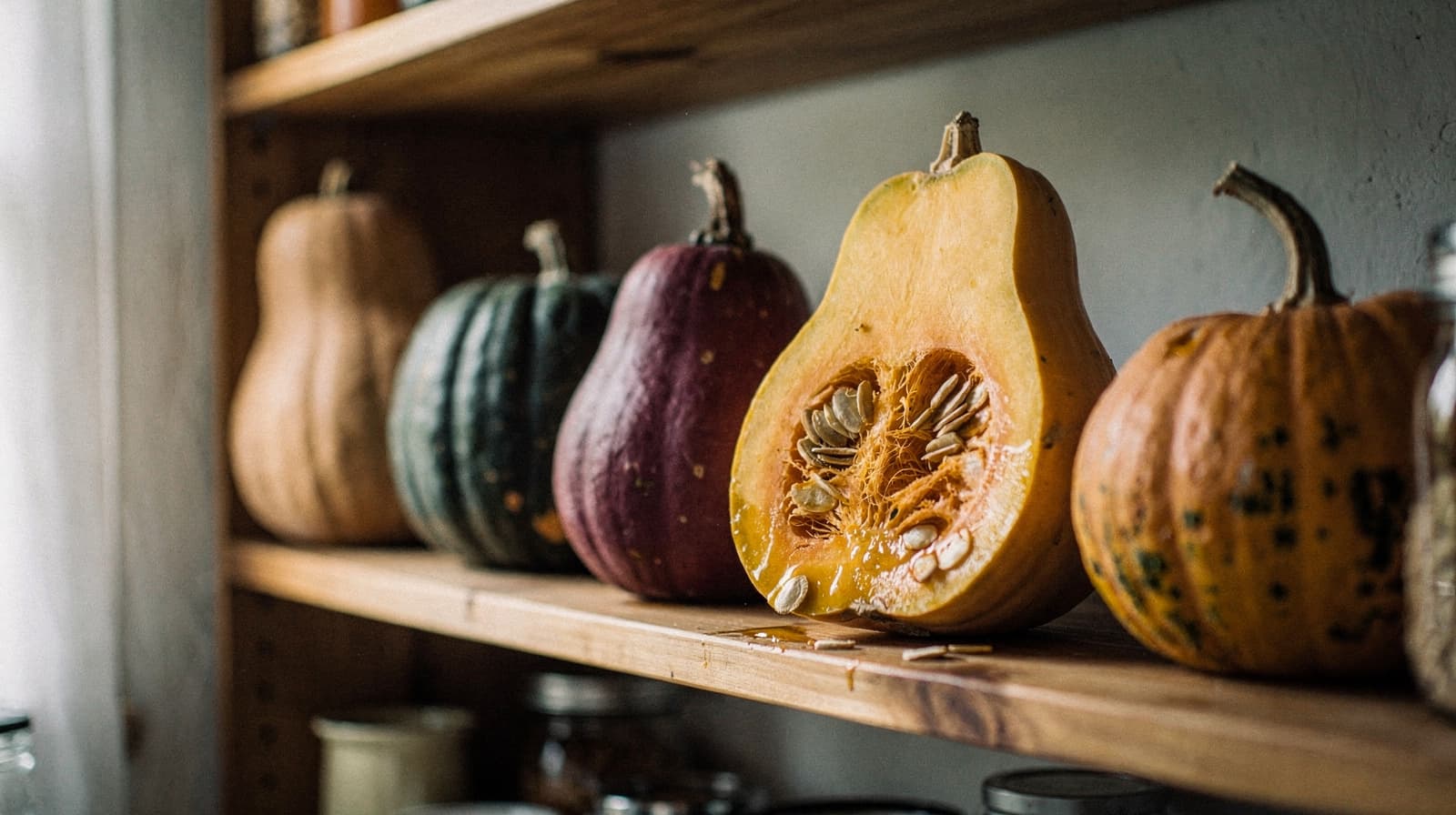
They're not interchangeable. One peels with a vegetable peeler, another fights back with a chef's knife, and a third has skin you're supposed to eat. Mash the wrong one and you get strands instead of puree. Knowing which is which saves the second trip to the store.
Butternut squash
Mild, sweet, and the easiest of the lot to break down with a sharp knife. Cut the neck off first, since it's solid flesh and cubes in about a minute. The bulb end holds the seeds and takes longer.
Best for: roasting, soup, mashing, and anywhere a recipe wants "squash" without specifying further. Peels with a standard vegetable peeler, unlike most of the others on this list.
How to cook it: cube and roast at 400°F for 30 to 35 minutes, or halve, seed, and roast face-down for about 45 minutes if you want it for mashing or soup.
Acorn squash
Smaller, ridged, and shaped like its name suggests. The flesh is slightly less sweet than butternut and a bit stringier, which matters more in a puree than it does roasted in chunks.
Best for: halved and roasted as individual portions, since the natural bowl shape is built for stuffing with grains, sausage, or a simple butter-and-brown-sugar filling.
How to cook it: halve, scoop the seeds, roast cut-side down at 400°F for 25 minutes, then flip and fill if stuffing, or continue roasting another 15 to 20 minutes if eating plain.
Delicata squash
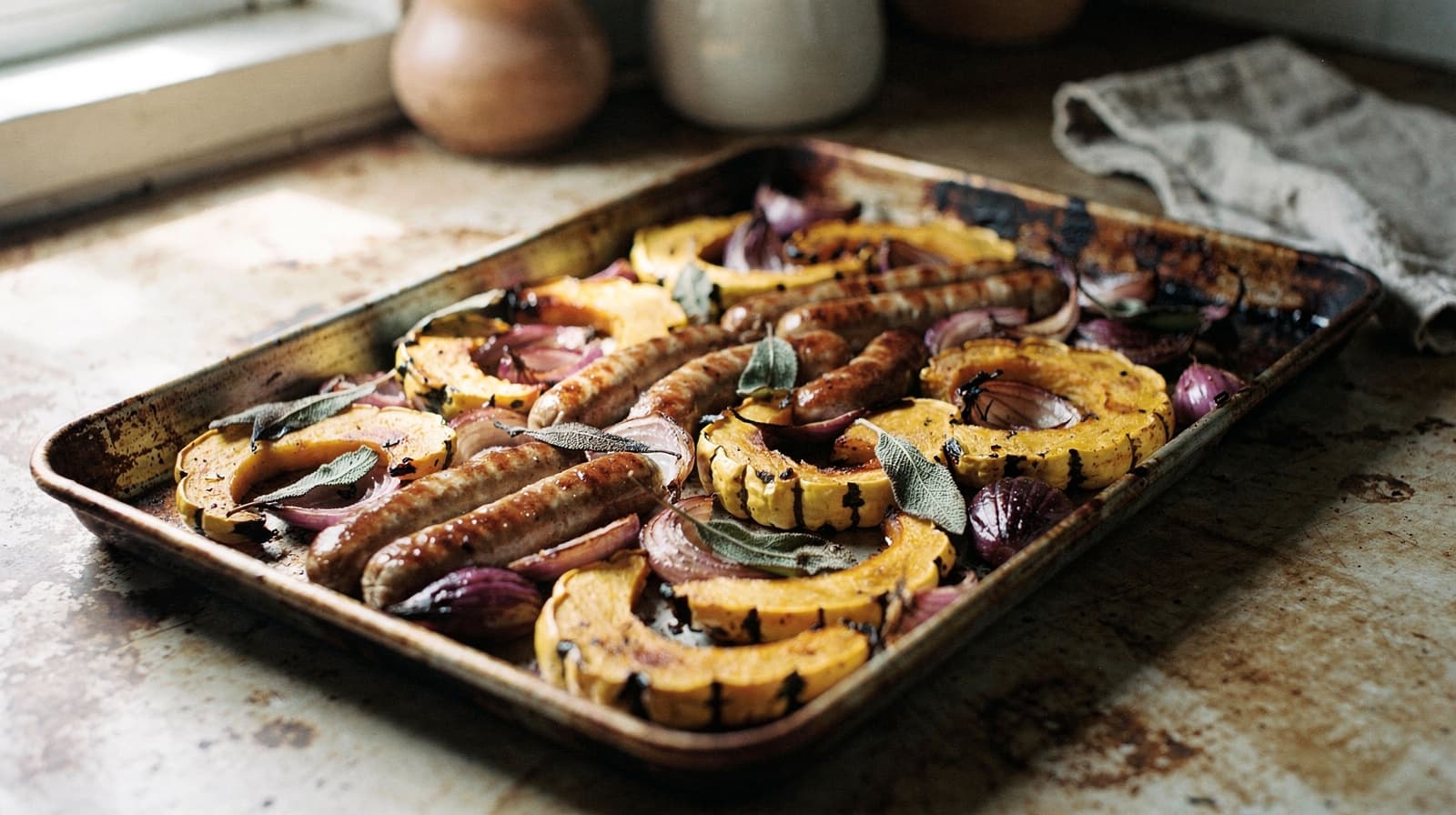
Buy this one if you've never cooked squash before. The skin is thin enough to eat, so there is no peeling step at all. Slice into half-moons, scoop the seeds, and it's ready for the oven in three minutes.
Best for: roasting as-is, sliced into rings or half-moons. Also good sliced thin and roasted until crisp at the edges, closer to a chip than a side dish.
How to cook it: toss sliced delicata with oil and roast at 425°F for 20 to 25 minutes, flipping once. It's the fastest-cooking squash on this list because the pieces are thin.
Kabocha squash
Deep green skin, dense orange flesh, sweeter and drier than butternut, closer in texture to a sweet potato once cooked. The skin is edible after roasting, though tougher than delicata's.
Best for: roasting into something you'd eat like a side dish rather than blending into soup, since its texture holds up better than it purees. Also good in curry, where its density keeps it from disintegrating in a long simmer.
How to cook it: cube (skin on is fine) and roast at 400°F for 30 minutes, or slice into wedges for a curry that simmers 20 to 25 minutes.
Spaghetti squash
The outlier on this list. Instead of mashing or holding its shape in cubes, the cooked flesh separates into strands, which is the entire appeal.
Best for: a low-carb stand-in for pasta, tossed with sauce, or as a base for a grain-bowl-style dinner. Not a good candidate for cubing or mashing; the texture is wrong for both.
How to cook it: halve lengthwise, seed, roast cut-side down at 400°F for 40 to 45 minutes, then scrape the strands out with a fork once cool enough to handle.
Two more worth knowing
Honeynut squash is a smaller, sweeter butternut, bred for concentrated flavor. It looks like a butternut that stopped growing, and it cooks the same way in half the time: 20 to 25 minutes roasted in halves, against 45 for the full-sized one.
Buttercup squash is squat and green like kabocha, but wears a turban-shaped cap on top. Once you've seen the cap you can't unsee it. Same density, same sweetness, same roasting and curry treatment.
Storing what you don't use right away
A whole winter squash keeps a month or more on a cool shelf, which is why it's cheap and stacked to the ceiling in October. Once you cut it, the pieces get five days in the fridge.
Past that, roast the flesh and freeze it. Three months, and it goes into soup or a grain bowl frozen. Our guide to cooking with what you have covers building meals out of the fridge and freezer rather than shopping to a recipe.
Seeds are worth saving
Every one of these comes with a bowl of seeds headed for the bin. Rinse the pulp off, pat them dry, toss with oil and salt, and roast at 300°F for 25 to 30 minutes, stirring once. Kabocha and butternut seeds are the best of them, being bigger than acorn or delicata seeds. Five minutes of work while the oven is already on.
Picking one at the store
Pick them up. Weight is the whole test: heavy for its size means dense flesh and a small seed cavity. Put back anything with a soft spot, because that's rot working outward from underneath. A stem still attached slows moisture loss, so take it if you have the choice.
Then roast it on a pan next to a protein and call it dinner. Our guide to sheet pan dinners for fall has the combinations, with butternut and delicata both in the list.