The Weekly Meal Prep Guide: How to Prep Smarter, Not Longer
You don't need 4 hours on Sunday. Here's how to prep components instead of full meals, so weeknight cooking takes 15 minutes.
The meal prep content you see on social media is aspirational but misleading. Those perfectly arranged containers represent hours of chopping, cooking, and cleaning, plus a full week of eating the same things in rotation.

Real meal prep is simpler. You're not cooking everything. You're reducing the friction in weeknight cooking by prepping components — so dinner goes from 45 minutes to 15.
Components vs. full meals: the better approach
Instead of cooking 5 complete meals on Sunday, prep the building blocks that go into multiple meals:
Proteins (cooked): A batch of baked chicken thighs. Ground beef. Hard-boiled eggs.
Grains: A big pot of rice, quinoa, or farro.
Roasted vegetables: Two sheet pans of whatever's in season.
Washed and chopped raw vegetables: Salad greens, sliced peppers, cucumber rounds.
Sauces and dressings: One big batch of vinaigrette, or a jar of pesto.
These components mix and match all week:
- Monday: rice bowl with chicken and roasted veg
- Tuesday: chicken tacos with sliced peppers and salsa
- Wednesday: farro salad with roasted veg and feta
- Thursday: fried rice with leftover rice and eggs
You didn't plan 4 complete meals. You prepped components and let dinner emerge.
The 90-minute Sunday prep
Here's how to run an efficient prep session that covers most of a week's cooking:
Set up (10 minutes)
- Clear counter space
- Get everything out of the fridge
- Preheat the oven to 400°F
- Fill a large pot with water for grains
Run 3 things simultaneously (60 minutes)
Run things in parallel. Don't do one thing at a time.
- Oven: Two sheet pans of vegetables (and/or chicken thighs)
- Stovetop: Pot of grain cooking
- Counter: Chopping and prepping salad vegetables, making dressing
While things cook, you're prepping. While dressing is made, the oven is doing its thing.
Store and label (20 minutes)
- Let hot items cool before refrigerating (don't skip this — hot containers cause condensation and sogginess)
- Use clear containers so you can see what's inside
- Label with the date and contents (especially if you have multiple people in the household)
- Put what you'll use first at the front
That's it. 90 minutes of focused work = 5 nights of fast cooking.
What to prep (by category)
Proteins
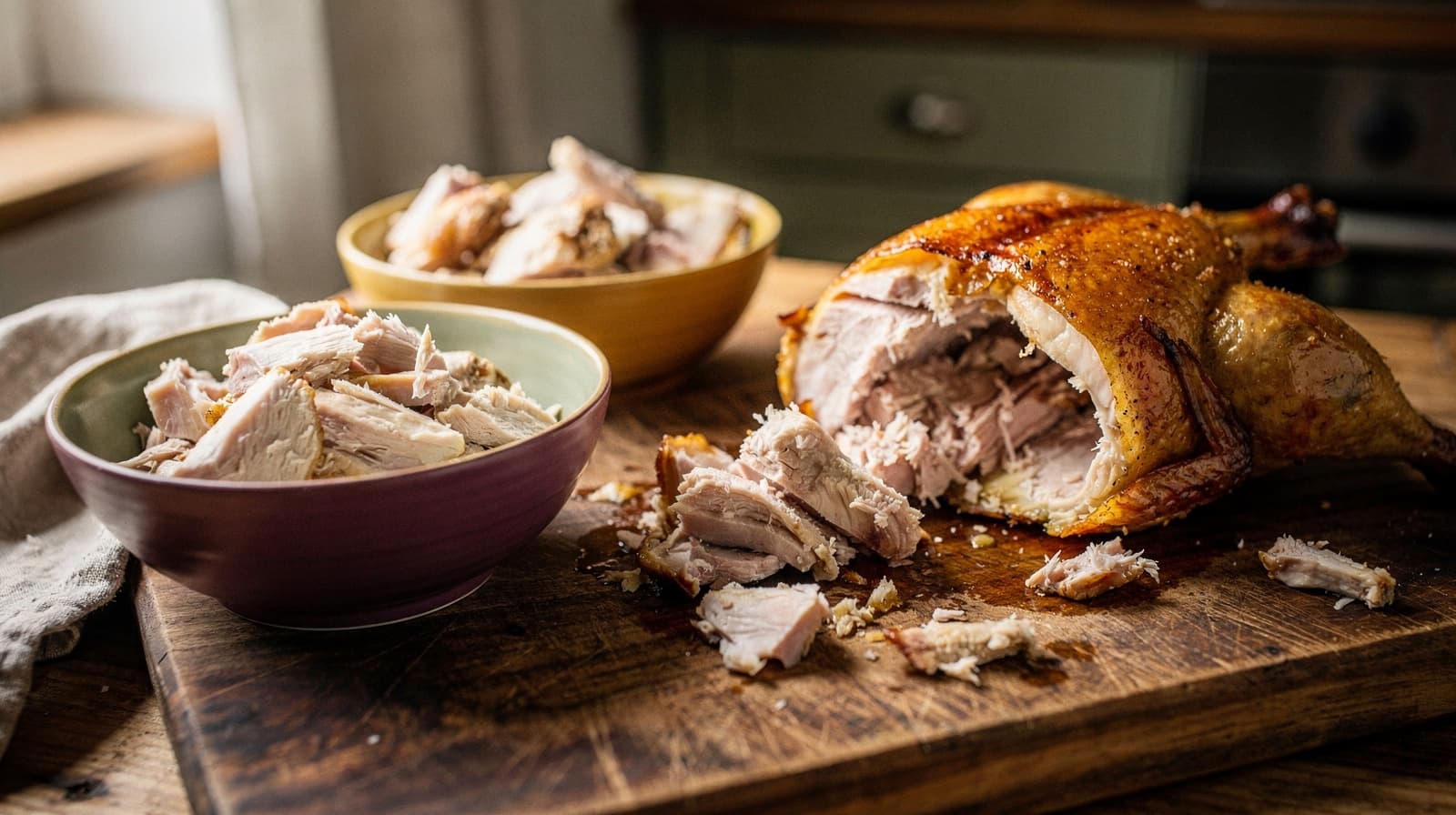
Chicken thighs (baked): Season with salt, pepper, olive oil. Bake at 400°F for 30-35 min. Use all week — slice for salads, shred for tacos, eat whole with vegetables.
Ground beef or turkey (browned): Cook with onion and garlic, season simply. Use in tacos, pasta, grain bowls, or stuffed peppers.
Hard-boiled eggs: Cover eggs with cold water, bring to a boil, turn off heat and sit 10-12 minutes. Ice bath to stop cooking. Peel now or peel as you eat — either works.
Tofu (baked): Press dry, cube, toss with soy sauce and sesame oil, bake at 400°F for 25 min until crispy. Great for stir-fries, bowls, and salads.
Salmon fillets: Season, bake at 400°F for 12-15 min. Best eaten within 3 days.
Grains
Rice: Standard absorption method. 1 cup rice = 2 cups water, bring to boil, cover and simmer 18 min. Makes 3 cups cooked. Keeps 5 days in the fridge.
Quinoa: Same ratio as rice, 15-minute simmer. High protein, great in bowls and salads.
Farro: 1 cup farro = 2.5 cups water, 30-minute simmer. Nutty, chewy, great in salads.
Pasta (par-cooked): Cook just under al dente, drain, toss with a little olive oil. Finishes cooking in whatever sauce or skillet you put it in.
Vegetables
Roasted: Broccoli, cauliflower, carrots, Brussels sprouts, sweet potato, zucchini. All roast at 400-425°F in 20-30 minutes. Cut uniform sizes, don't crowd the pan.
Blanched: Green beans, asparagus, snap peas. Boil 2-3 minutes, ice bath, done. Quick to eat all week.
Raw prepped: Salad greens (washed, dried, stored in a towel in the fridge), sliced peppers, shredded cabbage, cherry tomatoes (rinse before eating, not before storing).
Sauces and dressings
A versatile sauce makes everything taste intentional. Pick one or two:
- Tahini sauce: Tahini + lemon juice + garlic + water. Goes on everything.
- Lemon vinaigrette: Olive oil + lemon juice + Dijon + garlic + salt.
- Peanut sauce: Peanut butter + soy sauce + lime + ginger + honey. For stir-fries and noodles.
- Simple tomato sauce: Crushed tomatoes + garlic + olive oil + basil. 20 minutes, pasta ready all week.
Fridge storage: how long does prepped food last?
| Item | Days in Fridge |
|---|---|
| Cooked chicken | 4-5 days |
| Cooked ground beef | 4 days |
| Cooked grains (rice, quinoa) | 5-6 days |
| Roasted vegetables | 4-5 days |
| Hard-boiled eggs (in shell) | 7 days |
| Hard-boiled eggs (peeled) | 5 days |
| Dressings/vinaigrettes | 5-7 days |
| Washed salad greens | 3-5 days |
| Prepped raw vegetables | 3-5 days |
Anything you can't use by day 4: freeze it. For a complete guide to batch-cooking specifically for the freezer, see our freezer meal planning guide.
What to freeze from meal prep
Some things freeze better than others:
Freeze well: Cooked grains, browned ground meat, cooked chicken (shredded is best), soups and stews, cooked beans.
Don't freeze: Dressed salads, raw vegetables, eggs, dairy-heavy sauces.
Label everything with the freeze date and contents. Use within 3 months for best quality.
The minimal version: 30-minute prep
Can't do 90 minutes? Here's the bare minimum that still makes a difference:
- Wash and chop salad vegetables: 10 min
- Cook a pot of grain: 15 min hands-off
- Marinate a protein (not cooking it yet, just prepping): 5 min
That's 30 minutes. Not a full prep, but enough to make Monday night easier.
Using your recipe library for meal prep
The best meal prep sessions start with a plan. If you're new to planning meals ahead, our beginner's guide to meal planning is the right foundation before diving into prep.
Here's the workflow:
- Open your recipe app on the weekend
- Pick 4-5 recipes for the week
- Check what ingredients overlap (a recipe that uses roasted sweet potato might share prep with another that uses the same)
- Build your prep list around shared components
- Generate your grocery list from the recipe selections
In RecipeClip, you can mark recipes to a weekly plan and the app generates a unified grocery list across all of them — so you don't buy 4 bundles of cilantro when 1 will cover all your recipes. Pair this with an organized pantry and you'll always know exactly what to buy and what you already have.
Lowering the bar is the point
The goal of meal prep is to make Tuesday night easier when you're tired.
A batch of rice and pre-washed greens isn't exciting. But it means Tuesday dinner is "add chicken and dressing" instead of "start from scratch." That 15-minute dinner instead of 40 minutes is what makes the habit stick.
Start small. One grain, one protein, one vegetable. Build up as the habit settles.
If you only do one thing this Sunday, cook a pot of grain. Everything else builds on it. When you're ready to plan the week around it, RecipeClip scales servings and rolls your chosen recipes into one grocery list.