Meal Planning When Nobody Eats at the Same Time
A meal planning approach for households where practice, work shifts, and homework mean dinner happens in three separate waves.
One kid has practice until 6:30. Another eats at 5:00 because homework starts at 6:00. One parent gets home at 5:30, the other at 7:15. Standard meal planning assumes everyone sits down together at a fixed hour, and most households haven't done that since the kids started school sports.
Planning for staggered schedules isn't about finding one dish everyone eats at once. It's cooking a single time and serving across a two- or three-hour window without the last eater getting the worst dinner.
Cook for hold, not for a moment
Pick dishes that hold or improve over a few hours instead of dishes that peak the second they leave the pan. Most weeknight cooking, a quick sauté or anything meant to be crisp, is built for immediate eating and dies under a hold.
Braises, stews, chili, and soups improve over 1-3 hours on low heat or in a slow cooker on warm. A pot roast is better at hour two than it was at the moment it finished. That's the opposite of most quick-dinner advice, and it's what a staggered household needs.
Roasted meat holds about an hour, tented in foil in a 200°F oven, and gets worse after that. Rice and grains sit for hours in a rice cooker on warm or a covered pot without drying out. What fails is anything crisp: fried food, anything with a crust, a stir fry cooked to be eaten right then.
Build dinner around a base that reheats per-plate
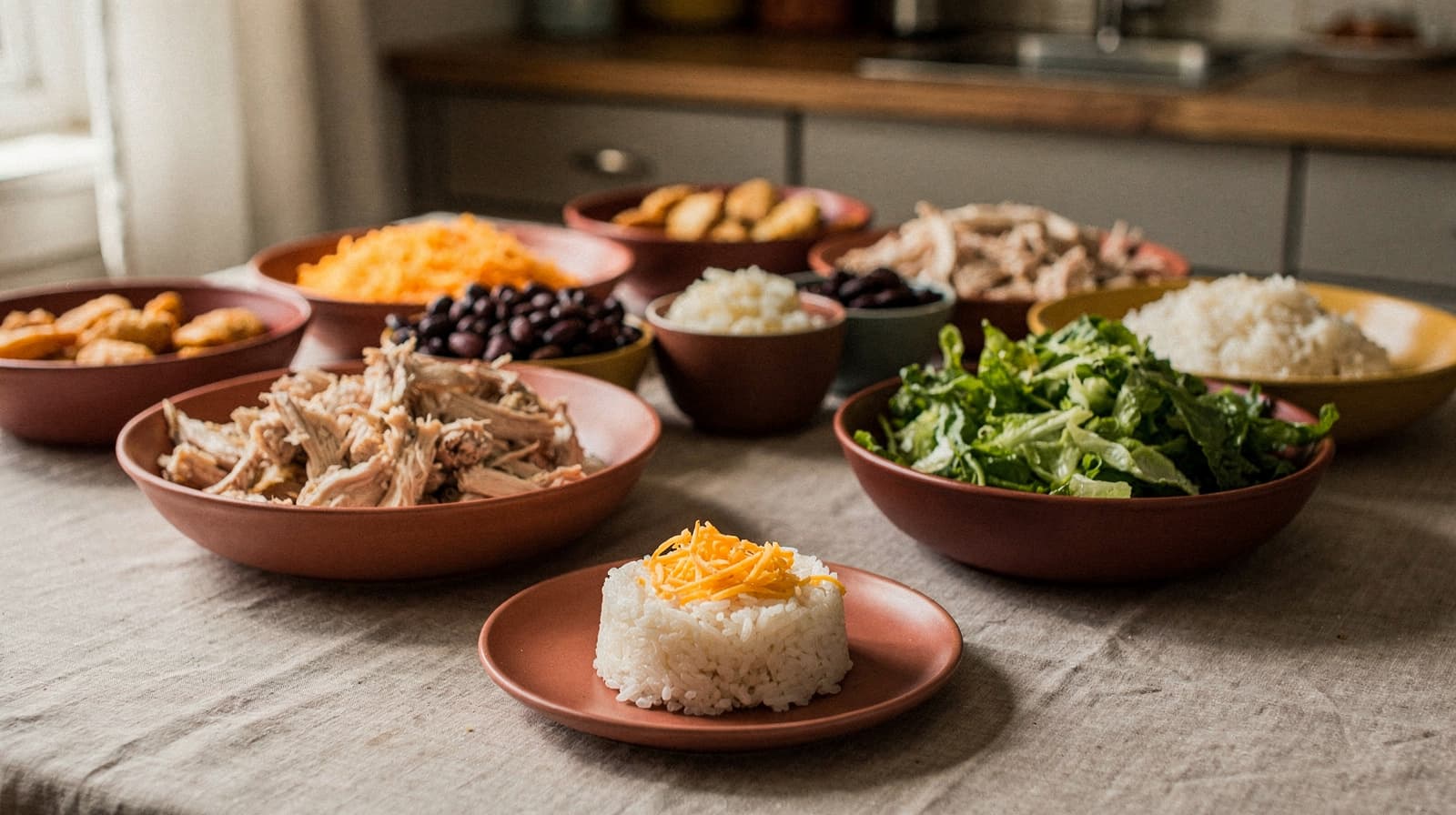
Don't plate the whole meal at once. Keep the components apart and let each person build a plate when they sit down. Chili stays on low all evening, rice holds in the cooker, toppings sit out or go in the fridge depending on what they are. Person one eats at 5:00 and person four eats at 7:30, and neither is eating a re-microwaved leftover.
This is the same component-based thinking that works for picky eaters and solo cooking, just applied to timing instead of taste. If your household also has different food preferences layered on top of different schedules, our guide to dinners that work when someone won't eat anything you cook pairs well with this approach.
What to reheat and what to make fresh per person
A few things have to be cooked fresh for the late eater, even inside an otherwise batch-cooked dinner.
- Eggs, fried food, and delicate proteins like fish go downhill within minutes. Cook them per person
- Pasta does better pulled a minute early and tossed with sauce per serving. Fully cooked and reheated, it's mush
- Green beans and broccoli keep their bite if you blanch them ahead and flash them in a hot pan per plate, instead of leaving them in a pot for two hours
- Bread, rice, and grains hold on their own and need no per-person attention at all
Set one anchor meal a week, not seven
If schedules clash most nights, stop trying to force seven shared dinners. Pick the one or two nights that genuinely work for a sit-down, usually a weekend or whichever weeknight has the least going on, and run the rest as staggered self-serve from a shared pot.
That moves the goal from nightly togetherness to dinner getting cooked and eaten warm, which is the part that carries a week. For building an entire week around the schedule you have rather than the one you'd like, our guide to meal planning for a family of four covers structuring the whole week, not just the timing problem.
Plate one portion aside before the rush starts
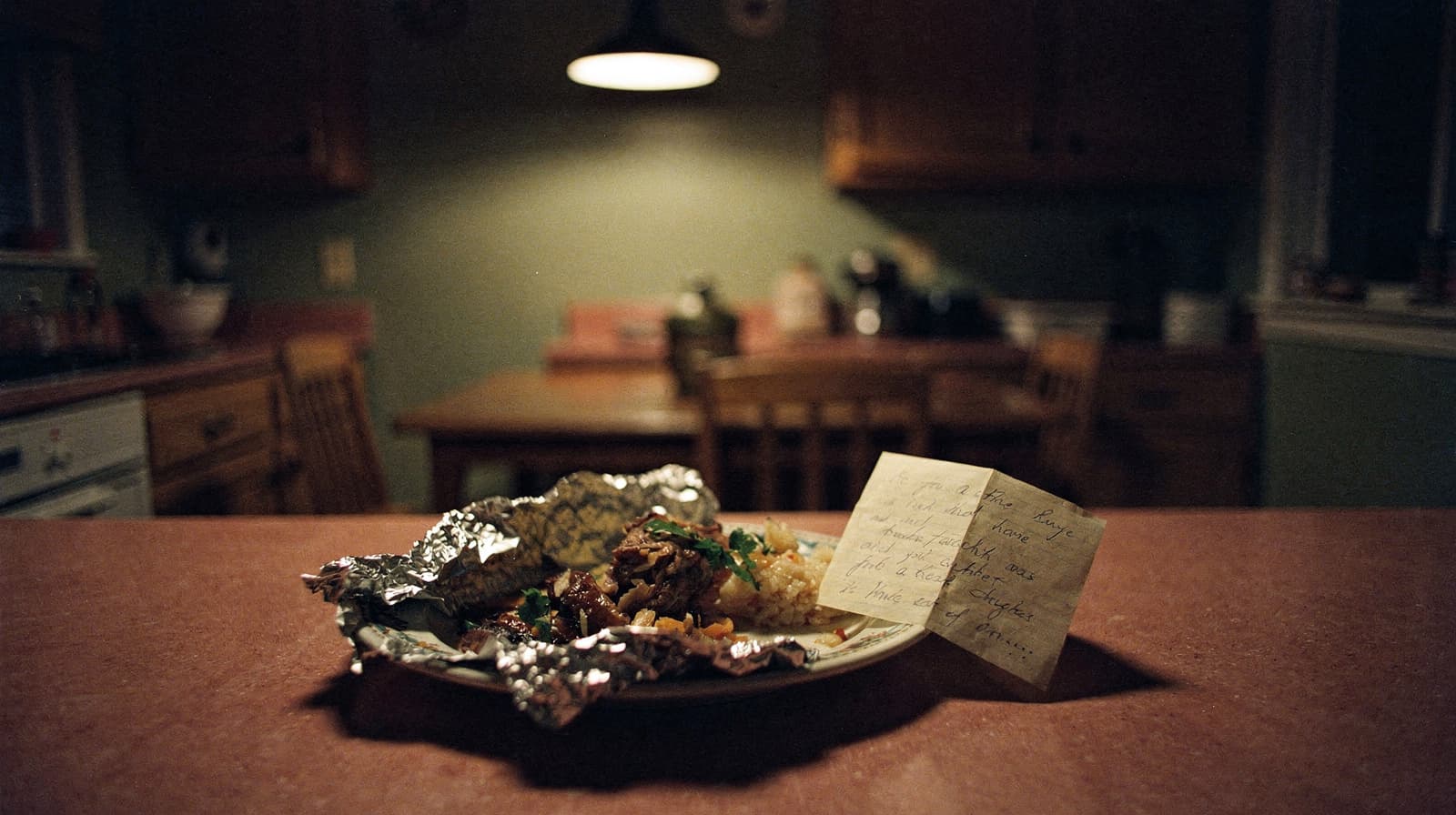
Serve dinner buffet-style over three hours and the first person through takes a heaping bowl, or the shredded cheese runs out before the last plate gets built. The fix is to set aside one full portion in a covered container the moment the food is ready, before anyone serves themselves. The person walking in at 7:30 then isn't scraping the bottom of a pot three people have already been through.
Ten seconds of work. It solves the one complaint every staggered household has, which is that the last eater always gets the worst dinner.
Communicating what's for dinner without a group text every night
When dinner happens at three different times, people need to know what's on the stove and whether it's still hot without asking. A note on the fridge, a line in the family chat, or a shared plan everyone can open saves a dozen "what's for dinner" texts sent from a car.
RecipeClip's meal plan calendar handles this in a staggered household. Build the week's dinners once and whoever's eating at 5:00 or 7:30 checks what's planned without starting a text chain. Nobody has to schedule exact eating times; everyone just knows what's cooking.
Pick one dish this week that's built to hold, a chili or a braise or a pot of soup, and leave it on low through your household's whole dinner window instead of cooking the same meal three times.