A Pasta Formula That Replaces Forty Pasta Recipes
One ratio for building pasta dinners from whatever is in your fridge, so you stop hunting for a specific recipe every Tuesday.
One pound of pasta, a cup of starchy cooking water, three tablespoons of fat, and whatever protein and vegetables you have. That's the formula behind most weeknight pasta dishes worth eating, and once it's memorized you stop needing a recipe for pasta night at all.
Cookbook authors write pasta recipes as though every dish is a distinct invention, but the mechanics repeat constantly. Cacio e pepe, a simple garlic-and-oil pasta, and a lemony spring pasta with peas are the same technique wearing different clothes.
The ratio
For 4 servings: 1 pound of dried pasta, 3-4 tablespoons of fat (olive oil, butter, or a mix), 1-1.5 cups of protein or vegetables (or both), 1/2 to 1 cup of reserved pasta water, and 1/2 to 1 cup of cheese if you're using it. Salt the pasta water like the sea, roughly 2 tablespoons per gallon.
The pasta water is the part people skip and shouldn't. It's cloudy with starch that the pasta shed while cooking, and that starch is what turns oil and cheese into a sauce that clings instead of a puddle at the bottom of the bowl. Reserve a full cup before you drain, even if the recipe only calls for a splash. You can always pour extra down the sink; you can't get it back once it's gone.
Building the base
Start the fat in a pan large enough to eventually hold all the pasta. Olive oil with garlic is the most common base; butter with shallot is richer; a spoonful of gochujang or miso melted into oil makes a completely different dish from the same three steps.
Cook your protein or vegetables in that fat while the pasta boils. Ground sausage needs about 8 minutes to brown. Frozen peas need 90 seconds. Canned white beans just need to warm through, maybe 3 minutes. Timing everything to land together is the only real skill involved, and it comes from doing it a dozen times, not from reading about it.
The four fat bases, and what each signals
Which fat you start with sets the ceiling for the whole dish. Choose it on purpose instead of grabbing whatever bottle is closest to the stove.
- Olive oil with garlic: the lightest and most forgiving, works with almost any protein or vegetable, competes with nothing
- Butter, browned a shade before anything else goes in: nuttier, and the right call with mushrooms, sage, or lemon at the end
- Half butter, half oil: butter's flavor with a higher smoke point, for when you're browning something hard before the pasta joins it
- Rendered fat from the protein itself: bacon fat, sausage drippings, the slick left after browning ground meat
That last one is usually the best of the four. It already carries flavor the others don't, and using what's in the pan is one less ingredient to think about.
Where the protein comes from
The formula doesn't care what protein you use. That makes it the fastest way to use up leftovers sitting in the fridge.
- Shredded rotisserie chicken, stirred in off the heat so it doesn't dry out further
- Crumbled Italian sausage, browned in the pan before anything else goes in
- A can of white beans or chickpeas, rinsed, for a meatless night
- Leftover roasted vegetables from two nights ago, reheated in the fat
- Canned tuna, added at the very end with a squeeze of lemon
- Bacon, cooked first, with the fat used as the base instead of olive oil
Pick one. Two is fine on a night you're feeling ambitious. Three starts to compete for attention on the plate and the dish stops tasting like anything specific.
Finishing it correctly
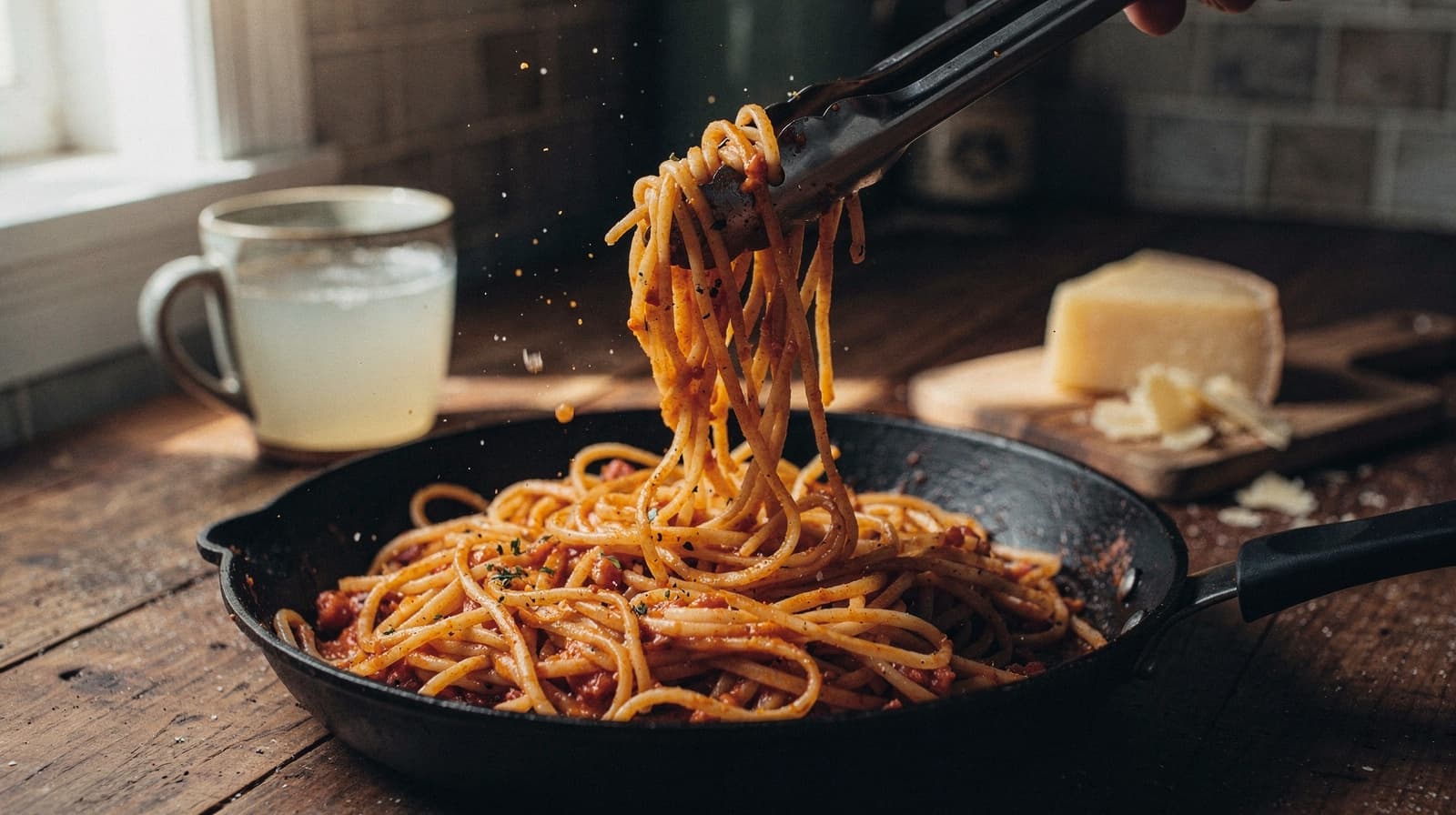
Add the drained pasta directly to the pan with your protein and fat, off the heat or on low. Pour in a splash of the reserved pasta water and toss. Add cheese now if you're using it (grated, never pre-shredded, which is coated in anti-caking starch that keeps it from melting smoothly). Toss again, adding more pasta water a tablespoon at a time until the sauce coats the noodles without pooling.
The whole process from turning on the pasta water to plating takes about 20 minutes, which puts pasta night solidly in the same speed bracket as most one-pan dinners, minus the sheet pan cleanup.
Adjusting for what's in the pot
Match the shape to the sauce. Long strands like spaghetti or linguine want thinner, oil-based sauces that coat rather than cling. Ridged tubes like rigatoni or fusilli trap chunky sauce and bits of protein inside the curves, so a sausage-and-vegetable combination ends up in the noodle instead of on the bottom of the bowl. Orzo and ditalini belong in the brothier version of this formula, where the pasta water ratio skews higher and dinner lands closer to a stew.
Get the quantity right too. A dry 2-ounce portion (about a cup and a half cooked) is a standard main course. Feeding bigger eaters, or want leftovers built in? Plan 3 ounces dry per person and scale the fat, protein, and pasta water with it so the ratio holds.
When the formula breaks down
Cream sauces and long-braised ragùs don't fit this pattern; they're their own category and worth learning separately if you cook them often. Baked pasta dishes like lasagna are a different formula entirely, closer to casserole logic than sauté logic.
The formula also assumes dried pasta. Fresh pasta cooks in 2-3 minutes instead of 8-12, sheds less starch into the water, and needs the fat-and-water emulsion built a little looser as a result. Worth knowing before you swap one for the other mid-recipe.
Stocking for pasta night on autopilot
Because the formula only needs a fat, an aromatic, a protein, and pasta water, the ingredients that make it possible are mostly shelf-stable. A well-stocked pantry with dried pasta, olive oil, garlic, canned beans, and a wedge of parmesan covers a pasta dinner on a night when the fridge is otherwise empty.
If you find a specific combination you like, jot it down so you can repeat it instead of reconstructing it from memory next month. Saving the ratio and your favorite protein pairings in RecipeClip means the next blank Tuesday isn't a blank page, it's a list of six combinations you already know work.
Next pasta night, write down the fat, the protein, and the finish you used. Three lines. That's the start of the list.