What a 30-Minute Dinner Actually Requires
Most 30-minute recipes take 50 in practice. Here's what genuinely fits in half an hour and the prep habits that make the clock honest.
A recipe titled "30-minute dinner" that starts with "finely dice one onion" has already lied to you. Dicing an onion well takes three to five minutes on its own, and that's before you've touched the garlic, the peppers, or whatever else needs chopping before the pan even heats up. The 30 minutes in most recipe titles counts active cooking time, not the prep that has to happen first, which is how a recipe promising half an hour routinely eats fifty.
A dinner that fits in 30 minutes with the timer running from the moment you open the fridge needs a narrower set of techniques, plus a couple of habits that have nothing to do with the recipe itself.
The clock starts when you open the fridge, not when the pan heats up
Recipe writers clock "cook time" separately from "prep time," and the title advertises the smaller number. If your window is a real half hour, because a kid eats at 6:30 or you're back out the door at 7, count all of it. Pulling things out of the fridge, chopping, measuring, and the rinsing of the cutting board you need again in four minutes.
Count honestly and the list of dishes that fit collapses to ones with minimal knife work, one or two vessels, and nothing that has to rest or marinate.
Techniques that fit and ones that don't
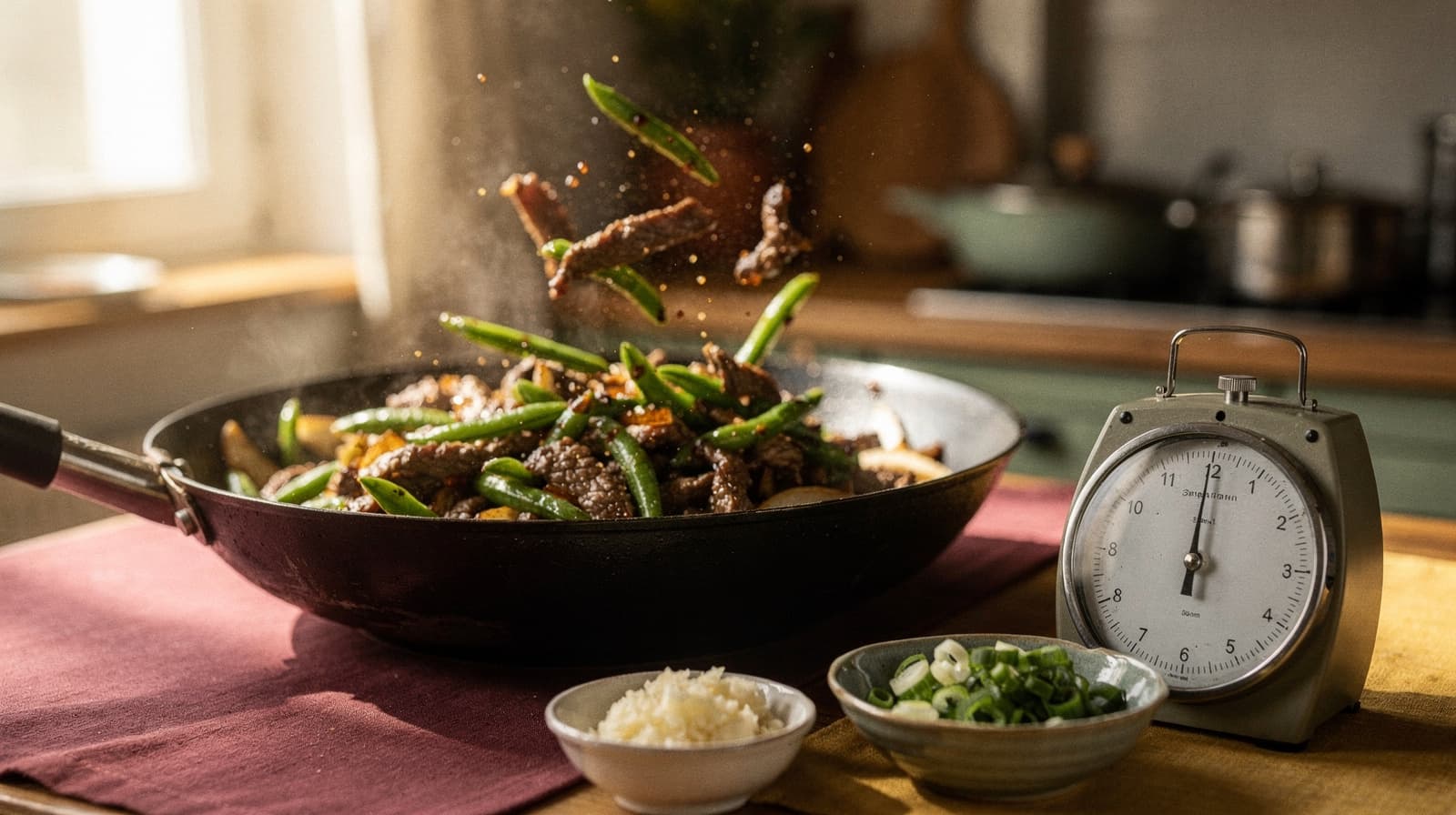
Stir-fries fit, as long as the vegetables are pre-cut or sliced thin enough to cook fast. Everything is through in under 10 minutes once it hits a hot pan, though only if you cook in two batches; crowd the wok and it steams. Sheet pan dinners fit when the protein is thin, chicken thighs rather than a whole roast, and the vegetables are cut to an inch or under. Call it 20 to 25 minutes at 425°F.
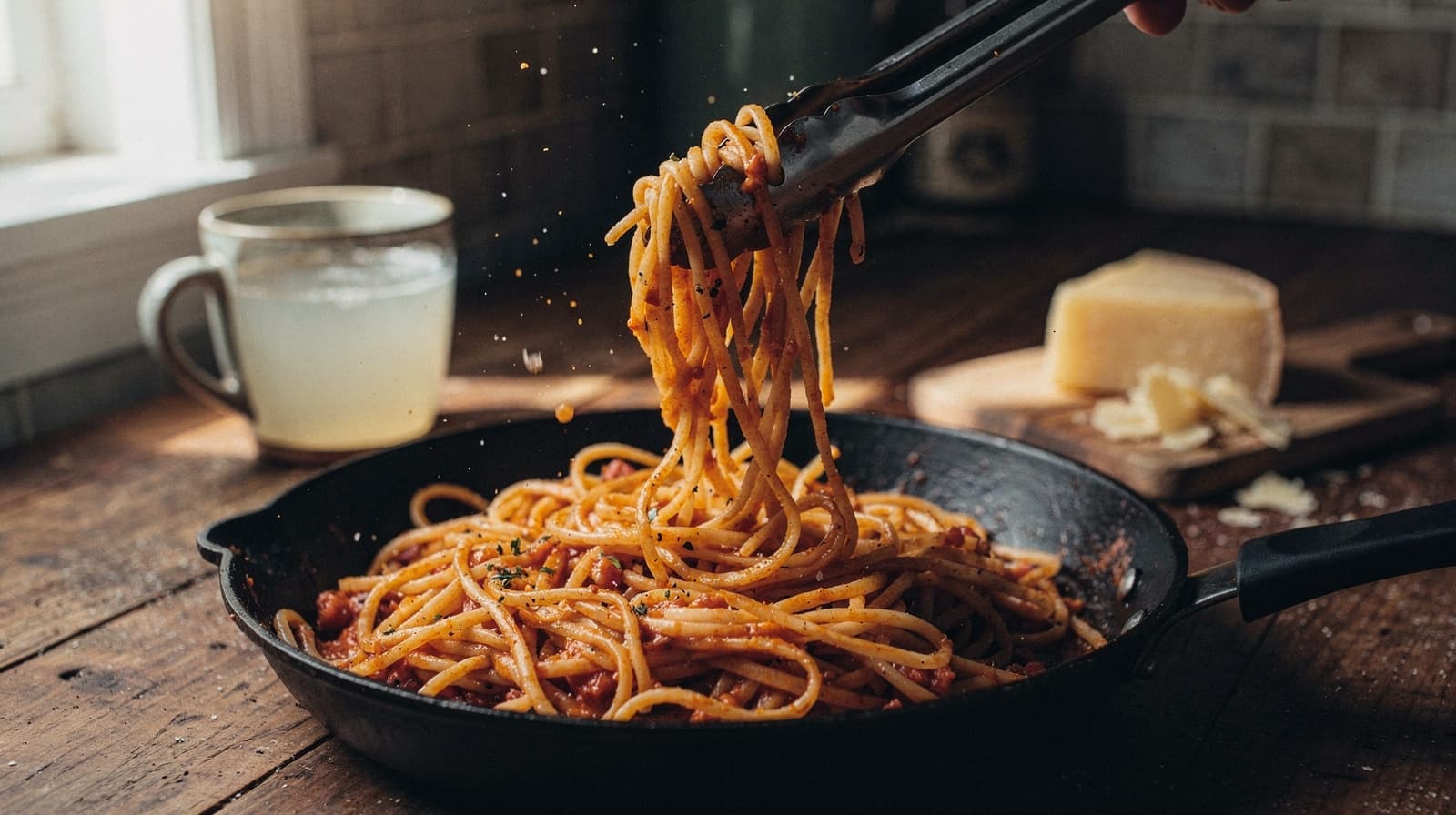
Pasta with a quick sauce works because the water and the sauce run in parallel instead of one after the other. Grain bowls work only if the grain is already cooked, which turns a 30-minute dinner into a 10-minute one.
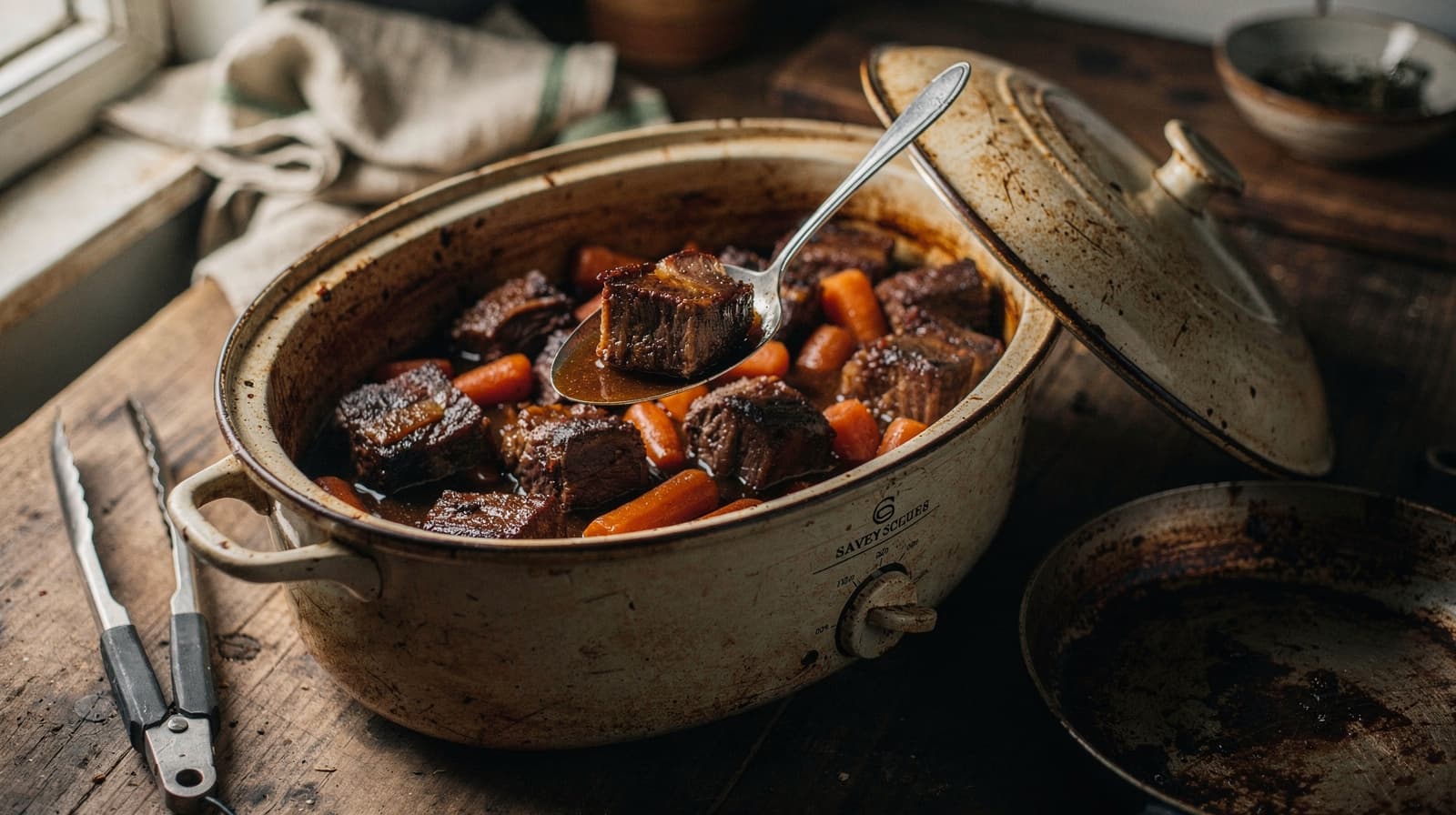
Braises, roasts, anything requiring a marinade with real contact time, and most baked goods don't fit and shouldn't be forced into a 30-minute framing. A recipe that says "marinate for at least 2 hours, or up to overnight" followed by "ready in 30 minutes" is describing two very different timelines stitched together.
Prep that happens before the week starts, not before dinner
The honest way to hit 30 minutes on a Tuesday is to have done part of it on Sunday. Forty minutes of washing and chopping at the weekend, stored in containers by type, turns Tuesday's stir-fry prep from eight minutes of knife work into thirty seconds of lids coming off.
Batch-prepped protein does the same job. Cook a tray of chicken thighs or a pot of ground beef once and spend it across two or three dinners. Our guide to batch cooking proteins covers how to do that without dinner three tasting reheated.
Pre-cooked grains work the same way. A pot of rice or farro made once and refrigerated turns any grain bowl into an assembly job rather than a cooking job.
The pantry that makes 30 minutes realistic
A stocked set of sauces and aromatics buys back more time than any technique. Soy sauce, a chili paste, a jar of pesto, canned tomatoes, and pre-minced garlic and ginger (frozen or jarred is fine) mean you never start from zero on flavor. Our rundown of essential pantry staples has the fuller list. The speed-specific subset is anything that gets you a sauce in under two minutes without leaving the house.
- Soy sauce or tamari, for a fast stir-fry sauce base
- A jarred chili paste or hot sauce with real depth, not just heat
- Canned crushed tomatoes, for a pasta sauce that comes together in the time the pasta cooks
- Frozen or jarred minced garlic and ginger
- A neutral oil with a high smoke point, for anything going in a hot pan
The protein that decides whether 30 minutes is realistic
Protein choice is the biggest lever you have. Thin-cut chicken breast, chicken thighs, shrimp, ground meat and firm tofu all cook through in under 10 minutes on heat. A bone-in breast, an inch-and-a-half pork chop, or anything that has to come up slowly to an internal temperature won't fit the format however clever the rest of the recipe is.
Shrimp is the fastest of the lot. Buy it frozen (most shrimp at the counter was frozen anyway, just thawed for display) and it comes back under cold running water in about five minutes. Two to three minutes a side in a hot pan is plenty. The window between done and rubbery is roughly 30 seconds wide, so pull it while you still think it needs another moment.
One pan, one pot, one sheet
The other lie in "30-minute" cooking is the washing up. A recipe using a saucepan for the starch, a skillet for the protein and a third pan for the vegetables triples both the cleanup and the number of things you're watching at once, even when each part cooks fast on its own. Three pans also means three things going wrong while you're looking at one of them.
Pick recipes built around a single vessel. A sheet pan, one skillet, or a one-pot pasta where the starch cooks in the sauce liquid.
If you want to know at a glance whether a saved recipe fits a 30-minute night, tag it yourself rather than trusting the title. RecipeClip lets you tag saved recipes with your own labels, so a personal "actually 30 minutes" tag can override whatever the original source claimed, based on how long it took you the first time you made it.