High-Protein Breakfasts That Aren't Eggs
Real high-protein breakfast options with actual gram counts for anyone who is sick of eggs, allergic, or just out of them.
You're allergic, or you're out, or you've eaten eggs four mornings this week and the thought of a fifth pushes you toward cereal. Eggs are the default answer to "how do I get protein before noon," and most people have no backup. This is the backup, with gram counts attached.
Greek yogurt is doing more work than you think
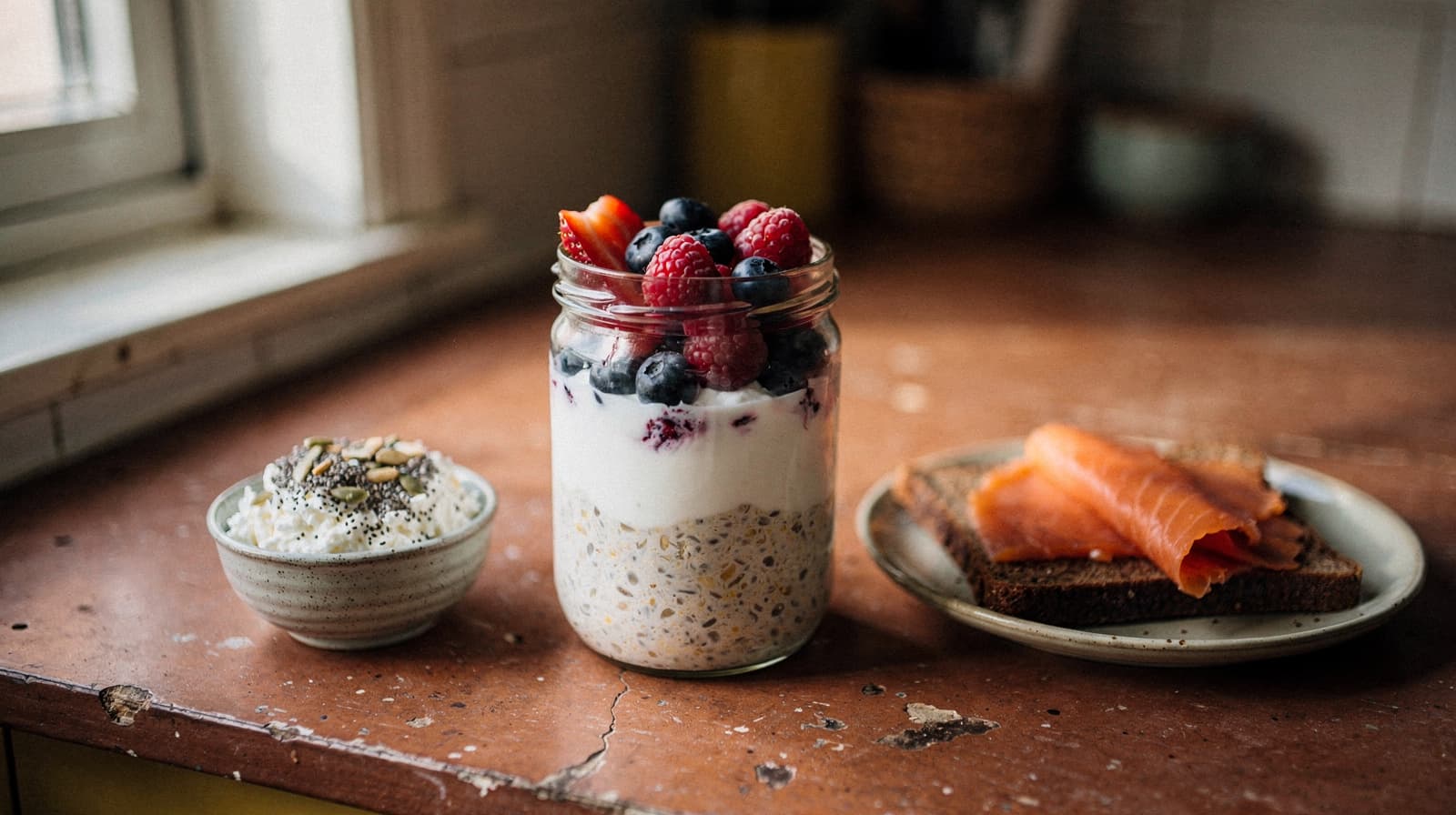
Plain nonfat Greek yogurt runs 20-23 grams of protein per cup, roughly three whole eggs, minus the pan and the cleanup. The word that matters is "plain." Flavored cups are often half the protein and twice the sugar, so turn the container around and read the panel.
Buy the large tub, not the individual cups. Portion it into 1-cup containers on Sunday and keep toppings separate so nothing is soggy by Wednesday. A cup with a tablespoon of peanut butter (4 grams protein, 8 grams fat) and a handful of berries lands at 27-28 grams and assembles faster than pouring cereal.
If you're the type who eats the same thing every day without complaint, this is your easiest win. If you get bored fast, rotate toppings weekly instead of daily: cinnamon and walnuts one week, cocoa powder and banana the next, so you're not making five separate decisions every morning.
Cottage cheese, reconsidered
Cottage cheese has an image problem. It also carries 24-28 grams of protein per cup, more than Greek yogurt, for less money per serving in most stores. The curds are what people object to, and a blender solves that in fifteen seconds. Blended smooth with a splash of milk and cinnamon, it tastes like thick yogurt.
Savory works too. Cottage cheese on toast with everything bagel seasoning and sliced tomato is a two-minute breakfast that's closer to 20 grams of protein once you count the bread. If you're prepping ahead, cottage cheese doesn't freeze well, but a tub lasts 1-2 weeks in the fridge, which is long enough to build a real habit around it without daily shopping.
Protein oats you make once
Regular oats carry about 5 grams of protein per half-cup dry, which is not much. The fix isn't a specialty product, it's arithmetic. Cook that half-cup in milk instead of water (roughly 8 grams), stir a scoop of protein powder in off the heat (20-25 grams depending on brand), and you're at 33-38 grams before toppings.
Oatmeal is the best format for batch prep because it reheats without turning into something else. Make a big pot Sunday night, portion into five containers, done through Friday. Three things to know first:
- Add the protein powder after cooking, off heat. High heat can make some protein powders turn gluey or clump.
- Use a neutral or vanilla powder if you're rotating toppings, so it doesn't fight with fruit or nut butter.
- Overnight oats work the same math cold. Combine oats, milk, and powder in a jar the night before, no stove required.
If you're already building a Sunday prep routine around this kind of batching, RecipeClip's meal-plan calendar lets you drag a big-batch oatmeal recipe onto five weekday breakfast slots at once instead of retyping the plan every week, and its nutrition tracking totals the protein automatically so you're not doing this math by hand every morning.
Tofu scramble, for the genuinely allergic
If eggs are off the table for medical reasons rather than boredom, tofu scramble is the closest texture match. A half-block of firm tofu, about 200 grams, carries 16-18 grams of protein. Press it, crumble it into a hot pan with turmeric for color plus garlic powder and nutritional yeast for flavor, and cook it like scrambled eggs, five to seven minutes.
It also reheats better than eggs, which go rubbery in a microwave in about forty seconds. Tofu scramble stays close to its original texture for two to three days, so a Sunday batch covers most of the week. Add black beans, 7 grams per half cup, and you clear 24.
Leftover dinner is a legitimate breakfast
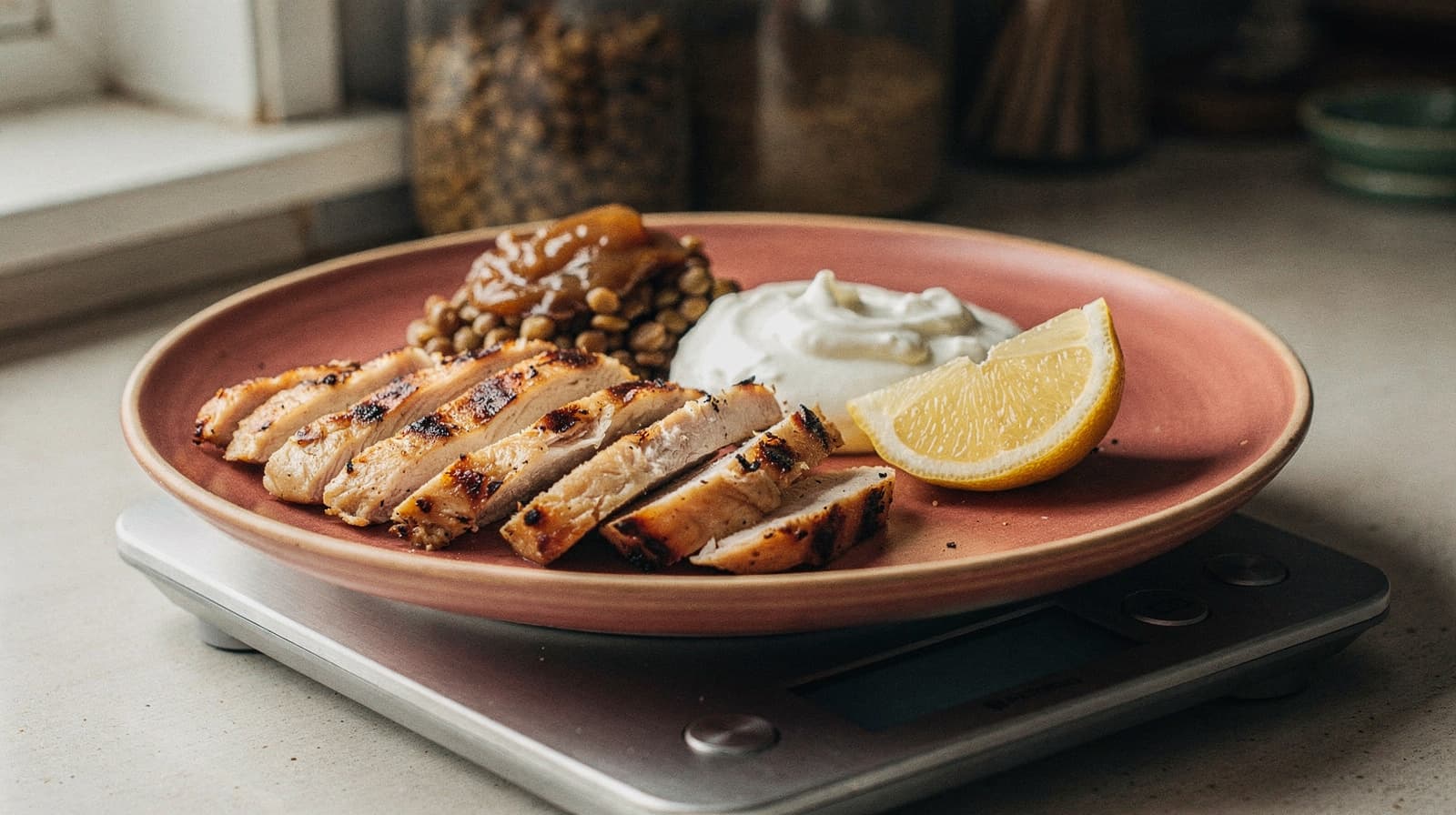
No recipe here. Last night's chicken thighs, a scoop of lentils, half a steak from Tuesday. Eating dinner at 7am reads as a planning failure, but dinner portions are already built around 25-40 grams of protein, which makes them the densest thing in the fridge.
Three ounces of chicken breast is 26 grams. A cup of leftover lentil soup is about 18. Neither asks you to treat breakfast as its own category of food. That's the premise behind prep-ahead meal planning: cook once, eat from it twice, and stop making a fresh decision at every meal.
Smoothies, with real macros instead of vibes
Smoothies get a bad reputation because most people build them around fruit and call it a protein source. Fruit is not a protein source. A smoothie only hits real numbers when it's built deliberately:
- 1 scoop whey or plant protein powder: 20-25 grams
- 1 cup milk or unsweetened soy milk: 7-8 grams (soy milk specifically; almond milk is closer to 1)
- 1/2 cup Greek yogurt: 10-12 grams
- 1 tablespoon nut butter: 3-4 grams
- 1 cup spinach and frozen fruit: roughly 1-2 grams, but this is where the vitamins and fiber come from
Stack the first three and you're at 37-45 grams of protein in one cup, before you've added anything for flavor. The prep-ahead version is smoothie bags: portion the solid ingredients (spinach, frozen fruit, a pre-measured scoop of powder in a small container) into freezer bags on Sunday, dump one bag plus liquid into the blender each morning. Ninety seconds, no measuring, no dishes beyond the blender cup.
Turkey and chicken sausage
Turkey or chicken breakfast sausage links run 5-6 grams of protein each, so two links land at 11-12. That's modest, which is why they belong on the side of the plate rather than in the middle of it. Two links plus a cup of cottage cheese clears 30 grams, and neither one involves standing over spitting bacon fat at 6am.
Cook a full package on Sunday, 12-15 minutes in a skillet or air fryer, and they reheat from the fridge in under a minute or from frozen in about three. If you're already tracking what's stashed in the freezer so you're not rediscovering a mystery bag of sausage in November, a system like the one in our freezer inventory piece keeps prepped protein from disappearing behind the ice cream.
Building your own rotation
None of these need to happen every day. The people who keep a high-protein breakfast going pick two or three formats, prep them on the same day each week, and rotate. A batch of protein oats, a tub of portioned Greek yogurt, and a bag of smoothie kits covers ten weekday breakfasts off about 45 minutes of Sunday work.
High-protein meal prep covers the lunch-and-dinner half of the same approach, and pulling the ones you like into a RecipeClip collection saves you re-Googling gram counts every few weeks. Pick two formats from this list and buy for them on your next shop.