Potluck Dishes That Survive the Car Ride
A great potluck dish that turns to soup in the back seat isn't a great potluck dish. Here's what actually holds up through transport and reheating.
A salad dressed at home and driven twenty minutes across town arrives wilted, pooled at the bottom of the bowl, and nothing like what it looked like in the kitchen. Nothing was wrong with the recipe. You picked a dish that wasn't built for a car. Potluck cooking is its own skill, because the food has to survive thirty minutes of sliding around a footwell and another hour on a table before anyone puts a spoon in it.
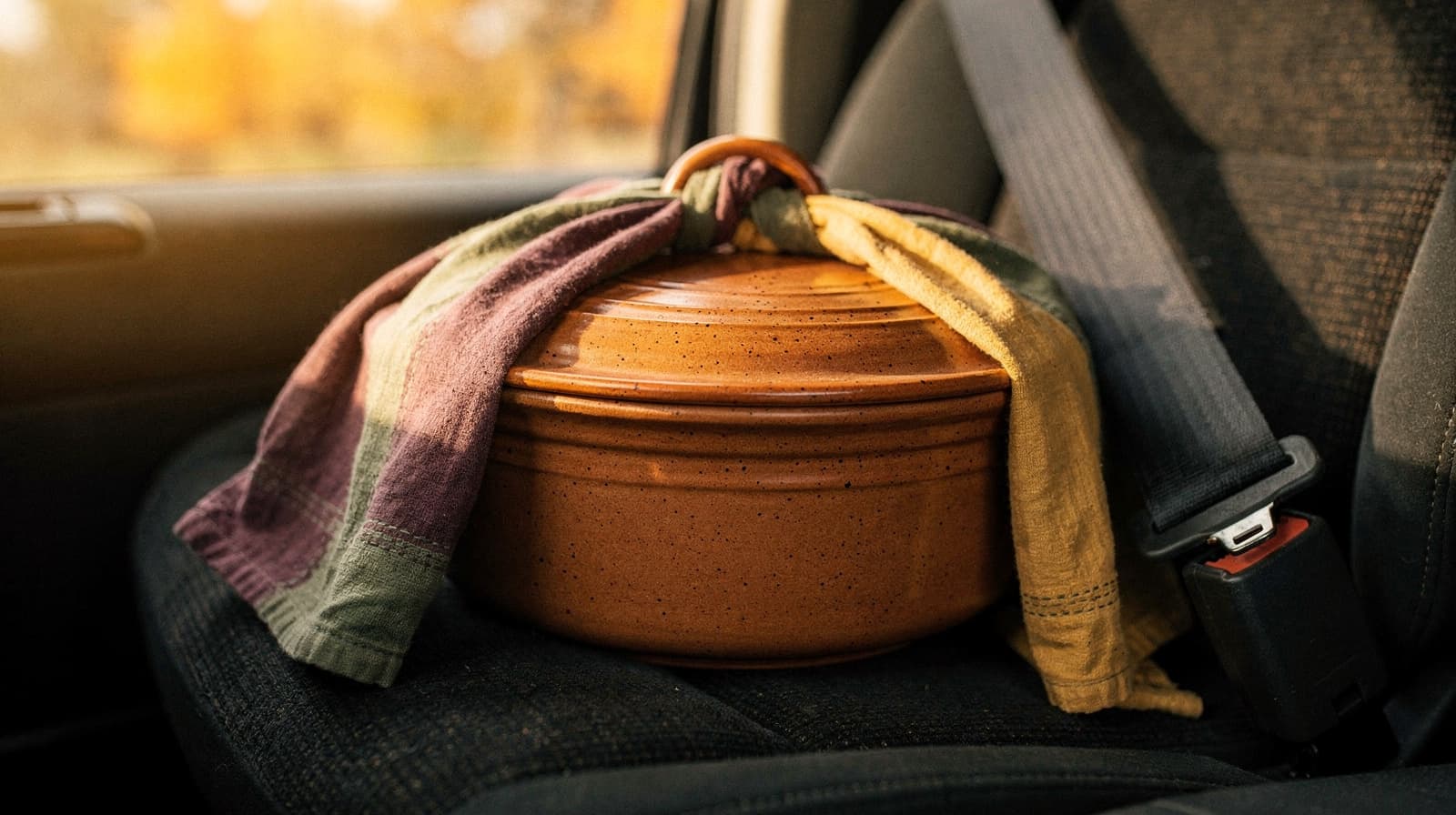
The dishes that work don't separate, don't need assembling on arrival, and taste about as good at room temperature as they do hot.
Casseroles and bakes travel best
A baked casserole, still in its pan, covered with foil, is close to the ideal potluck format. It's already set, so nothing shifts or splits in transit, and a 9x13 straight out of a 350°F oven holds above 140°F for about an hour under foil and a towel. Baked pastas, gratins, and rice-and-bean bakes all qualify.
Don't decant it into a nicer dish. The extra handling is where the spills happen. Bring two tea towels, one under the pan and one over it; a casserole in a footwell slides on the first roundabout no matter how well you wedged it.
Cold salads that don't separate
Not every cold dish wilts. A farro or quinoa base with roasted vegetables and vinaigrette mixed in three hours ahead holds fine, because there's no lettuce to collapse and the grain drinks the dressing instead of drowning in it. Bean and pasta salads work the same way. Dressed in the morning, they're better on arrival than they were in the bowl.
Leafy green salads are the one thing to leave at home. If you're bringing one anyway, carry the dressing in a jam jar and toss it on the table, five minutes before people eat. Lettuce dressed at 4pm for a 5pm meal is already gone.
Dishes that reheat without drying out
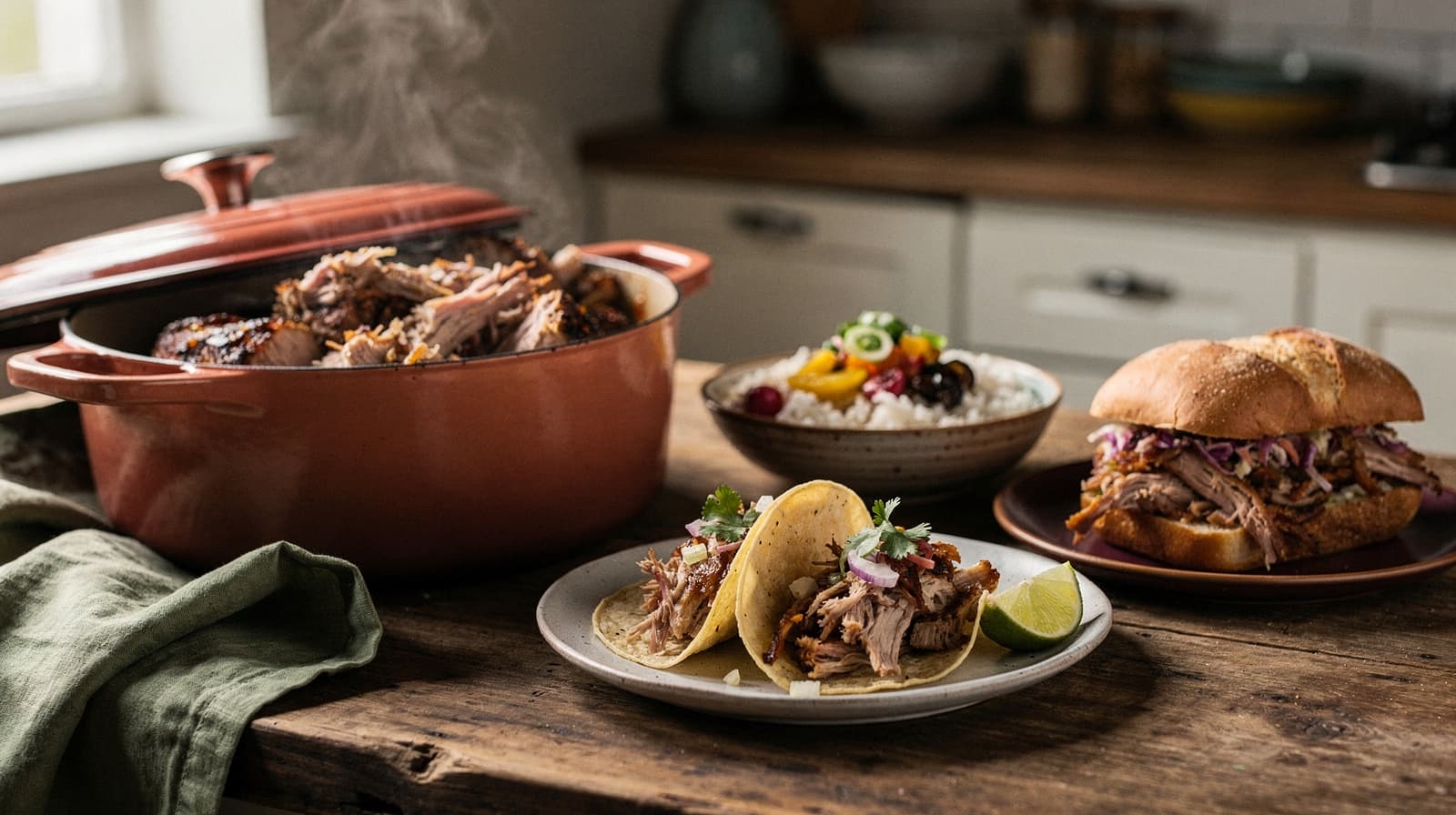
Anything with a sauce reheats better than anything without one, because the sauce keeps moisture against the food while it sits over a chafing dish or in a low oven. Braises, chilis and saucy stir-fries all qualify.
Dry things do not. Plain grilled chicken or unsauced roasted vegetables spend two hours in a slow cooker on warm and come out with the texture of luggage.
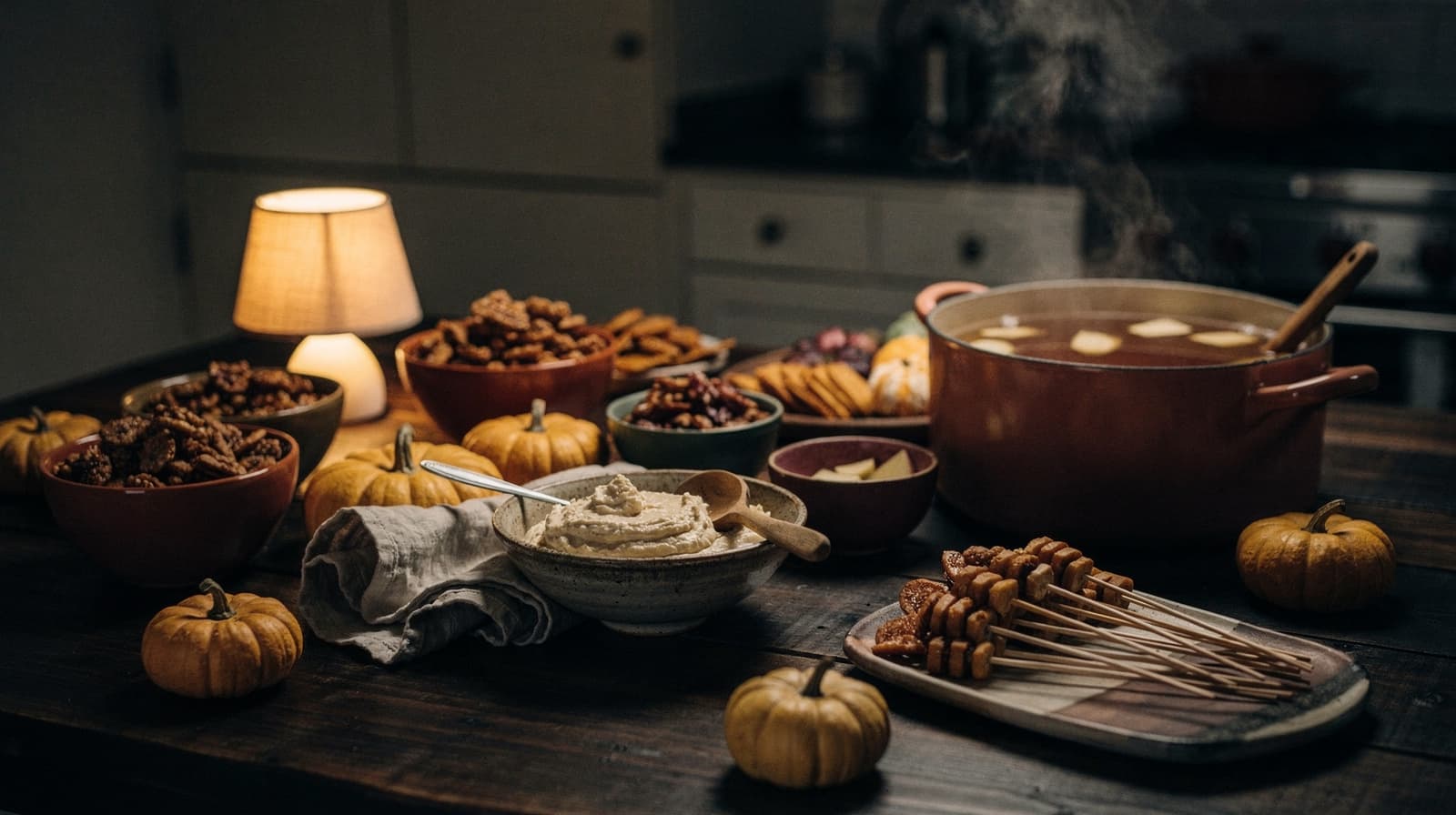
Bring the sauce separately if the dish is dry by nature. Half a cup of vinaigrette poured over roasted vegetables at the table fixes most of it with no cooking involved. Same logic as make-ahead party food, where the dishes worth building a spread around are the ones that hold for hours rather than minutes.
Desserts that don't need refrigeration or a fork-and-plate assembly
Bar cookies, brownies, and sheet cakes travel better than anything that needs to be sliced and plated on arrival, like a layer cake or a pie with a delicate crust. Cut them into squares before you leave the house, transport in the pan, and they're ready to serve the moment they're set down.
Whipped cream, cut fruit that browns, and custard fillings all need refrigeration in transit, and none of them should sit out for the two or three hours a potluck table runs. If a dessert has to stay cold, put it in a cooler with an ice pack rather than betting on a short drive and a cold day.
Packing and labeling, the unglamorous part
A dish that travels well can still arrive a mess if it's packed badly. A few habits that prevent most transport disasters:
- Cover tightly with foil or a lid rated for travel, not plastic wrap alone, which shifts
- Pack the dish flat in the trunk or footwell, not on a seat where braking slides it
- Bring serving utensils; potlucks are notorious for a table full of food and no spoons
- Label anything with common allergens (nuts, dairy, gluten) directly on the dish
- If it needs reheating, note the temperature and time on a card next to the dish
Cooking for a crowd you're not hosting
Potluck quantities are their own small math problem, because you're bringing one dish to a meal whose headcount you don't control. Default to 8 to 10 servings when you don't know the group, which is about one and a half times a family recipe. Note that scaling a recipe isn't multiplying every line by 1.5; salt and chili go up less than proportionally, and bake times barely move. How to scale a recipe covers where the math breaks.
When a dish survives the drive and disappears off the table, write that on the recipe before you forget which version you brought. RecipeClip keeps that note attached to the saved recipe, so next October you're not guessing whether it was the version with the extra sauce.