Unstuffed Cabbage Roll Soup Beats the Rolled Version, and It's Not Close
Same ground beef, rice, cabbage, and tomato as stuffed cabbage rolls, minus an hour of rolling. Here's the technique that makes the soup work.
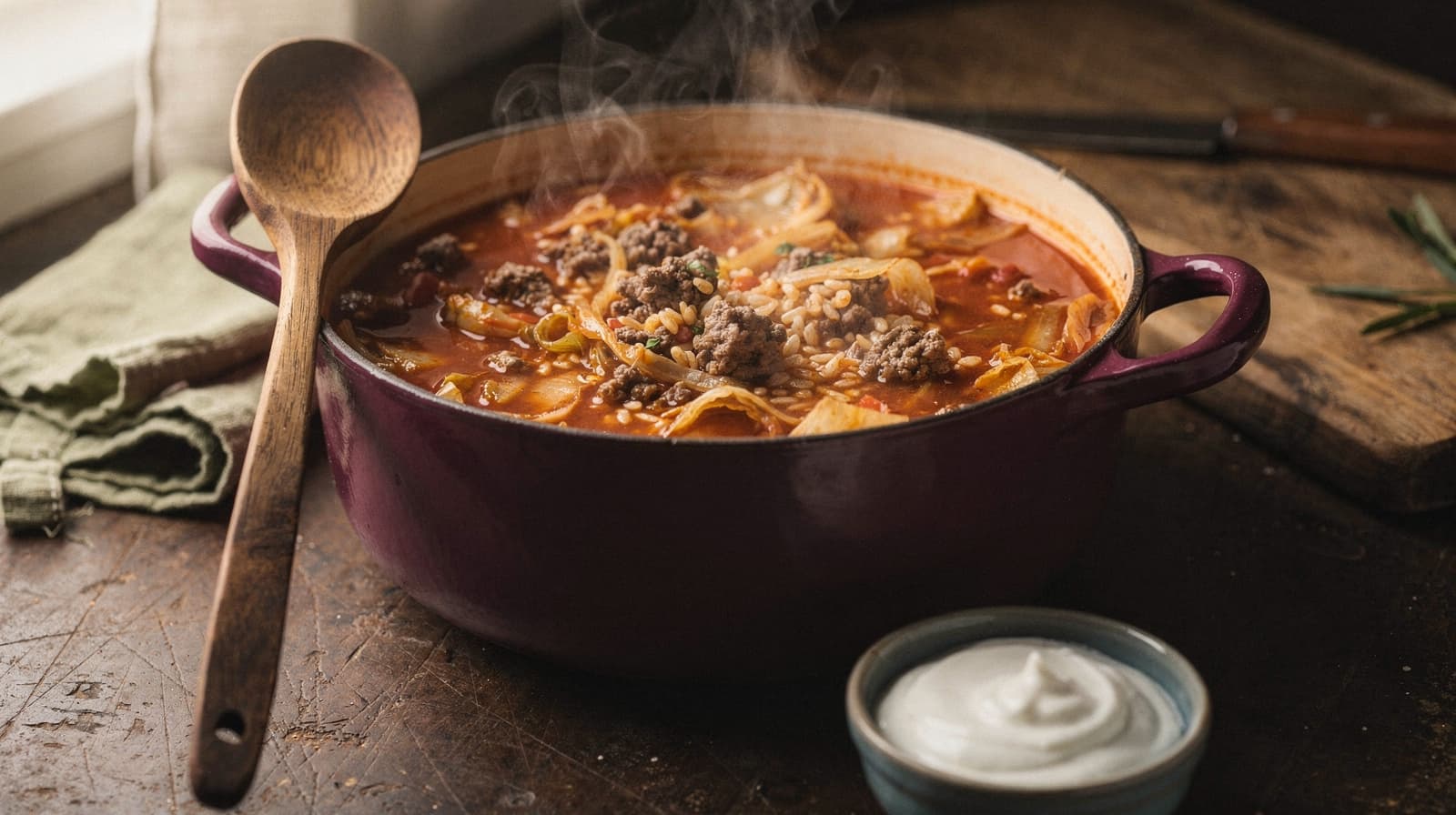
Stuffed cabbage rolls take about ninety minutes if you're fast and closer to two hours if you're not. You have to boil a whole head of cabbage to soften the leaves, cut out the tough rib without tearing the leaf, portion a beef-and-rice filling into each one, roll it tight enough that it survives braising, and then wedge two dozen of them into a pot with toothpicks holding the ones that split. Unstuffed cabbage roll soup uses the exact same four ingredients (ground beef, rice, cabbage, tomato) and gets you dinner in under an hour with one pot and no rolling. It's the better version of the dish, not a lazy substitute for it.
I say this as someone who likes stuffed cabbage. The filling is good, the sauce is good, the whole idea of meat and rice wrapped in a vegetable and simmered in tomato is good. What's not good is the assembly line. Cabbage rolls are a project. Soup is dinner.
Why deconstructing it wins
The case for the soup isn't only "less work," though that's true too. Four things change once you stop rolling.
Nothing can fail. A cabbage roll has to hold its shape through an hour of simmering. Leaves tear, rolls unravel, rice pokes through the seam and turns the braising liquid starchy and cloudy. Chop the same cabbage into ribbons and simmer it loose and there's no seam to split. Every bite gets the same ratio of beef to rice to cabbage to broth.
It scales for free. Doubling a rolled recipe means rolling twenty-four more rolls. Doubling the soup means a bigger pot and five more minutes.
It freezes and reheats better. Rolled cabbage gets mushy after a freeze-thaw cycle and the leaves separate from the filling, leaving beef-rice balls floating next to soggy sheets. The soup never depended on structure, so freezing costs it nothing. Cool it, ladle it into containers, and it survives a microwave reheat two months later.
If you're keeping a freezer stash going, our freezer meal planning guide covers how to portion and label soups so they thaw cleanly instead of becoming a block you hack at with a butter knife.
One pot, no side dishes. Rolled cabbage usually needs mashed potatoes or bread, because six rolls on a plate look bare. A bowl of soup already looks like dinner.
The technique that makes the soup good
This isn't "throw everything in a pot." Five details separate a soup that tastes like the real dish from a bowl of watery meat-rice water.
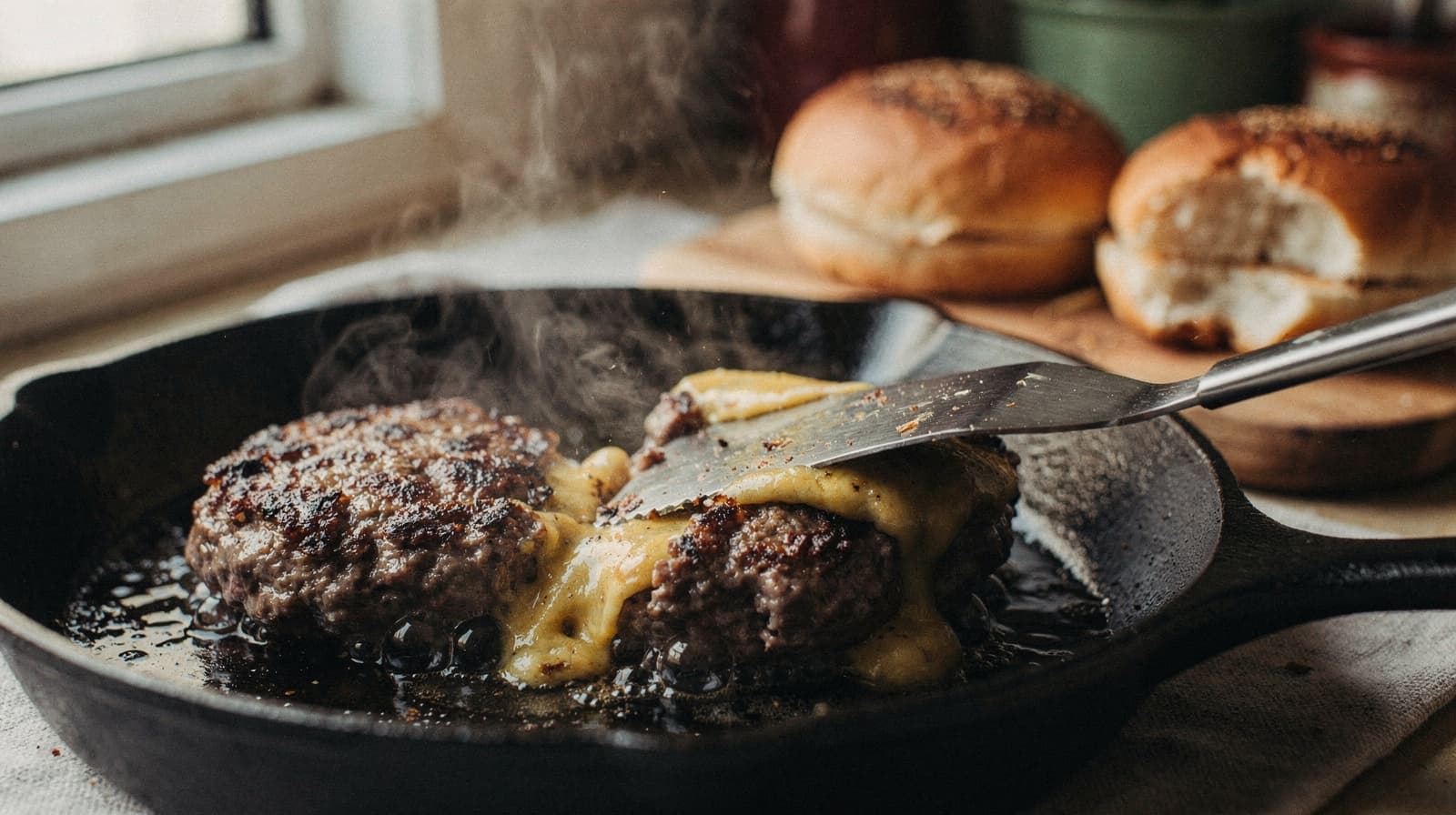
Brown the meat, don't just cook it through. Heavy pot, Dutch oven or similar, medium-high heat, beef broken into rough chunks rather than a fine crumble. Let it sit undisturbed two to three minutes before you stir, or it steams in its own liquid. That browning is where most of the flavor lives. Dump raw beef straight into broth and you get gray meat and a thin soup, no matter how much tomato paste goes in later. Drain the fat if there's a puddle, but leave a tablespoon behind for the onions.
Sauté the aromatics in the fond. Add a diced onion and two cloves of minced garlic to the same pot, scraping up the browned bits as they soften. Two minutes. Skip this and the soup tastes assembled rather than cooked.
Season the tomato base before you add liquid. Stir in a tablespoon of tomato paste and let it cook for a minute. This takes the raw edge off it and deepens the color. Then add a 28-ounce can of crushed tomatoes, a quart of beef broth, a tablespoon of brown sugar, and a splash of apple cider vinegar or lemon juice. The sugar and acid together do the job a long braise does in the rolled version, balancing the tomato against the fat in the beef. Skip them and you've made tomato beef stew. Add smoked paprika, a bay leaf, and black pepper here too, and hold the salt until the end, because canned broth and canned tomatoes both arrive salted.
Add the rice late. This is the step that decides whether the soup is good or ruined. Rice dropped in at the start of a 45-minute simmer turns to mush and thickens the broth into porridge. Add raw long-grain white rice 18 to 20 minutes before you serve, after the cabbage, with the broth at a steady simmer. If part of the batch is going in the freezer, cook that rice separately and stir it in at reheat. Rice that sits frozen in broth for two months comes back as paste.
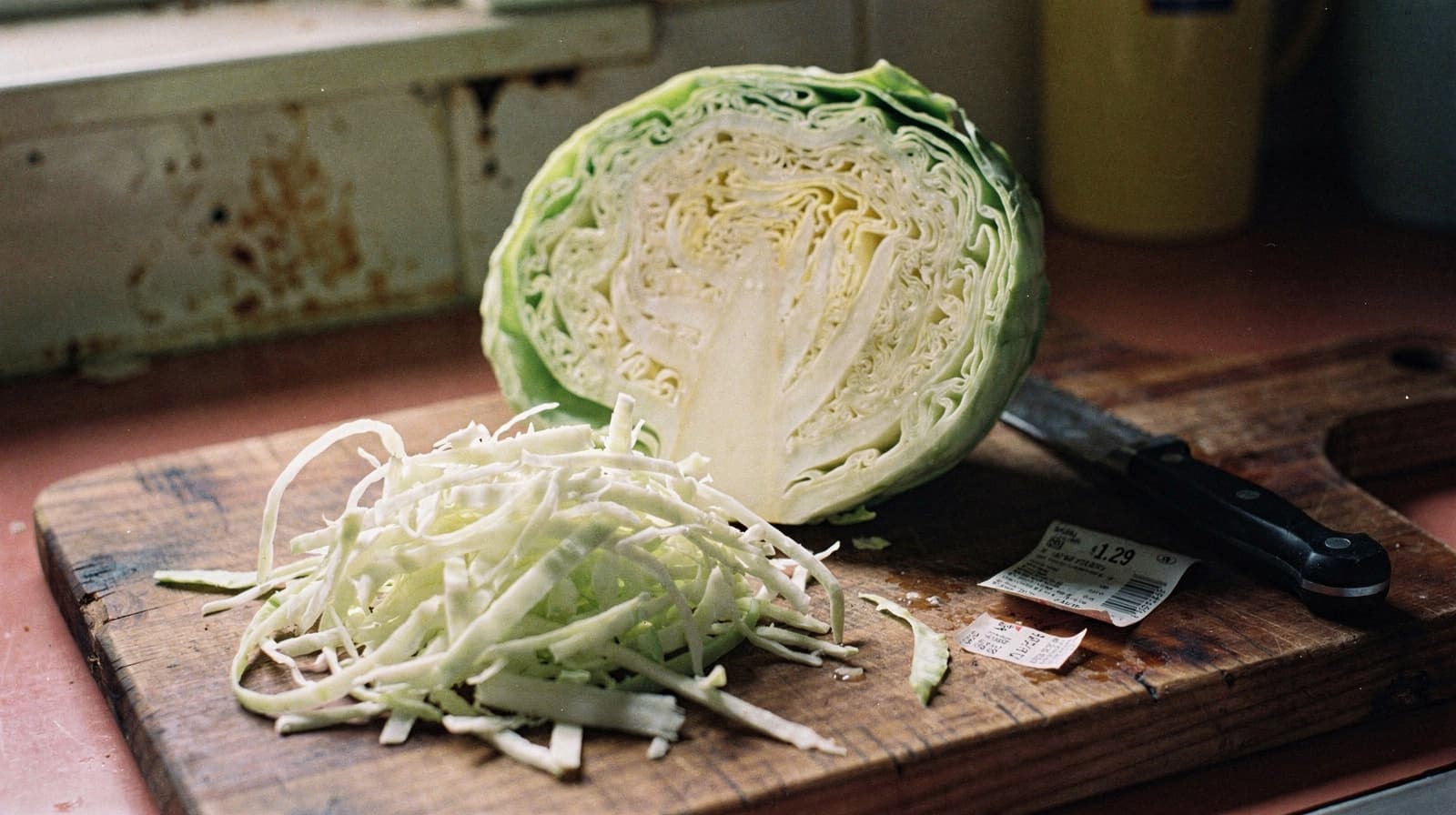
Add the cabbage in the middle, not the end. Roughly chopped cabbage, a small-to-medium head, cored and cut into ribbons, goes in after the tomato base comes together but before the rice. It needs 15 to 20 minutes to soften without collapsing, which lines up with the rice if you stagger them a few minutes apart. Cut the ribbons about a half-inch wide. Thinner than that and they vanish into the broth; much wider and you're chasing a flap of cabbage around the bowl with a spoon. A two-pound head is right for a six-quart pot. Anything bigger and the soup stops being soup.
Here's the rough order, if you want it as a checklist:
- Brown 1.5 lbs ground beef in a Dutch oven, breaking into chunks, 6-8 minutes
- Add diced onion and garlic, cook 2 minutes
- Stir in tomato paste, cook 1 minute
- Add crushed tomatoes, broth, brown sugar, vinegar, paprika, bay leaf, pepper; bring to a simmer
- Add chopped cabbage, simmer 15 minutes
- Add rice, simmer 18-20 minutes more until rice is tender
- Salt to taste, remove bay leaf, serve
How long it keeps
Four to five days in a sealed container in the fridge. It reheats fine on the stovetop or in the microwave, though you'll want a splash of broth or water, because the rice keeps drinking liquid overnight and the soup sets up thick.
In the freezer, two to three months at full quality if the rice went in separately, about six weeks if you froze it rice-and-all before the grains go soft. Either way it beats the rolled version, which never comes back from a thaw.
Where this fits into a bigger cooking routine
Ground beef browned in bulk is worth doing more than once a week if you're trying to keep dinners moving without reinventing one from scratch each night. Our batch-cooked proteins guide covers how to brown a few pounds at once and split it across different meals, so this soup becomes one of three or four things you can make from the same session instead of a one-off. If cabbage itself is the ingredient you're trying to figure out what to do with, the cheap cabbage dinners roundup has more ways to use a head of it before it wilts in the crisper drawer.
If you're the type who saves a recipe like this from a food blog or a video and then can't find it again three weeks later, RecipeClip imports it from a URL, a photo, or a screenshot, then tags it, so "that cabbage soup thing" turns up under "cabbage" instead of dying in a browser tab.
A head of cabbage costs under $2 in most stores, a pound and a half of ground beef runs $6 to $8, and the rest is pantry. That's four to six servings for the price of one takeout order. Make it on a Tuesday and eat the rest Thursday.