Frozen Vegetables Are Fine, and Sometimes Better
Frozen vegetables are picked and blanched at peak ripeness, often beating fresh on nutrition. Here's when to use them and when not to bother.
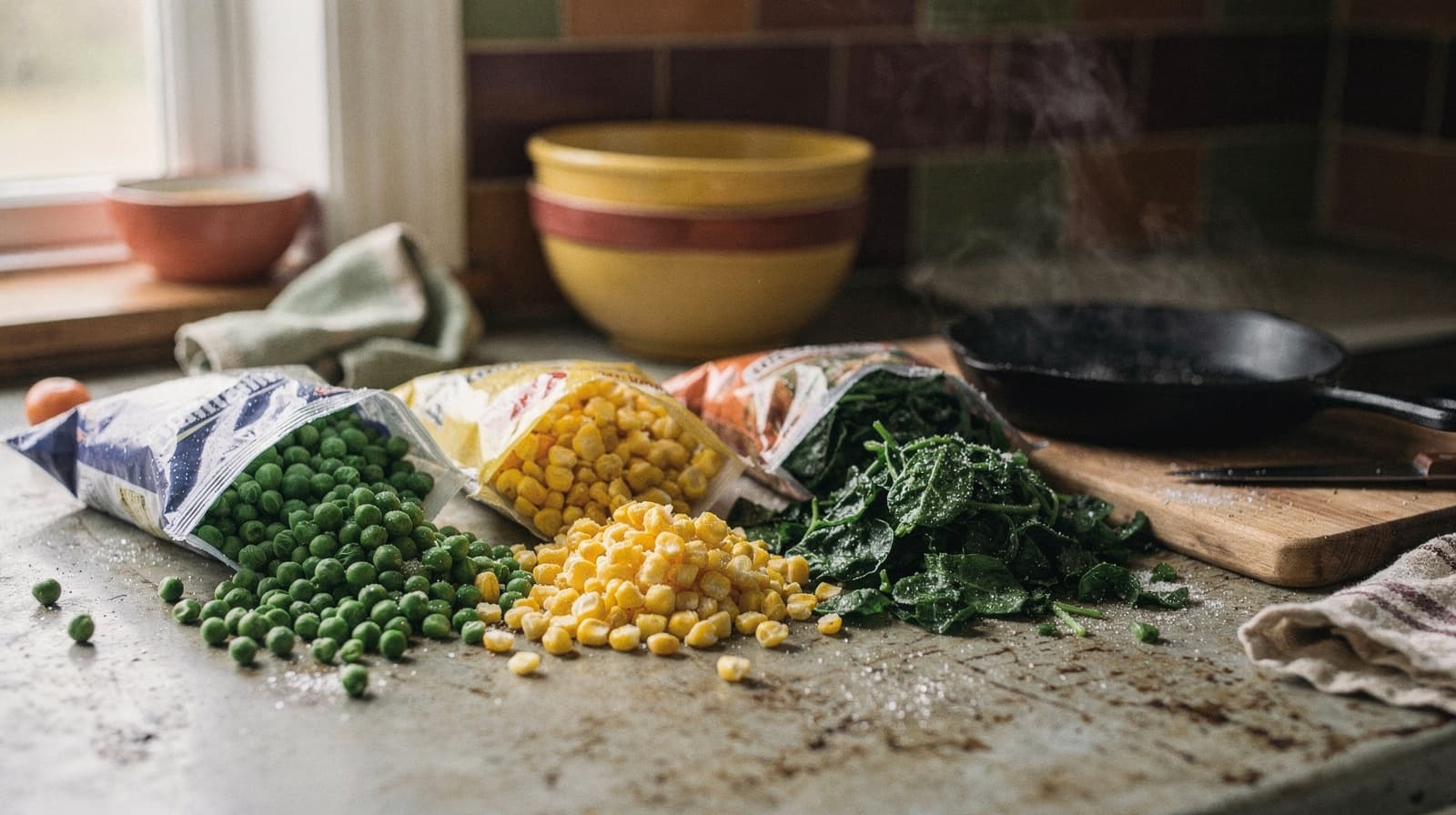
Frozen peas beat "fresh" peas most weeks of the year. Fresh peas start converting sugar to starch the moment they're picked, so unless yours came from a farm stand this morning, the bag in your freezer, picked and flash-frozen within hours of harvest, is the sweeter, fresher one. That's true for a longer list of vegetables than most people assume.
The bias against frozen produce is mostly about texture in a handful of specific vegetables, not nutrition or flavor across the board. Once you know which ones hold up and which ones don't, frozen stops being a compromise and starts being a default.
Why freezing doesn't gut nutrition
Vegetables destined for the freezer are usually picked at peak ripeness and processed within hours, then blanched briefly before freezing, a step that locks in color and slows nutrient loss. Produce sold "fresh" in a supermarket, by contrast, can spend days in transit and storage before it reaches your cart, during which water-soluble vitamins like vitamin C and folate degrade steadily.
You don't need a lab to reason through it. A pea frozen within hours of picking is ahead of one that spent three days in a truck and two more under supermarket lights, on vitamin C and folate especially, since both degrade with time and light.
Where frozen wins outright
Peas, corn, and edamame are close to indistinguishable from fresh once cooked, since all three are naturally sweet, small, and freeze without much cellular damage. Chopped spinach and kale hold up well for anything cooked, soups, curries, sautéed sides, though they're a poor substitute for a fresh salad.
Diced onion and minced garlic, sold frozen in most grocery stores now, are worth keeping stocked even if you also buy fresh. They save you the five minutes of chopping that decides whether a Tuesday dinner happens, and once they hit a hot pan nobody can tell. Riced cauliflower and butternut squash cubes are two more where the freezer version buys back real knife time; breaking down a whole squash is ten minutes and a real risk to your thumb.
Where fresh still wins
Anything you're eating raw needs to be fresh. Frozen vegetables are blanched before freezing, which breaks down cell walls, so they arrive soft and sometimes mushy. Fine in a soup, wrong in a salad. Lettuce, cucumber, and raw bell pepper strips fall in this category; don't bother looking for a frozen version.
Texture-forward cooking loses the most. A stir-fry that depends on snap peas staying crisp, or sprouts meant to caramelize and hold their shape, will disappoint with frozen, because browning can't start until the pan is above about 300°F and the water coming off thawing vegetables holds it at 212°F. For real char on broccoli or brussels sprouts, buy them fresh, pat them dry, and spread them across a 425°F sheet pan with an inch between pieces.
The prep trick that fixes most frozen-vegetable complaints
Almost every "frozen vegetables taste watery" complaint traces back to the same move. You tip the bag straight into a pan that already has chicken and onions in it. A cup of frozen peas carries something like a quarter cup of ice; that melts, the pan drops below a simmer, and dinner steams instead of frying.
The fix depends on the dish. For a stir-fry or sauté, thaw the vegetables and press them dry in a clean towel first, or cook them straight from frozen in a wide, mostly empty pan so the water can boil off. For soups, stews, and braises, don't thaw at all. Tip them into the simmering liquid frozen; there's no texture to protect and the melt just becomes broth.
The freezer as a food-waste backstop
A bag of frozen vegetables doesn't have a countdown clock the way a fresh bunch of kale does. That changes how you shop: buy fresh produce for what you'll cook in the next two or three days, and keep frozen backups for the nights that don't go as planned. When a fresh vegetable is a few days from turning, it's often worth freezing yourself rather than composting it, which is a bigger topic covered in our guide to reducing food waste.
This pairs well with a loose weekly rhythm rather than a rigid plan, since frozen vegetables are exactly the kind of always-available ingredient that makes meal planning for people who hate meal planning actually work. You don't need to know Tuesday's dinner in advance if the freezer has three vegetables that go with almost anything.
Reading the bag before you buy
Not all frozen vegetables are prepared the same way, and the label tells you more than the vegetable name does. "IQF" (individually quick frozen) means the pieces were frozen loose before bagging, so they pour freely and you can take out a handful without chipping at a solid brick. A block-frozen bag is cheaper processing, and it thaws unevenly: the outside edges go mushy while the middle is still cold.
Squeeze the bag before it goes in your cart. If the contents have fused into one lump, it thawed somewhere in the supply chain and refroze, and the texture is already gone.
Check the bag for added sauces or seasoning blends if you're buying vegetables specifically to use in your own recipes. A "seasoned" frozen vegetable mix often carries salt, oil, and sometimes sugar you didn't plan for, which throws off a recipe built around plain vegetables. Plain, unseasoned bags give you control over the final dish; seasoned blends are fine for a quick side but not for cooking into something else.
Building a frozen vegetable stock that earns its freezer space
Six bags cover most of what a weeknight actually needs:
- Peas, for stirring into rice, pasta or dal in the last two minutes.
- Corn, same job, plus salads and soups.
- A stir-fry blend for noodles.
- Chopped spinach or kale for soups and pasta sauces.
- Riced cauliflower, if you use it.
- Diced onion, for the nights you don't want to cry over a cutting board.
That's one shelf, not a whole drawer, and about $15 of groceries.
If you're tracking what you keep on hand alongside the recipes that use them, RecipeClip's pantry feature can note which staples you have stocked so recipe suggestions and grocery lists account for what's already in the freezer instead of listing ingredients you don't need. Keep the fresh produce for what you'll eat raw or want browned, and let the freezer handle the rest.