Cabbage Is the Cheapest Thing in the Produce Aisle. Here's What to Do With It
A two-pound head of cabbage costs about a dollar and keeps for weeks. Here's every dinner it turns into, from slaw to soup to roasted wedges.
A head of green cabbage runs about $0.50 to $0.79 a pound at most grocery stores, which means a two-and-a-half-pound head costs somewhere around $1.50 to $2. Compare that to a bag of pre-washed spinach at $3.99 for five ounces, or a single bell pepper at $1.29, and cabbage isn't just cheap. It's cheap by a factor of five or more, and one head feeds four people across multiple meals.
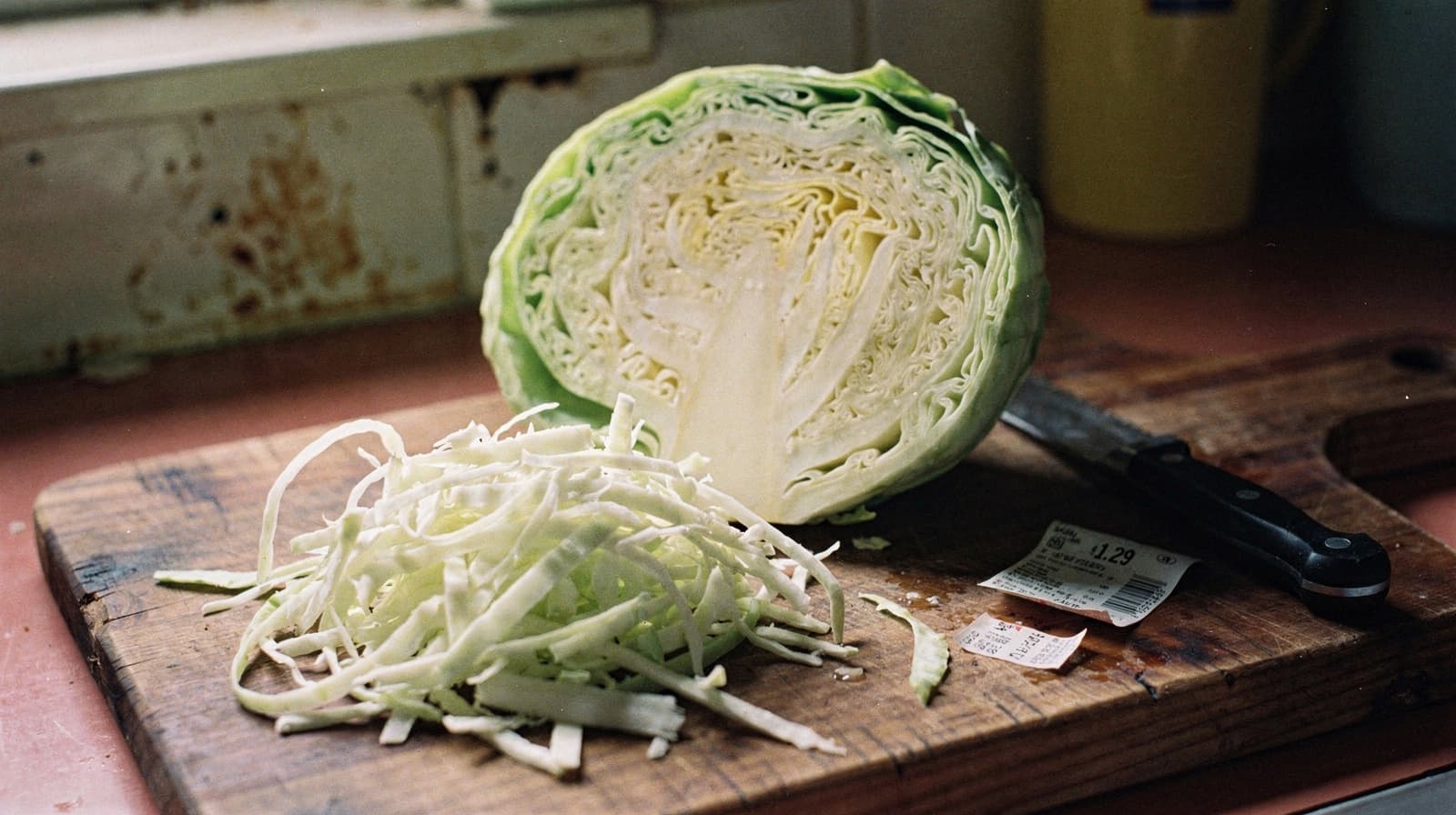
It also keeps. A whole, unwashed head of cabbage stored in the crisper drawer lasts three to four weeks without turning to mush, which is longer than almost any other fresh vegetable in the store. Lettuce wilts in five days. Broccoli goes yellow in a week. Cabbage just sits there, dense and stubborn, waiting for you to use it. Cheap, patient, and big enough to make four dinners: no other vegetable in the store does all three.
The catch is that most people only know cabbage as a coleslaw ingredient or a boiled side dish from a holiday dinner nobody asked for. It's much more versatile than that. Here's the real range of what a single head can become.
Buying and storing it right
Skip the pre-shredded coleslaw mix if you're optimizing for price. It's convenient, but you're paying $2.50 to $3.50 a pound for something you can shred yourself with a knife in under two minutes. Buy the whole head instead.
Look for a head that feels heavy for its size and has tight, compact leaves with no soft spots. Green cabbage is the cheapest and most common. Red cabbage runs slightly higher per pound but holds its color and crunch well in raw preparations. Napa cabbage (sometimes labeled Chinese cabbage) is milder and more delicate, better suited to quick cooking than long braises.
Store the whole head in the crisper drawer, ideally wrapped loosely in a plastic bag to hold in humidity. Only cut off what you need for that meal and leave the rest intact. A cut cabbage with plastic wrap pressed against the exposed face will still last another week or two, it just won't go the full month. That one habit is what stretches a single head across four or five dinners instead of one big cook that uses it all.
If waste bothers you more than price does, our guide on cutting food waste at home applies the same rule to produce generally. Buy whole, use in parts, and don't start the clock until you cut it.
Stir-fried, for a ten-minute dinner
Thin-sliced cabbage cooks fast in a hot pan or wok, which makes it one of the quickest vegetables to turn into dinner. Slice a quarter head into ribbons about a half-inch wide, then get a pan hot with a tablespoon of oil before the cabbage goes in. Keep the heat high and the cabbage moving. Drop the heat and it steams in its own water instead of charring, and you end up with a wet grey pile.
Five to seven minutes is usually enough. Add garlic and ginger in the last minute so they don't burn, then finish with soy sauce and a splash of rice vinegar. Toss in whatever protein you have on hand: leftover shredded chicken, a couple of scrambled eggs, ground pork, or cubed tofu. Serve it over rice and you've spent maybe $3 total on a dinner that took less time than delivery would.
Braised, for thirty minutes that taste like two hours
Braising turns cabbage sweet. The sharp, slightly bitter edge it has raw mellows out after even a short simmer, which is why it works with pork, bacon, or sausage.
Cut the head into wedges through the core so each piece holds together. Sear them in bacon fat or oil until the cut sides take on color, then add a cup of broth, a splash of apple cider vinegar, and your aromatics: caraway and a sliced apple for a German-style braise, or onion and thyme for something plainer. Cover and simmer 25 to 30 minutes, until a spoon cuts through a wedge. It reheats better on day two than it tastes on day one, so make the full head and take the rest for lunch.
Raw, as slaw that isn't just a side dish
Dressed lettuce is garbage in an hour. Dressed cabbage is fine on Thursday. Toss it with a vinegar-based dressing (skip mayonnaise if you're making it more than a day ahead, since it separates and goes watery) and it'll still crunch three or four days later.
Slaw doesn't have to be a side. Pile it onto tacos, pulled pork sandwiches, or grain bowls, and it functions as the crunchy, acidic element that a lot of weeknight cooking is missing. A half head of cabbage, a carrot, a lime, and some oil turns into enough slaw to top four or five meals over the course of a week for under two dollars total.
Soup, when you want the whole head to disappear into one pot
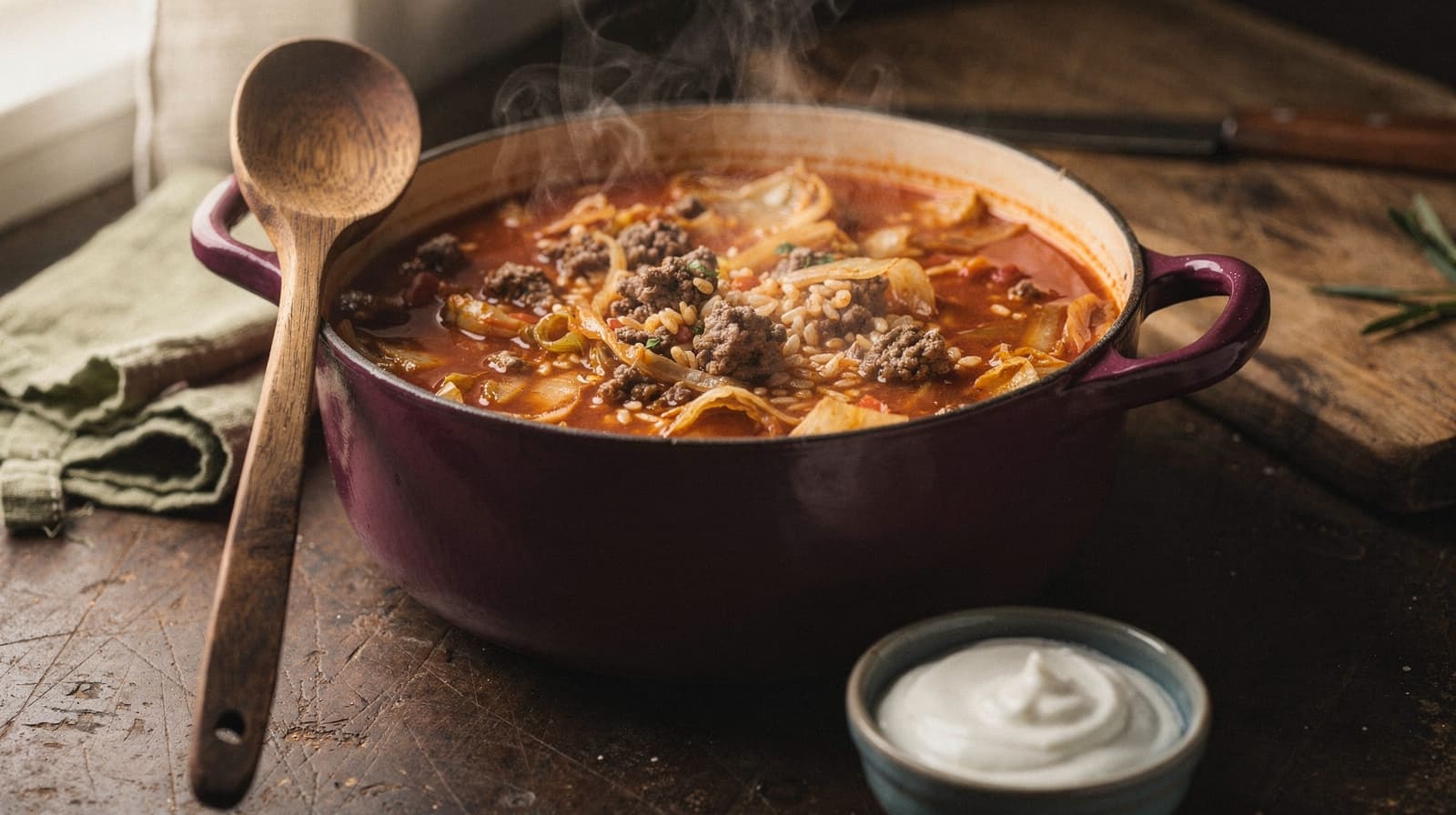
Cabbage soup is where a single head goes furthest, because it can absorb an entire quarter or half of a large one without the dish feeling like it's mostly cabbage. Chopped cabbage simmered with tomatoes, broth, and ground beef or sausage turns into something closer to a stew than a soup, and it freezes well in portions.
If you want the flavor of stuffed cabbage rolls without the folding and rolling, unstuffed cabbage roll soup gets you there in about 40 minutes. Everything that would normally go inside the leaf goes into the pot instead. We wrote up the full method, ingredient ratios, and timing in a separate post on unstuffed cabbage roll soup if that's tonight's dinner.
Roasted wedges, for the least hands-on option
Cut the head into wedges, brush with olive oil, season with salt and pepper, and roast at 425°F for 25 to 30 minutes, flipping once halfway through. The outer layers char and crisp while the inside stays tender, and the whole thing needs about five minutes of active work. A drizzle of balsamic glaze or a spoon of grainy mustard sauce after roasting turns a side dish into something worth building a meal around.
Roasting is also where the sad heads go. Peel off the limp outer leaves, roast the rest, and nobody can tell it sat in the crisper for three weeks.
Stuffed, or the unstuffed shortcut
Traditional stuffed cabbage rolls (blanched leaves wrapped around seasoned rice and meat, then baked in tomato sauce) are worth eating and take about two hours: blanch the leaves, roll each one, bake for fifty minutes. That's a Sunday, not a Tuesday.
The unstuffed version linked above cooks the same ingredients loose in one pot, which is why it has quietly replaced the rolled version in most weeknight kitchens.
Making it part of a repeatable rotation
No single cabbage recipe is the point. The point is that one $1.50 head becomes a stir-fry on Monday, slaw on tacos Tuesday, and half a pot of soup that covers Wednesday dinner and two Thursday lunches. Pair it with rice, canned beans, and eggs and you have most of a week under $20.
If you're building meals around a hard dollar limit, budget meal prep under $5 a serving does that math across a whole week. And grocery shopping on $100 a week shows where cabbage-heavy meals sit inside a weekly number.
If you're the type who finds a good cabbage recipe online and then loses it before you get to make it again, RecipeClip saves it from the original site or TikTok in one tap and tags it, so "that cabbage soup thing" is searchable the next time you've got a head sitting in the crisper with no plan for it.
Buy the whole head next time, not the pre-cut bag. Cut off a quarter for tonight, wrap the face in plastic, and put the rest back in the crisper drawer.