Your Spice Cabinet Is Half Dust. Here's the Audit
How long spices actually last, how to test what's still good, and how to rebuild a cabinet that isn't quietly ruining your cooking.
Pull the paprika out of your cabinet and smell it. If it smells like cardboard, or like not much of anything, that jar has been diluting your cooking for months without you noticing. Spices don't spoil in a way that makes you sick. They just go quiet, and a quiet spice makes every dish that uses it a little flatter than it should be.
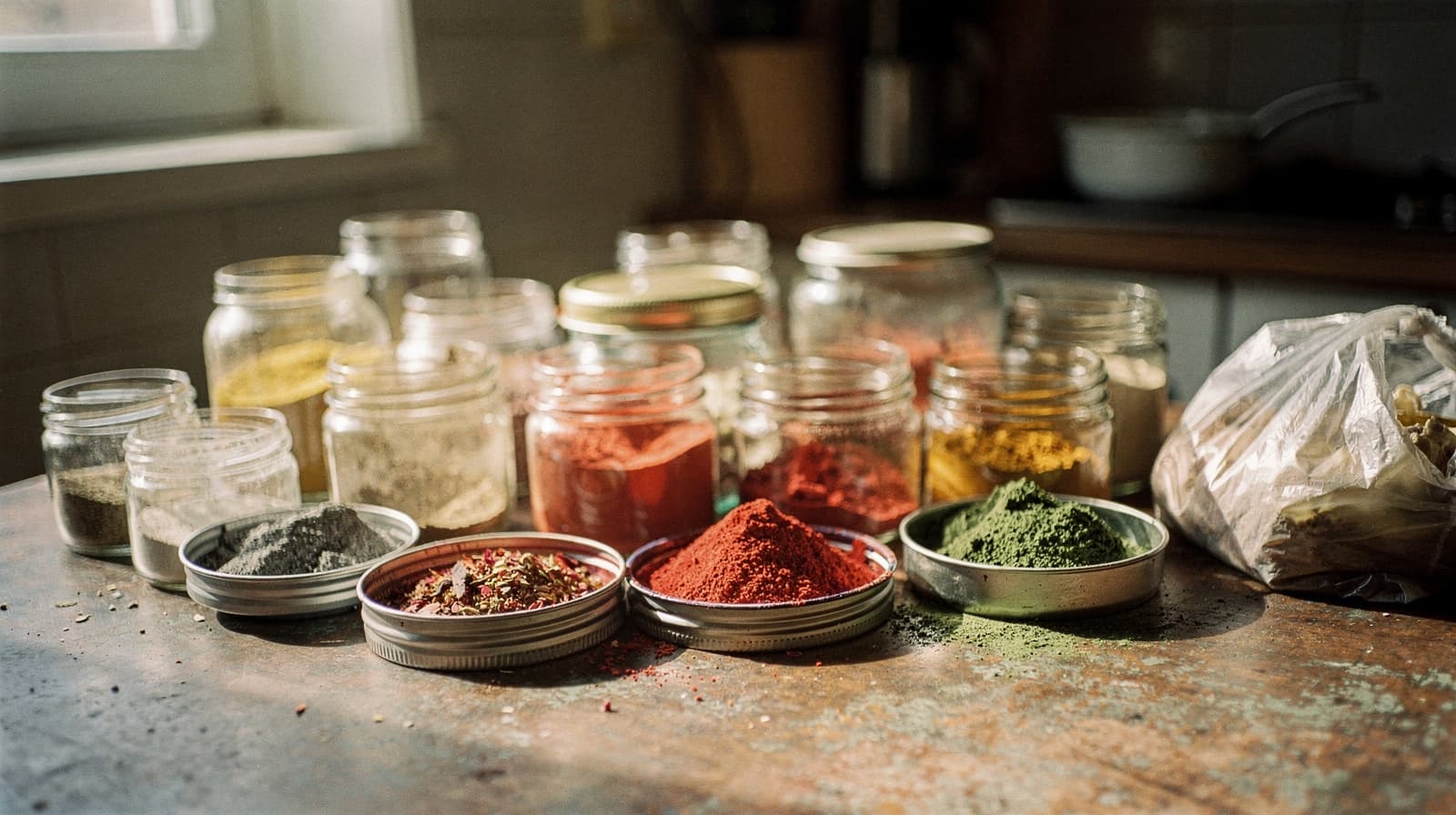
Most spice cabinets are half active flavor and half expensive-looking dust. An audit takes about 20 minutes and fixes a problem you've probably been blaming on your cooking skills instead of your ingredients.
How long spices actually last
Shelf life depends on form. Whole outlasts ground by roughly three to one.
Whole spices (peppercorns, cumin seed, whole cloves, cinnamon sticks) last the longest, roughly 3-4 years, because their essential oils are sealed inside an intact structure that hasn't been broken open to the air.
Ground spices last about 2-3 years for the most stable ones (cinnamon, ginger) and closer to 1 year for anything with a lot of volatile oil (paprika, chili powder, ground cumin). Grinding exposes far more surface area to oxygen, so the flavor compounds evaporate faster than in whole form.
Dried herbs (oregano, thyme, basil, rosemary) last around 1-2 years. Their flavor comes from delicate oils that break down faster than a spice's, especially with heat and light exposure.
These numbers assume proper storage: sealed, away from the stove, away from a sunny window. A jar kept on an open rack next to the burner degrades faster than the same jar in a closed cabinet, sometimes by a year or more, because heat accelerates oil breakdown.
The smell test, which beats the expiration date
None of the numbers above matter as much as your nose. A spice past its printed date but stored well can still be potent; a spice within date but stored badly can already be dead. Open the jar, crush a small pinch between your fingers, and smell it immediately.
If the aroma is strong, distinct, and matches what you'd expect (cumin should smell earthy and warm, cinnamon should smell sweet and sharp), it's still good. If you have to think about whether you smell anything, or if it smells like dust or cardboard, it's spent. It won't make you sick to use it. It just won't do anything for the dish.
Run this test on your five most-used spices right now. Chances are at least one surprises you.
What to toss without debate
A few things don't survive the smell test and aren't worth keeping regardless of what it tells you:
- Pre-ground spice blends bought more than 2 years ago, especially ones with salt already mixed in, which cakes and clumps over time
- Anything stored in a clear jar on an open shelf near a window; light degrades spices almost as fast as heat does
- Duplicate jars of the same spice bought because you couldn't find the first one; consolidate and toss the older one
- Whole spices that smell like nothing at all when crushed; whole spices rarely fade quietly, so no smell means the oils are gone
Rebuilding with intention
Once the cabinet is thinned out, buy back only what you actually cook with regularly, and buy it in the smallest quantity available rather than the bulk jar that looks efficient at the store. A small jar of a spice you use twice a month gets used up before it goes flat; a bulk container of the same spice sits half-full for three years.
For anything you use constantly, cumin, garlic powder, black pepper, buying whole and grinding as needed (a $15 spice grinder pays for itself in flavor within a few uses) extends the useful life to years instead of months, and you taste the cumin instead of just smelling it. For everything else, ground is fine and more convenient.
Organizing by use frequency rather than alphabetically also helps; keep your five most-used spices at eye level near the stove, and everything else can live further back. This pairs with a broader pass at organizing a small kitchen, where cabinet space is usually the real constraint, not the spice collection itself.
Container and storage choices that slow the clock
Put the jars somewhere dark and cool, and check that every lid actually seals. Opaque tins or a closed drawer beat clear glass on an open shelf, because that same transparency lets afternoon sun break down the oils inside. If you like the look of matching glass jars, keep them in a cabinet. You get the aesthetic without the bleaching.
A rack mounted on the wall behind the stove is the worst spot in the kitchen. Heat and steam hit those jars every time you cook, and the paprika you bought in January will smell like red flour by June. Moving the everyday spices to a drawer three feet away costs you half a second of reach and buys you most of a year of flavor.
Then there's moisture. A jar of garlic powder kept next to the sink clumps into one solid puck within a season, and in a humid kitchen a badly sealed lid can grow mold in a ground spice you only open twice a year. Those are the jars to check first.
Building the shopping list from what's missing
After the audit, you'll have a real list, not a guess, of what needs replacing. Cross-reference it against the recipes you actually cook rather than restocking everything that was there before. If you tossed a jar of a spice you haven't used in two years, that's a sign to leave it off the list rather than automatically rebuying it.
Checking your pantry staples at the same time makes sense, since spices are usually stored near other shelf-stable items and a single restocking trip covers both. If you keep recipes in RecipeClip, scanning your saved recipes for repeated spices is a quick way to confirm what's actually load-bearing in your cooking versus what got bought once for a recipe you never made again.
Give it twenty minutes and a trash bag. Start with the paprika.