One Pot of Chili, Five Different Dinners
A base chili recipe designed to be split and finished five different ways, so one Sunday pot covers most of the week without repeating.
A pot of chili made on Sunday can cover five dinners without anyone in the house noticing they're eating the same base twice. The move is holding the chili itself neutral, no heavy toppings mixed in, and deciding what it becomes fresh each night.
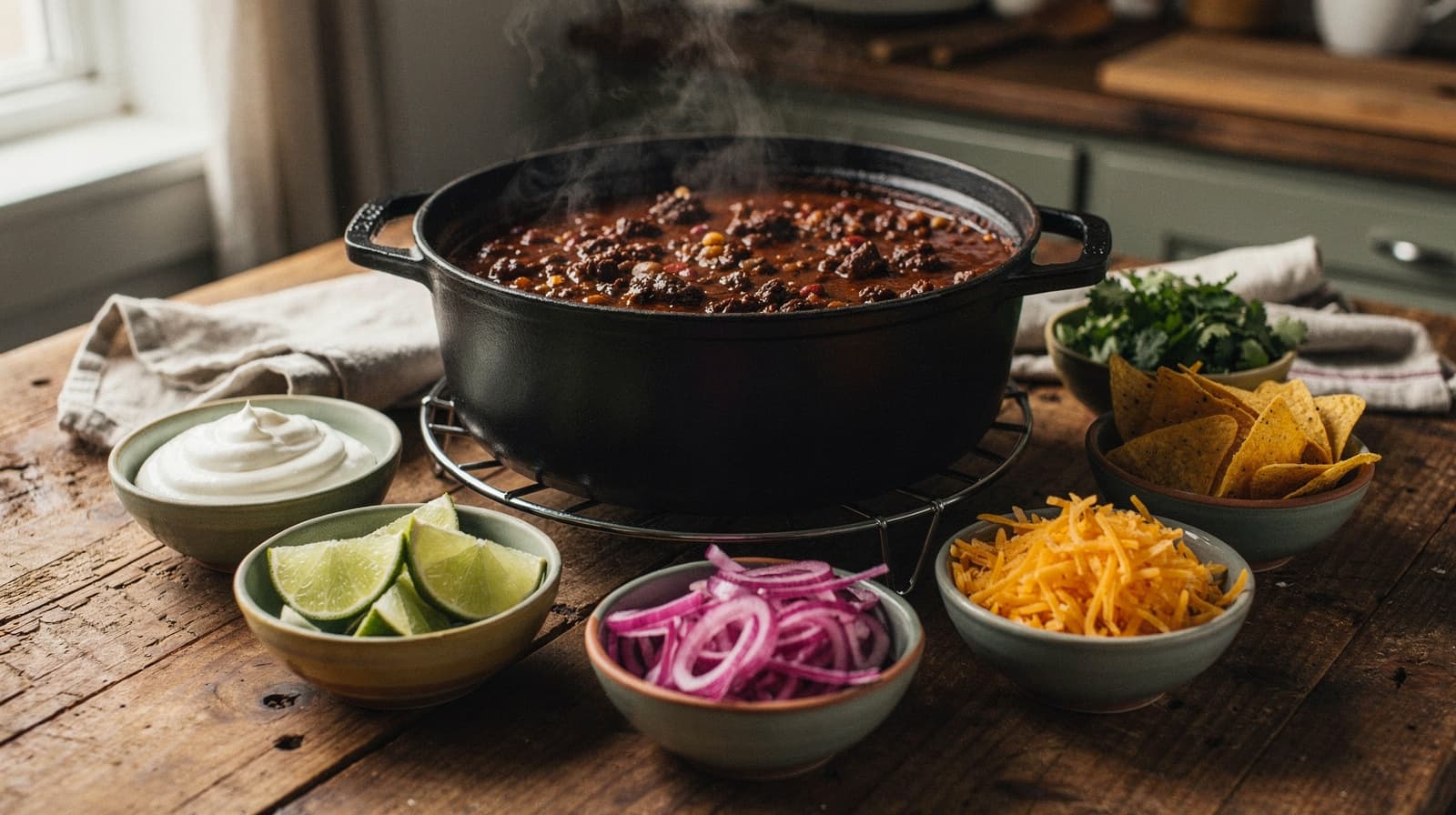
This works because chili is really just seasoned ground meat and beans in a thick sauce, and that combination is a foundation for a dozen other dishes, not a finished product that only works one way.
The base recipe
For a large pot, roughly 8-10 cups total: 2 pounds ground beef or turkey, 2 diced onions, 4 minced garlic cloves, 2 (15-ounce) cans of beans (kidney, black, or a mix), 2 (28-ounce) cans crushed tomatoes, 2 tablespoons chili powder, 1 tablespoon cumin, 1 teaspoon smoked paprika, salt to taste, and 1-2 cups of beef broth or water depending on how thick you want it.
Brown the meat with the onion and garlic, drain excess fat, add the spices and toast them for a minute in the pan before adding the tomatoes, beans, and broth. Simmer uncovered for 45 minutes to an hour, stirring occasionally, until it's thick enough to hold its shape on a spoon.
Keep it simple at this stage. No cheese, no sour cream, no cornbread stirred in. Those come later, per dinner, not now.
Five ways to finish it
Straight, night one. Bowl of chili, shredded cheddar, a dollop of sour cream, chopped green onion. Do this one while the pot is freshest.
Chili mac. Stir cooked elbow macaroni into a portion with an extra half-cup of shredded cheese melted through. Ten minutes, and the kids read it as a different dinner entirely. It's the same pasta-formula logic of building a sauce around a protein that's already cooked.
Loaded baked potatoes. Split a baked russet and spoon chili over it with cheese, sour cream, and chives. The potato soaks up the liquid, so it eats like a casserole instead of a soup.
Nachos. Spread tortilla chips on a sheet pan, spoon chili over them, top with cheese, and broil 3-4 minutes until the edges char. Pickled jalapeños and a drizzle of sour cream go on after it comes out. Fastest of the five, under 10 minutes including the broiler.
Chili-stuffed cornbread bake. Pour a portion into a baking dish, top with cornbread batter (mix or scratch), and bake at 400°F for 20-25 minutes until the top is set and golden. This is the one guests assume you cooked from scratch that afternoon.
Adjusting the base for different households
The base above sits at a medium heat level. Set it before you commit to five nights of it. If anyone in the house is spice-sensitive, cut the chili powder to 1 tablespoon and put hot sauce and diced jalapeño on the table, so heat becomes a per-plate choice instead of a pot-wide one.
Swapping the protein works too. Ground turkey instead of beef keeps it leaner and changes nothing about the technique. A plant-based crumble, or one more can of beans in place of the meat, turns all five dinners vegetarian without a separate meal to plan.
Whatever you use, brown it hard before the liquid goes in. That browning carries more of the finished flavor than any spice tweak will.
Storing it for five separate nights
Portion the base chili into five containers as soon as it's cooled, rather than keeping it in one large pot and scooping from it daily. Individual portions reheat faster and let you grab exactly what you need without disturbing the rest. Refrigerated chili holds for about 4 days; freeze any portions you won't get to within that window, since chili freezes and reheats better than almost any other stew.
This is the same underlying approach as cooking once and eating three different meals: a single cooking session produces a flexible base, and the finishing decisions happen fresh, one night at a time.
Cost across five dinners
Ground beef at roughly $5/lb, two cans of beans around $1.50 each, and two large cans of crushed tomatoes around $2 each puts the base recipe at about $16-18 total, before toppings. Spread across five dinners for a family of four, that's under $1 per serving for the core of the meal. Toppings add maybe $2-4 a night, depending on whether it's a bag of chips or just the block of cheddar you already have. It's one of the more efficient entries in a budget meal rotation, and the variety keeps it from feeling like the cheap option.
Avoiding the fatigue that kills a repeat-base plan
This method fails on night four, not in the pot. Five dinners off one base wears thin if the finishes sit too close together, and chili mac followed by loaded potatoes is basically the same plate twice.
Spread the five across two weeks. Three finishes this week, nachos and the cornbread bake next week, and the base freezes for three months, so nothing is wasted waiting.
Changing the base every other round helps too. Black beans instead of kidney, or a can of diced green chiles, and the five finishes stop converging on one taste.
Keeping the pattern
Once you've settled on a base and five finishes your household will eat, write both down together instead of treating them as separate recipes to reconstruct from memory. Save the base and the five variations as one linked plan in RecipeClip so a Sunday chili session comes with the whole week already mapped out, not just Sunday's dinner.
Make the pot this Sunday and portion it into five containers before you eat any of it. That single step is what makes the other four nights possible.