Cook Once, Eat Three Times, Without Eating the Same Thing
A method for turning one large cooking session into three genuinely different dinners, built around components instead of finished dishes.
Roast a tray of chicken thighs and a tray of vegetables on Sunday, and by Wednesday you can have eaten three meals that don't resemble each other, despite sharing 80% of the same ingredients. The trick is cooking components rather than finished dishes, then assembling them differently each time.
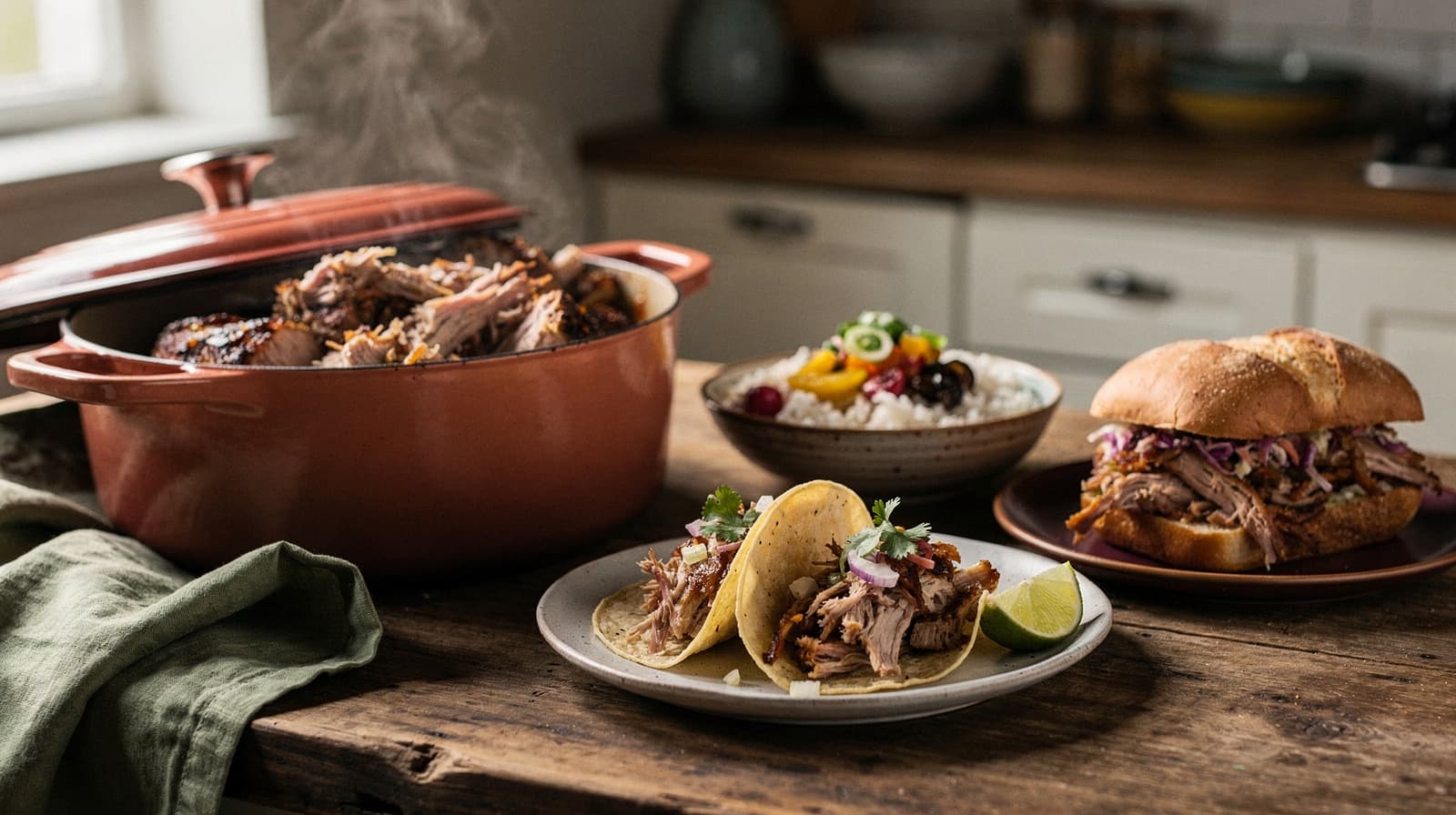
This is different from standard batch cooking, where you make one big dish and eat identical leftovers for four days. Cook once, eat three times means the Sunday effort produces raw material, not a finished plate, and the finishing happens fresh each night in under 15 minutes.
Pick a protein that reheats well
Not every protein survives being cooked once and eaten across three different contexts. Good candidates: chicken thighs (more forgiving than breast, which dries out on reheat), ground beef or turkey, pulled pork, firm tofu, or a pot of beans or lentils. Avoid delicate fish and anything breaded, both of which degrade fast on a second or third pass through heat.
Cook a larger batch than one meal needs, roughly 2-2.5 pounds of protein for a household of four across three dinners. Season it simply during the initial cook, salt, pepper, maybe garlic and a neutral oil, so it stays flexible for whatever direction each night takes. Heavy seasoning up front locks you into one cuisine for all three meals.
Pick a starch and a vegetable that hold
A grain that keeps its texture over several days works better than one that turns gummy. Rice, farro, and quinoa all hold up. Couscous clumps into a brick by Tuesday. Roast a large tray of vegetables, whatever's in season and cheap that week, cut into pieces that work in a bowl, a wrap, or a soup without further chopping.
Cook everything the same afternoon if you can. It's one cleanup instead of three, and the batch-cooked protein approach that underlies this method works the same way whether you're prepping one component or four.
Three ways to finish it
Night one is straightforward. Serve the protein, grain, and vegetables together with a simple sauce: tahini, a vinaigrette, or olive oil and lemon. This is the "cook once" night, closest to a normal dinner, and it uses the freshest portions of everything.
Night two changes the format. Shred or chop the protein further, fold it into a stir-fry with the leftover vegetables and a splash of soy sauce and sesame oil, and serve it over the grain fried hard in a pan instead of steamed. Same ingredients, different dinner. That's the logic in our guide to remixing leftovers, where changing the vessel does most of the work on its own.
Night three crosses a cuisine line. Turn the last of the protein and vegetables into soup, or into a taco filling with warm tortillas, lime, hot sauce, and cilantro. Nobody at the table connects it to Sunday's roast.
Portioning for the week
Divide the raw components into containers as soon as they're cool enough to store, rather than leaving them mixed together in one big dish. Separate protein, grain, and vegetable containers give you more flexibility at assembly time than a pre-combined casserole would; you can lean the flavor of each night in a different direction because nothing's already sauced.
Refrigerate what you'll use in the next 4 days and freeze the rest in flat bags if you cooked more than three dinners' worth. A stocked freezer turns this from a three-night plan into a standing backup for the weeks you don't have time to cook at all.
What it saves versus cooking three separate dinners
The time savings come almost entirely from the shared prep work happening once. Roasting 2.5 pounds of chicken thighs and two sheet pans of vegetables takes roughly 45 minutes of active and passive time combined on Sunday. Cooking a fresh protein and vegetable side from raw on three separate weeknights, even at 20-25 minutes each, adds up to over an hour of scattered cooking plus three rounds of cleanup instead of one.
The grocery bill lands lower too, and not because the ingredients are cheaper. A family pack of thighs on sale beats three small packs bought across three trips, and you stop throwing out the half-bunch of cilantro you bought for one dish.
Where this method breaks
It only works if the components stay separate long enough to be reused differently. If you sauce and combine everything the first night, you've made a single finished dish, and reheating it is standard leftovers, not this method. The discipline is holding back the sauce, the seasoning direction, and the final assembly until you're plating.
Three nights is also the ceiling, not five. By the fourth meal the chicken has gone dry and stringy enough that no sauce hides it, and by then everyone wants something new anyway.
Fitting it around a real week
Build the schedule around the nights you already know will be tight. If Monday and Wednesday have the least slack, give those the fastest finishes, the stir-fry and the tacos, and save the soup with its stock simmer for the night with 30 spare minutes in it.
The Sunday session is fixed. Which finish lands on which night isn't.
Scaling down keeps the same logic. A household of two doesn't need 2.5 pounds of protein for three nights, and a pound and a quarter produces the same three-meal spread at a smaller portion size. The components freeze fine in small batches if a night gets skipped.
Making the pattern repeatable
Once you've found a combination of protein, grain, and three finishing directions your household eats without complaint, write the pattern down instead of reinventing it weekly. Note the seasoning you used on the base cook and the three finishing sauces separately, since that's the part that's easy to forget by the next time you try this.
Keeping that pattern in RecipeClip, tagged as a single multi-part plan rather than three separate recipes, means Sunday's cooking session comes with its own built-in roadmap for Monday and Wednesday.
Start this Sunday: 2.5 pounds of thighs, two trays of vegetables, salt and pepper only. Decide the finishes on the nights themselves.