Sheet Pan Dinners for the Months You Want the Oven On
One pan, one 400-degree oven, and a rotating list of fall combinations that don't need a recipe once you know the ratios.
Chicken thighs, cubed squash, and red onion, tossed with olive oil and roasted at 400°F for 35 minutes. That's dinner, and it's also the template for a dozen other combinations you can make through fall without looking up a single recipe. Once the weather turns and running the oven for 40 minutes stops feeling like a heat-the-kitchen liability, sheet pan dinners earn their keep.
The format has three parts: a protein, a vegetable that roasts well, and fat plus seasoning to tie them together. Get comfortable with the ratios and you can improvise around whatever's cheap that week instead of shopping for a specific recipe.
The basic ratio
For a standard half-sheet pan (18x13 inches) serving three to four people, aim for:
- 1.5 to 2 pounds of protein
- 1.5 to 2 pounds of vegetables, cut to roughly similar sizes so they cook evenly
- 2 to 3 tablespoons of oil
- Salt, pepper, and one or two other seasonings
Cut everything to a size that roasts in the same window. Squash and root vegetables go in one-inch chunks. Zucchini and peppers cook faster, so cut them bigger, two inches or so, or they'll be mush by the time the squash is done.
Fall combinations that don't need a written recipe
Chicken thighs, butternut squash, red onion. Toss with olive oil, smoked paprika, and a pinch of cinnamon. Roast at 400°F for 35 to 40 minutes, until the chicken hits 165°F internally and the squash is fork-tender.
Sausage, apples, brussels sprouts. Halve the sprouts, quarter a couple of apples, and roast alongside whole sausage links at 400°F for 25 minutes, flipping once. The apples soften and pick up the sausage fat, which is most of the flavor doing the work here.
Salmon, broccoli, sweet potato. Sweet potato needs a head start since it takes longer than salmon to cook. Roast the sweet potato cubes alone for 15 minutes at 425°F, then add the broccoli and salmon fillets and roast another 12 to 15 minutes, until the salmon flakes.
Chickpeas, cauliflower, red pepper. For a meatless option, toss canned chickpeas (drained and patted dry so they crisp instead of steam) with cauliflower florets and pepper strips, plus cumin and coriander. Roast at 425°F for 30 minutes.
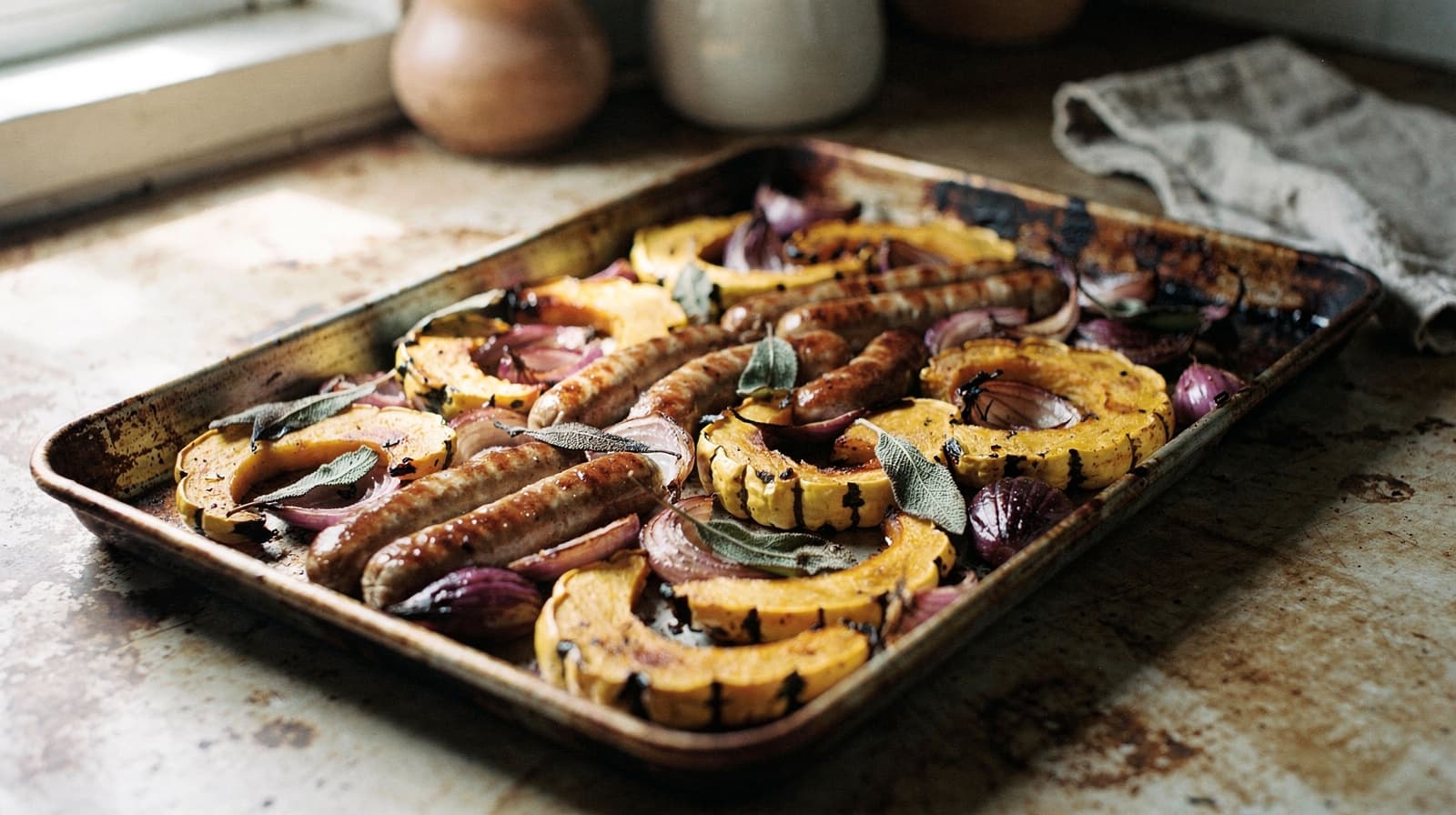
Pork tenderloin, delicata squash, shallots. Delicata doesn't need peeling, which saves real time. Sear the tenderloin briefly first if you want more color, then roast everything together at 400°F for about 25 minutes.
Why fall vegetables suit this format
Winter squash, root vegetables, and brussels sprouts take 40 minutes at 400°F without collapsing, which summer's tomatoes and zucchini won't. They caramelize instead of going watery, and there's enough starch in them that oil, salt and heat is the whole seasoning plan.
They're also cheap right now. Butternut at $1 to $1.50 a pound in September gets you two dinners out of one squash. Root vegetables stay cheap into February because they store in a shed, not a refrigerated truck.
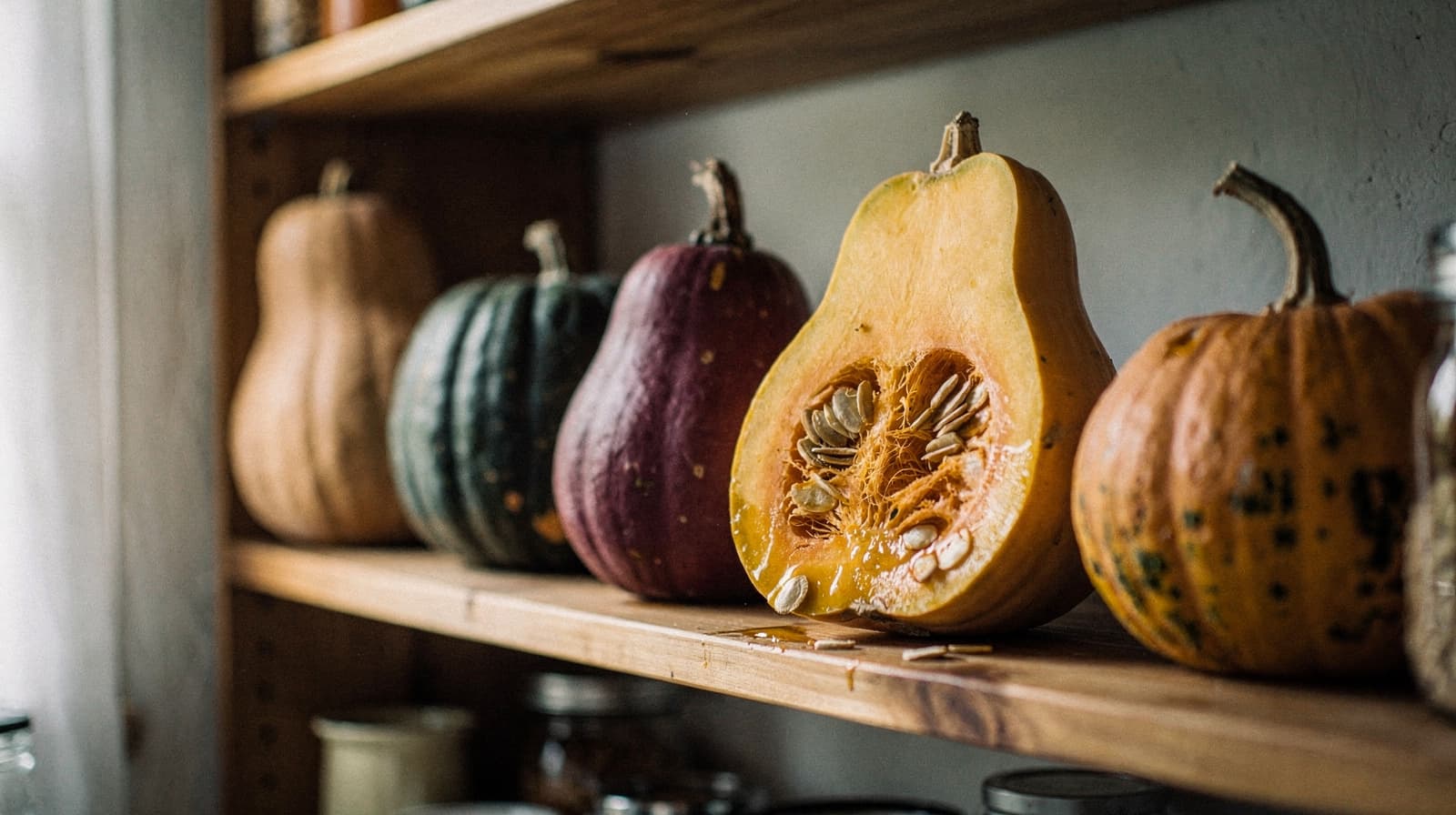
If you're not sure what to do with a particular squash you picked up on impulse, our field guide to winter squash breaks down which ones roast well, which ones are better mashed, and how to tell them apart at the store.
Timing when protein and vegetables cook at different speeds
The most common sheet pan mistake is treating everything as one cook time. A cube of sweet potato and a salmon fillet do not finish together, and no amount of hopeful timing fixes that. Either cut the slow item smaller until it catches up, or stagger the pan and start the slow item alone.
With fish or thin cutlets, stagger. Give the vegetables a 15-minute head start, then slide the protein in for its own time, and open the oven exactly once.
Getting real caramelization instead of steamed vegetables
Crowding is why a sheet pan dinner comes out soft instead of browned. Pile the vegetables two deep and the moisture they release has nowhere to go, so they steam. Spread everything into a single layer, and use two pans if that's what it takes. One extra pan to wash buys you brown edges instead of grey ones.
Then get the oven hot enough: 400°F to 425°F. Below 400 the vegetables dry out before they brown, and above 425 a thin cutlet scorches while the middle is still raw.
Leftovers from a sheet pan dinner
Roasted vegetables and meat keep three or four days in the fridge. Reheat them in a 400°F oven or an air fryer for six or seven minutes, not a microwave, which turns every browned edge soft and grey.
Chopped up, they go into a grain bowl, an omelet, or a quesadilla. Filling the pan on Tuesday is how Wednesday's lunch gets cooked without cooking twice.
Making it part of a weekly rotation
Ten to fifteen minutes of chopping, then 35 minutes where the oven does the work and you don't stand over it. That's the whole case for putting one or two of these in every week. Spend the 35 minutes on homework, on the dishes, or sitting down.
If you're building out a wider rotation of low-effort dinners, our guide to meal planning when you have no time covers how to structure a week around a handful of formats like this one instead of planning seven different meals from scratch. Keeping a running list of your sheet pan combinations in RecipeClip means you're not reconstructing the ratio from memory every time; save the ones that worked, tag them "sheet pan," and pull from that list on the nights you don't want to think.
Line the pan with foil or parchment if you're roasting anything with sugar in it, like the apple-sausage combination. Caramelized sugar welded to a sheet pan is a ten-minute scrubbing job you can skip entirely for the cost of one sheet of foil.