The Five-Dinner Shortlist for Nights You Can't Decide
A five-dinner list you keep on hand for nights when deciding what to cook is harder than actually cooking it.
By 5:30 on a Tuesday, deciding what's for dinner is the hardest part of dinner. Not the cooking, the deciding. You've made forty decisions since breakfast, and standing at the open fridge trying to invent something is one too many. The fix isn't a better recipe. It's fewer choices.
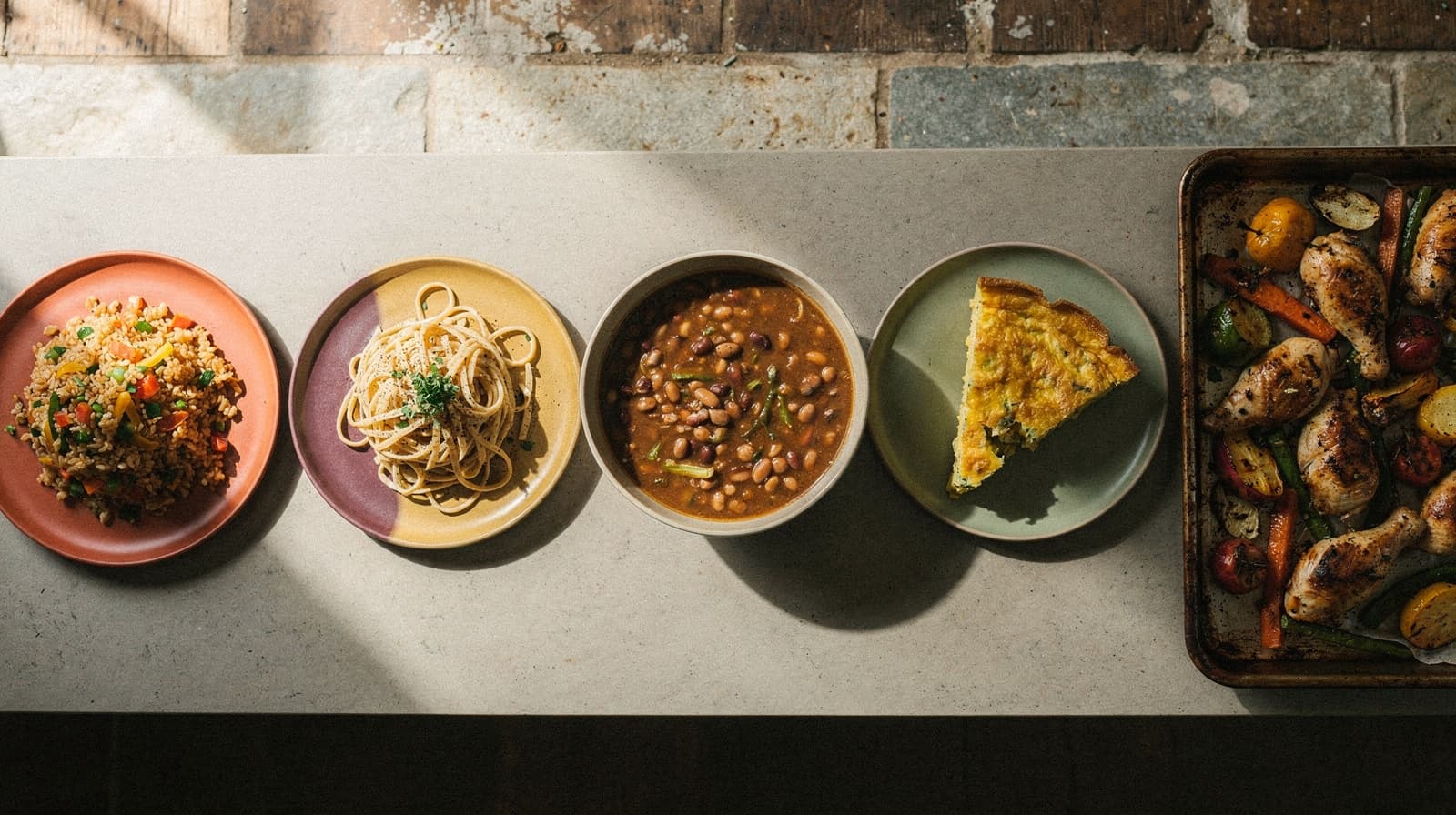
A five-dinner shortlist is five meals you can cook without opening a recipe, kept in your head or on the fridge, reserved for nights when deciding is harder than cooking. Not your favorite five. Not the most impressive five. The five you can run on autopilot.
Why five, and why no recipe
Five is small enough to hold in your head without a list and big enough that you're not eating the same thing twice in a week. A recipe, even a simple one, hands you three more decisions: which recipe, do I have the ingredients, did I read the second step correctly. The shortlist skips all of that. You know the method. You're executing.
This isn't a replacement for a week of planned meals. A meal plan front-loads your decisions into one Sunday session. A shortlist is a permanent fallback for the nights that plan didn't survive contact with reality, or for households that never wanted to plan a whole week. Our guide to meal planning for people who hate meal planning goes further into that lower-effort approach.
What belongs on your list
Three criteria decide this, not the dish. Under 30 minutes. Ingredients you keep in the house without a special trip. No recipe-checking, because you've cooked it enough times to know it by feel.
A reasonable starting shortlist:
- Pasta aglio e olio, or any pasta with olive oil, garlic, red pepper flakes and parmesan, done in the time the water takes to boil and the pasta to cook
- A dump-and-roast sheet pan, protein and vegetables tossed with oil and whatever seasoning is within reach, 400°F for 25-30 minutes, no attention required
- Fried rice, whatever rice, protein and vegetables are in the fridge, which makes it the best entry for using up odds and ends
- Quesadillas or a grain bowl from beans, cheese and leftovers, on the table in 15 minutes
- An omelet or a frittata, eggs plus whatever vegetables and cheese exist. Breakfast for dinner solves more Tuesdays than it gets credit for
Build your own version from what you can cook without thinking. If stir fry is second nature and pasta isn't, swap.
Keep it stocked, not planned
The shortlist runs on a stocked pantry, not on a planning session. If pasta and canned tomatoes are on your five, they belong in the cabinet, not on a list of things you keep meaning to buy. Our guide to cooking with what you already have covers building meals around what's in the kitchen rather than a specific shopping trip, which is the skill underneath a good shortlist.
That's also why the shortlist doesn't compete with a weekly plan. The plan covers most nights on purpose. The shortlist covers the nights the plan collapsed, off staples you were buying anyway.
Where the list lives
A shortlist that lives only in your head gets forgotten on exactly the nights you need it, because those are the tired nights. Write it somewhere you can check in five seconds. A sticky note on the fridge, a note on your phone, a tagged collection in whatever recipe app you already use.
In RecipeClip, a tag called "tired night dinners" does the job. You open it instead of trying to remember, on the night when remembering is the whole problem.
Revisit it every few months, not every week
Don't keep editing the list. Once it's set, leave it alone until something breaks: an ingredient gets hard to find, someone in the house is sick of a dish, or your schedule tightens until 30 minutes is too long. A check-in every few months keeps it useful without turning maintenance into another decision.
Seasons are the usual reason to swap. A sheet pan roast that felt easy in October means a 400°F oven in a July kitchen, and the cold grain bowl nobody touched in February becomes the entry you cook twice a week. Swap one dish, not the list.
The point isn't variety
You'll be tempted to make the shortlist interesting. Five exciting dinners instead of five reliable ones. Resist it. The whole value here is that the list removes decisions, and an interesting dinner adds them back: what to buy, what to read, what to figure out at the stove at 6:15. Keep the exciting recipes for nights you have the energy to want them.
Pick your five this week, write them where you'll see them, and don't touch the list until one of the five stops working.