Dinners That Work When One Person Won't Eat Anything
A practical approach to family dinners when one picky eater rejects most of what you cook, without becoming a short-order cook every night.
The chicken is fine. The rice is fine. But the sauce touched the chicken, so now nothing on the plate is fine. If you've cooked for a picky eater, you know most nights aren't about food at all. They're about texture, color, and whether the green thing is touching the beige thing.
The internet offers two bad options: cook one meal and force everyone through it, or run three separate dinners a night like a diner cook. Neither survives a real week. The middle path starts with treating the picky eater's plate as a variation of dinner, not a separate meal.
Build dinner in components, not one dish
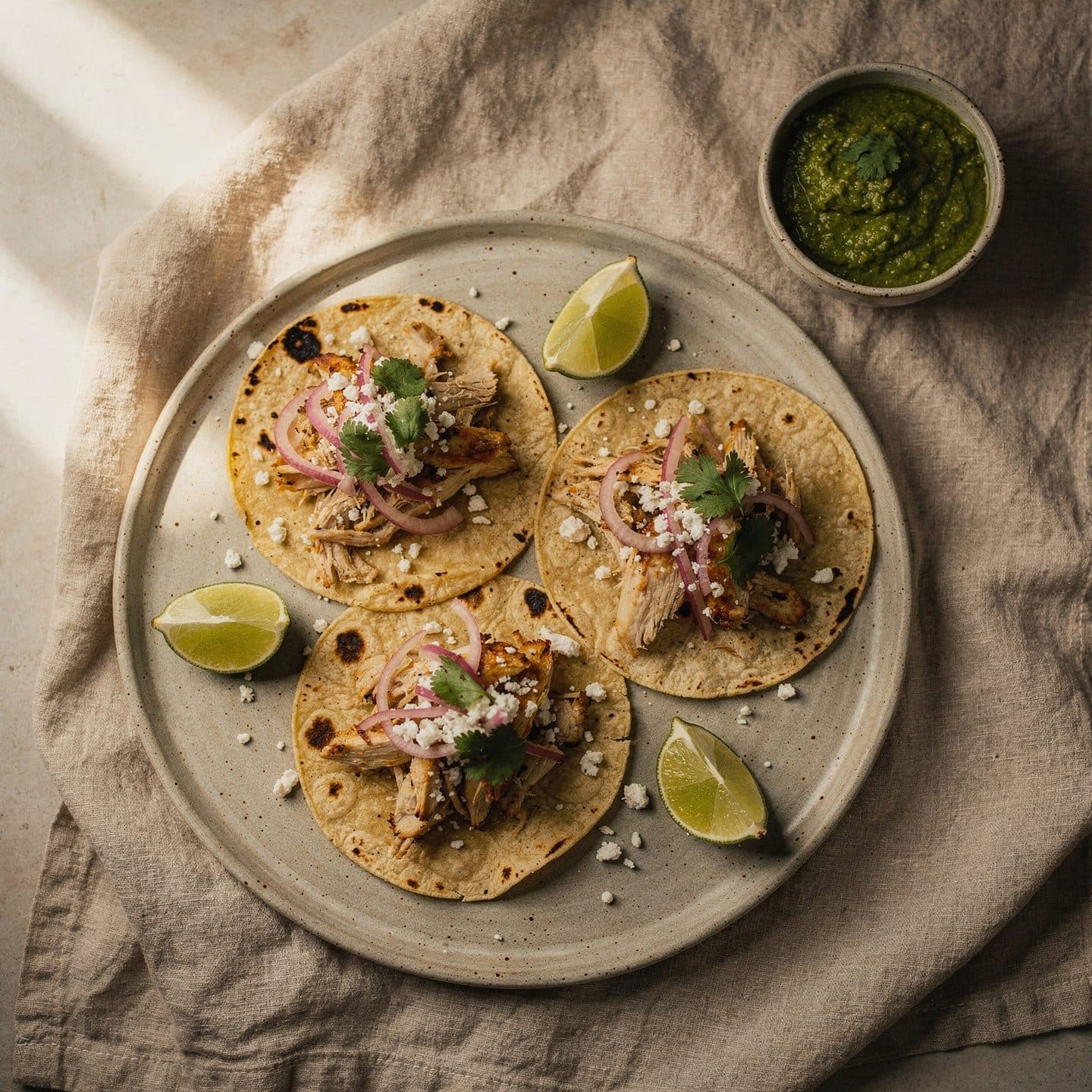
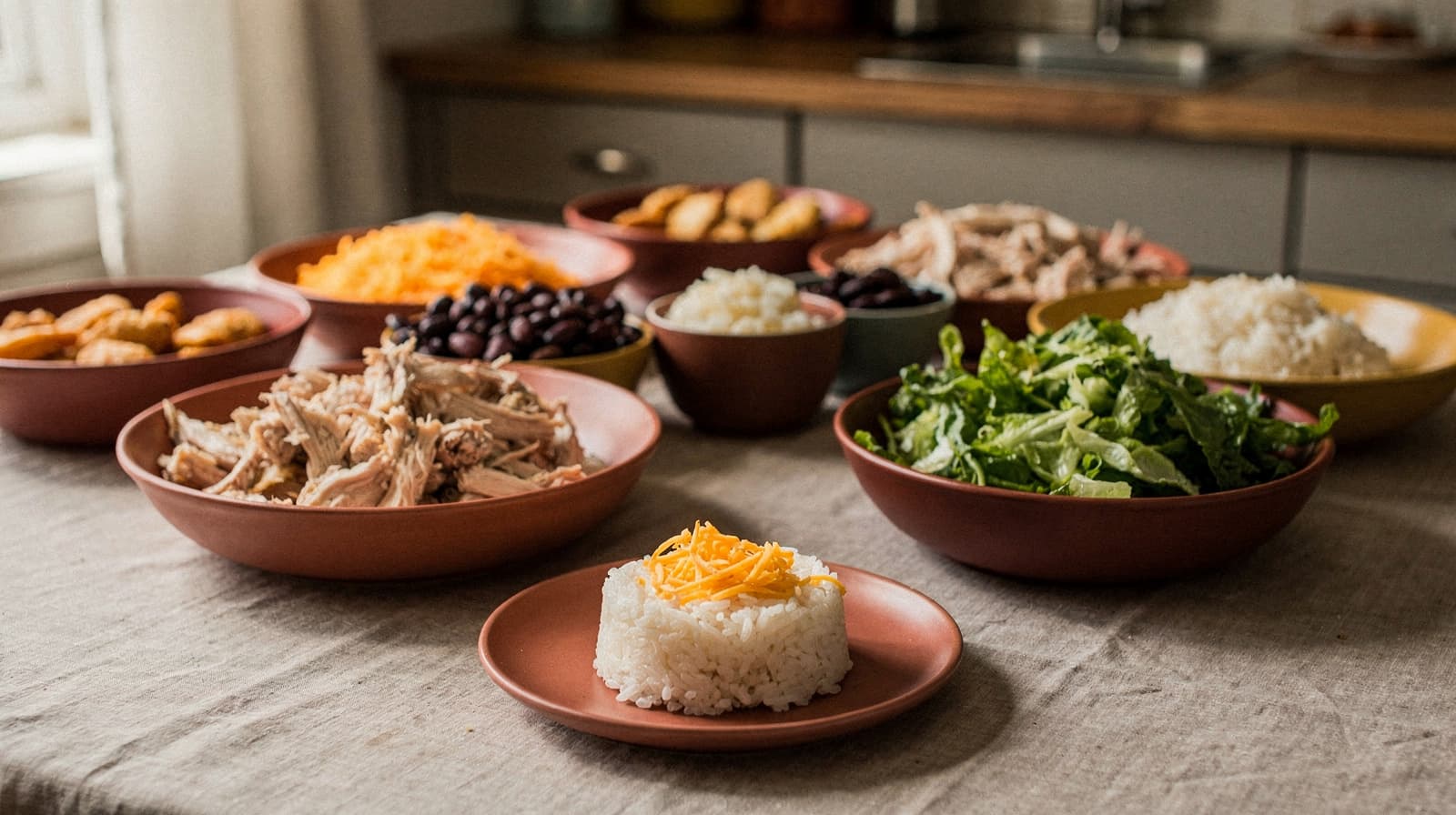
Cook the parts, assemble each plate differently. Put out taco night as five bowls (protein, tortillas, cheese, lettuce, salsa) and one person builds a plain cheese quesadilla while everyone else piles on peppers. Same 30 minutes of cooking, different outcomes on the plate.
This works for more than tacos. Keep a stir fry in three pans until the last minute and one bowl comes out as rice and plain chicken while the rest of the table gets the sauce. Sheet pan dinners work the same way: line down the middle, undressed chicken and potatoes on one half, everything tossed in harissa on the other.
Keep one "safe" element on every plate
Picky eating usually isn't about hating all food, it's about needing something predictable on the plate before trying anything else. If dinner always includes one thing the picky eater reliably eats (plain pasta, a specific bread, a particular fruit), the rest of the meal becomes optional exploration instead of a standoff.
This isn't the same as making a separate meal. It's making sure the shared meal has at least one component the picky eater already trusts. Over time, the "exploration" part of the plate is what expands, but only if the safe element stays consistent enough that dinner doesn't feel like a gamble every night.
Introduce new foods without making them the whole plate
New foods land better in small quantities next to familiar ones than they do as the star of the meal. A tablespoon of a new vegetable next to a full portion of known-good pasta is a much easier ask than a plate where the new thing takes up half the space.
Serve the new thing on its own rather than stirred into a sauce or a casserole, so it's easy to identify and easy to leave alone. Then put it out again next week without comment. A food rejected ten times gets eaten on the eleventh often enough to be worth the repetition, and nobody can point to the push that did it. Watching everyone else eat it does more than anything you could say about it.
Don't negotiate meal by meal ("three bites and you get dessert"). That turns food into a power struggle instead of a taste, and it rarely changes what gets eaten a month from now.
Plan the week around what gets eaten
Work backward from the rotation you already have instead of inventing five new meals a week that everyone loves equally. Most families run on 10-12 dinners that cycle, with one or two new tries dropped in on a night when there's energy for a fight.
Our guide to meal planning for a family of four covers building that rotation in more detail, including how to structure a week so you're not reinventing dinner from scratch every day. The goal isn't variety for its own sake. It's a short list of meals reliable enough that nobody's fighting about food most nights.
What to stop doing
A few habits make picky eating worse, not better, even though they feel like reasonable responses in the moment.
Cooking a completely separate meal every night solves tonight's dinner and guarantees tomorrow's fight, because it teaches that refusing food gets you your own menu. An occasional separate plate on a hard night is fine. A second kitchen shift, seven nights a week, is not.
Bribing with dessert or bargaining over bite counts turns eating into a transaction. Kids pick up the pattern within about a week and start opening at two bites instead of three.
Hiding vegetables in everything is the third habit worth dropping. Blending spinach into a smoothie or grating zucchini into a muffin gets the nutrition in, but nobody learns to eat a vegetable that looks like a vegetable. Do it if you want, just don't count it as progress.
What to do on the nights nothing works
Some nights none of this lands and the safe food gets refused too. Fall back to buttered pasta, toast, or a bowl of cereal rather than turning dinner into a standoff. One rough night doesn't undo weeks of pattern. A nightly power struggle does.
The distinction that matters is between accommodating an off night and restructuring your whole approach around avoidance. If the fallback becomes the only thing that gets eaten for two weeks straight, that's a signal to bring in a pediatrician or a feeding specialist rather than trying to solve it with another dinner strategy from an article.
Keep track of what lands
Over months, the useful move is noticing patterns. Roasted vegetables get eaten and steamed ones don't. Sauce is the dealbreaker, not the protein under it. Those patterns only show up if you write them down somewhere instead of trusting your memory of a Tuesday in March.
RecipeClip lets you tag which recipes worked for which person, so "picky eater approved" is a filter you pull up on Sunday instead of a guess you make fresh every week. For families juggling multiple eaters and schedules, our roundup of recipe apps built for families covers the tools that make coordinating this easier.
Tonight, pick one component of dinner and serve it separately instead of mixed in. That's the whole change.