Too Salty, Too Sweet, Too Flat: Fixing Dinner Mid-Cook
Real fixes for oversalted, overly sweet, or flat-tasting food, and an honest list of the mistakes that don't have a fix.
You taste the soup and your mouth puckers. Too much salt went in, probably from broth and a seasoning packet stacking on top of each other, and dinner is twenty minutes out. Some of these mistakes are fixable mid-cook. Some aren't, and it's worth knowing which is which before you dump in more ingredients trying to save something that's already gone.
Too salty
Salt doesn't cook out. You dilute it or you balance it, and which one works depends on how much liquid is already in the pot.
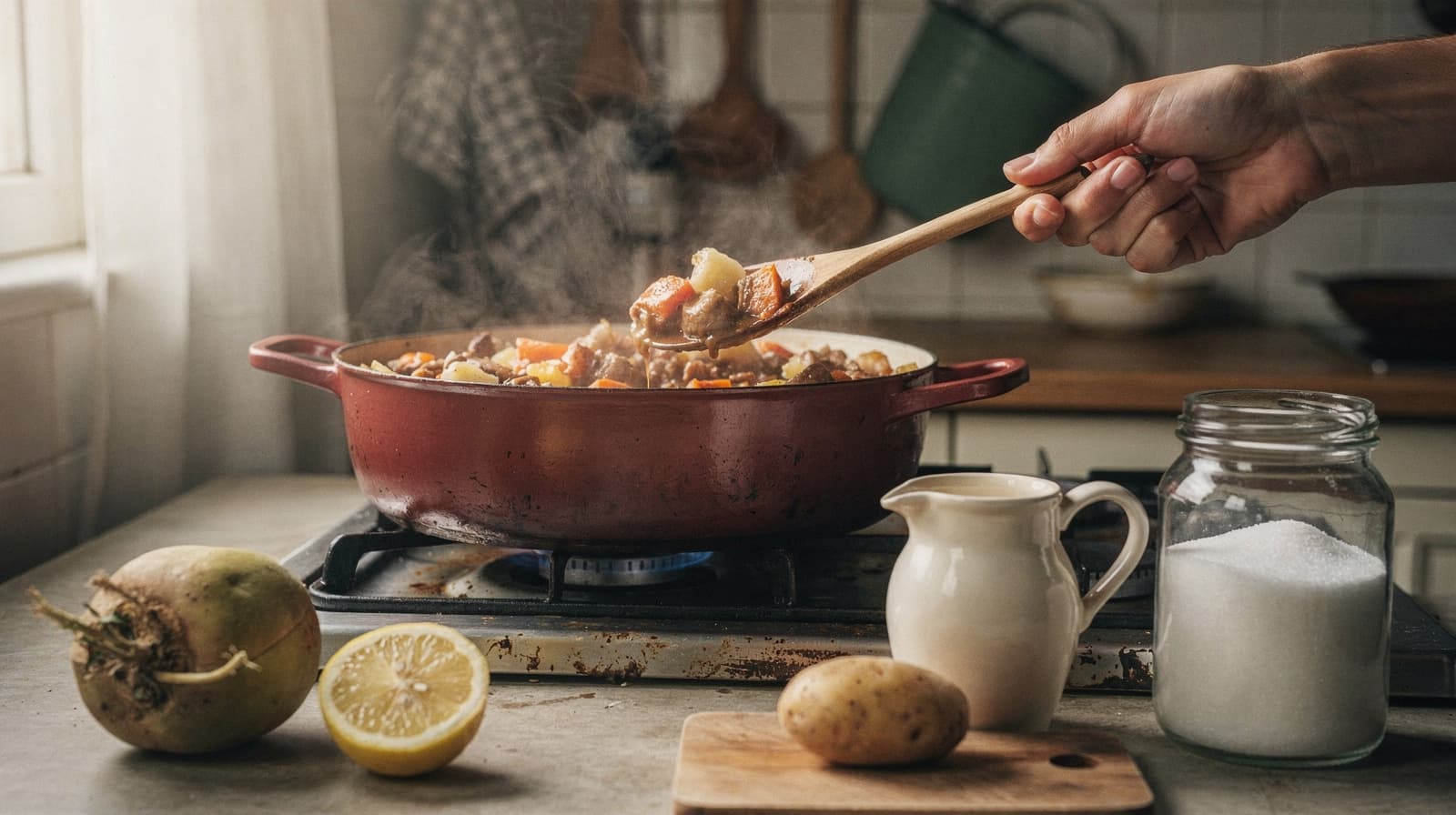
Dilution is the most reliable fix for soups, stews, and sauces with room to take more liquid. Add unsalted broth, water, or a can of unsalted tomatoes and simmer another 5-10 minutes. It's a volume fix, not a taste trick, so use it when the dish can afford to get bigger and you aren't cooking to an exact serving count.
Acid and fat together balance salt without adding volume, which is what you want when six portions have to stay six portions. A squeeze of lemon or a splash of vinegar changes what your tongue notices first; a pat of butter or a splash of cream rounds off the edge salt leaves. Braises and pan sauces respond best.
A raw potato simmered in the liquid is the trick everyone repeats. It pulls out a little salt. Not much. Use it alongside dilution, never instead of it.
Extra starch absorbs salt and adds bulk in one move. Stir in more rice, pasta, or beans than the recipe called for and the blandness takes up some of the excess while the dish stretches to feed more people.
None of these undo an oversalted dish. They move the balance far enough that dinner is edible and often good. But if you put in a tablespoon of salt where the recipe wanted a teaspoon, nothing on this list recovers it, and you're better off admitting that than pouring in broth until the pot won't fit on the stove.
Too sweet
This shows up most in sauces and glazes where sugar or a sweet ingredient (ketchup, barbecue sauce, honey) went in heavier than intended.
Add a pinch of salt. Salt and sugar suppress each other on the tongue, and a quarter teaspoon in a pot of barbecue sauce does more than you'd guess. Go small, taste, add again only if you need to. Oversalting while fixing oversweetness leaves you with two problems.
Acid works here too. A splash of vinegar or citrus juice cuts sweetness the same way it cuts salt, and it's the better move in a dish that already has plenty of sodium.
Bitterness is the third lever and the hardest to steer. Extra black pepper, a dash of unsweetened cocoa in a savory sauce, a spoonful of mustard. Taste after every addition, because bitterness overshoots fast and there's no fixing that.
Too flat or bland
This is the most common complaint and the easiest to solve. "Flat" almost always means missing salt, missing acid, or both. It rarely means the dish needs a new ingredient.
Salt first, a quarter teaspoon at a time, tasting between each. Most home cooks under-salt out of caution and serve food that tastes like nothing in particular. Then acid: a squeeze of lemon, a splash of vinegar, a spoonful of pickle brine, added in the last minute rather than the first, because the brightness cooks off.
If salt and acid together still leave the dish tasting muted, the next move is usually fat (a drizzle of good olive oil, a pat of butter) or umami (a dash of soy sauce, a spoonful of miso, a sprinkle of parmesan), which round out flavor in a way plain seasoning can't.
What doesn't have a fix
Some mistakes are honest failures, not seasoning problems, and no amount of adjusting at the end recovers them.
- Overcooked, dry meat. No sauce fixes texture. Slice it thin, drown it in gravy, take the thermometer out earlier next time
- Burnt garlic, or a scorched pan bottom. That bitterness runs through everything and can't be balanced. Start the base again if you have the ingredients
- Curdled dairy, from cream or milk hitting something too hot or too acidic. It won't come back together. Temper next time and keep the heat lower
- Undercooked rice or beans. Seasoning doesn't cook them. They need time, which means dinner is late
Knowing this list saves ingredients. Chasing a fix that doesn't exist burns the twenty minutes you could have spent boiling the pasta that rescues most kitchen disasters.
Building the habit that prevents most of this
Almost all of this traces back to not tasting while you cook, rather than one bad decision at the end. Taste at three or four points through a recipe. You catch the salt at a teaspoon instead of a tablespoon, and you adjust in small moves rather than performing surgery on a finished pot.
Write down the fix that works for you, a ratio of vinegar to sugar say, next to the recipe, so you're not deriving it again in six weeks. Our guide on recipe substitutions covers the neighbouring problem of swapping ingredients you don't have, rather than fixing a dish after the fact. And keeping acids, fats, and starches stocked, covered in our rundown of essential pantry staples, means the fix is already in the cupboard when you need it.
Taste before you serve, and taste again after you adjust.