You Picked Twelve Pounds of Apples. Now What?
A dozen ways to use up an orchard haul beyond pie, sorted by how much effort you actually feel like putting in this week.
A half-bushel of apples is heavier than most people expect when they're standing in an orchard filling a bag for fun. By the time you're home, you've got roughly 12 pounds, which is somewhere around 35 to 40 apples, and pie only accounts for maybe six of them. The rest need somewhere to go before they start softening on the counter.
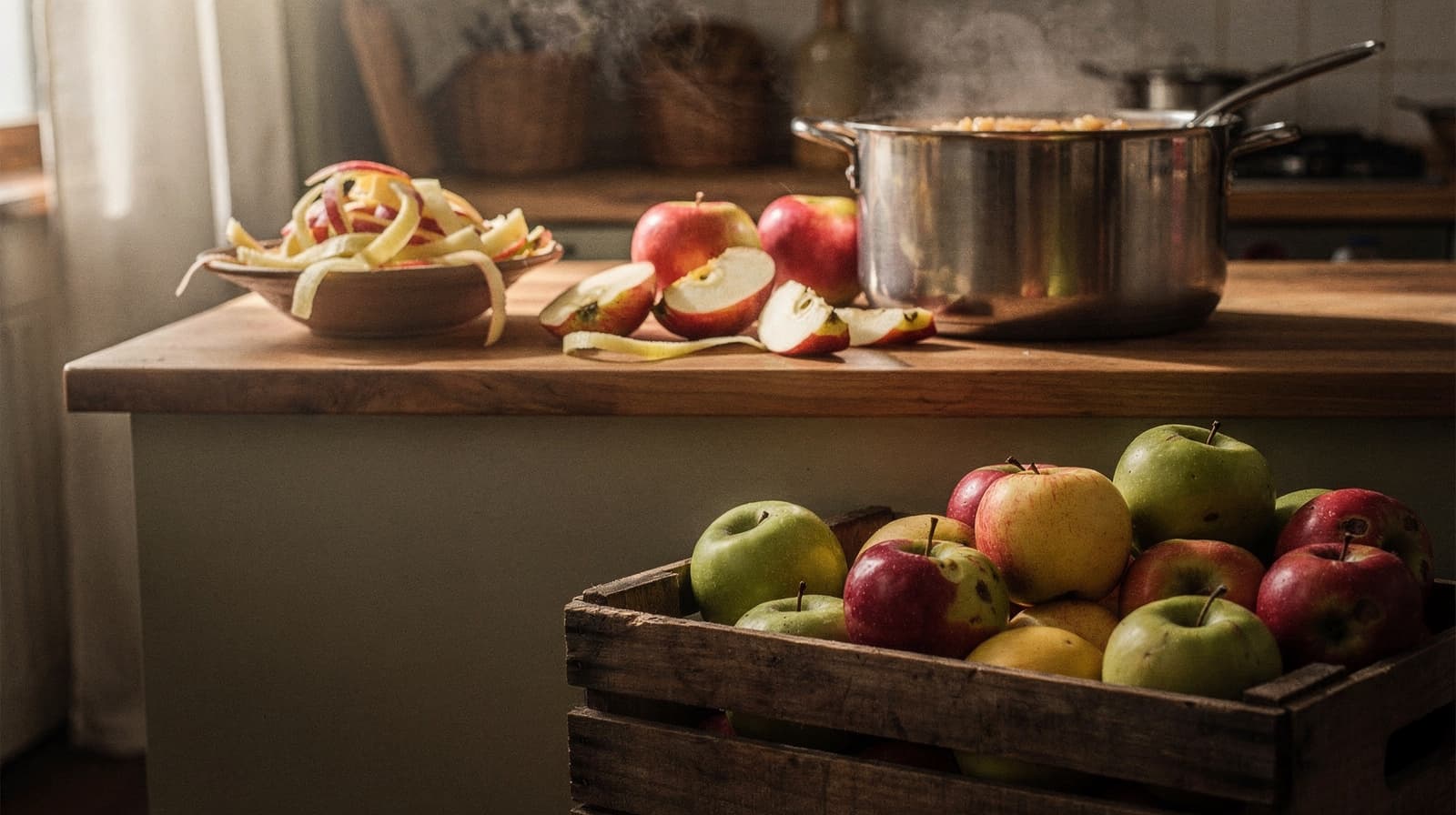
Apples hold up better than most fruit, a few weeks in the crisper if you keep them away from other produce (they release ethylene gas that speeds up ripening in anything nearby). But 12 pounds is still 12 pounds, and a plan beats letting them sit.
Freeze a batch immediately, no cooking required
Freeze a few pounds before you've decided what to make with them. Peel, slice, toss with lemon juice to stop the browning, and freeze flat on a sheet pan before bagging. That buys you months, and the slices go into a crisp, a pan sauce for pork chops, or a pot of oatmeal straight from frozen.
Do this first, on the day you get home. Choosing what to cook with 40 apples is the part that stalls people, and freezing half the pile cuts the decision in half too.
Low effort: raw and barely-cooked
Apple slices with peanut butter and everything else. Not a recipe, just a reminder that this is a legitimate way to eat several apples across a week without any cooking at all.
Quick apple slaw. Julienne a couple of apples, toss with shredded cabbage, a squeeze of lemon, and a light vinaigrette. Keeps for two days in the fridge and works alongside pork, chicken, or a grain bowl.
Apple and cheddar toast. Thin apple slices under melted sharp cheddar on toast, run under the broiler for two minutes. Ten minutes, tastes like more effort than it is.
Sauteed apples for oatmeal or yogurt. A tablespoon of butter, sliced apples, a pinch of cinnamon, five minutes in a pan. Spoon over anything that needs a topping.
Medium effort: a real dish, still fast
Applesauce. Quarter and core a few pounds (no need to peel, the skins soften and blend in, or strain them out after if you want it smooth), simmer with a splash of water and a cinnamon stick for 20 minutes, mash or blend. Freezes well in portioned containers.
Apple and sausage skillet. Sliced apples and sausage, seared together with an onion, finished with a splash of cider vinegar. One pan, 20 minutes, dinner. For the hands-off cousin of it, our sheet pan dinners for fall roasts the same sausage-and-apple pairing instead of pan-searing it.
Baked apples. Core whole apples, stuff with oats, brown sugar, and butter, bake at 375°F for 30 to 35 minutes. Less work than pie, similar payoff, and a reasonable use for the apples that are a little too soft for slicing cleanly.
Higher effort, worth it if you've got the time
Apple butter. A slow-cooked, deeply concentrated spread, essentially applesauce cooked down for hours until it caramelizes. A slow cooker does most of the work: apples, a little sugar, spices, 8 to 10 hours on low, stirring occasionally near the end. Freezes for months and uses up several pounds at once.
Apple cider (the stovetop version). Simmer apple scraps, cores, and peels (saved from other recipes) with water, cinnamon, and cloves for an hour, strain. A good way to use the parts you'd otherwise compost.
Dried apple rings. Thin slices, 200°F oven or a dehydrator, three to four hours. They keep for weeks in a jar and get eaten faster than that.
Freezing for later, beyond raw slices
Cooked apple dishes freeze about as well as the raw fruit. Applesauce, apple butter and pre-made crisp filling all hold two to three months, so one Saturday afternoon becomes four desserts you don't have to cook in December.
Label the containers with contents and date. Our guide to freezer meal planning covers the portioning, and it's the difference between crisp filling in March and an unmarked bag of brown mush you eventually throw out.
Matching the apple to the use
Varieties behave differently under heat, and an orchard haul is whatever was ripe that week. Granny Smith and Honeycrisp hold their shape through 35 minutes in the oven, so they get the skillet and the baked apples. McIntosh collapses, which is exactly what applesauce and apple butter want.
Don't know what you picked? Bite one. If it's crisp with no give, it'll hold its shape cooked. If it's already soft, it's sauce, whether that was the plan or not.
The realistic plan for 12 pounds
Split the haul into thirds:
- Four pounds eaten raw or in the quick preparations above, over the next two weeks
- Four pounds cooked and frozen as applesauce or crisp filling
- Four pounds frozen raw in slices, for whenever a recipe wants apples and the crisper is empty
Saving the version that worked
When you land on something good, the sausage skillet or a spice ratio in the applesauce that finally works, write it down that night. Twelve months is long enough to forget it completely. A note in RecipeClip tagged "apples" means next October starts from last year's version, with your own edits on it.
None of this needs a weekend of apple processing. Twenty minutes at a time, four or five times across a week, clears twelve pounds. Start with the freezing, tonight.