A Soup Season Meal Plan That Survives Past Week Three
How to build a rotating soup meal plan for fall and winter that stays interesting past week three, with batch-cooking and freezing that works.
Week one of soup season is great. You make a pot of chili, it's warm and easy, everyone's happy. Week two, minestrone. Still good. By week three you're eating your fourth bowl of something brothy and beige, and it all tastes vaguely like the last thing, and your household starts asking if there's anything else.
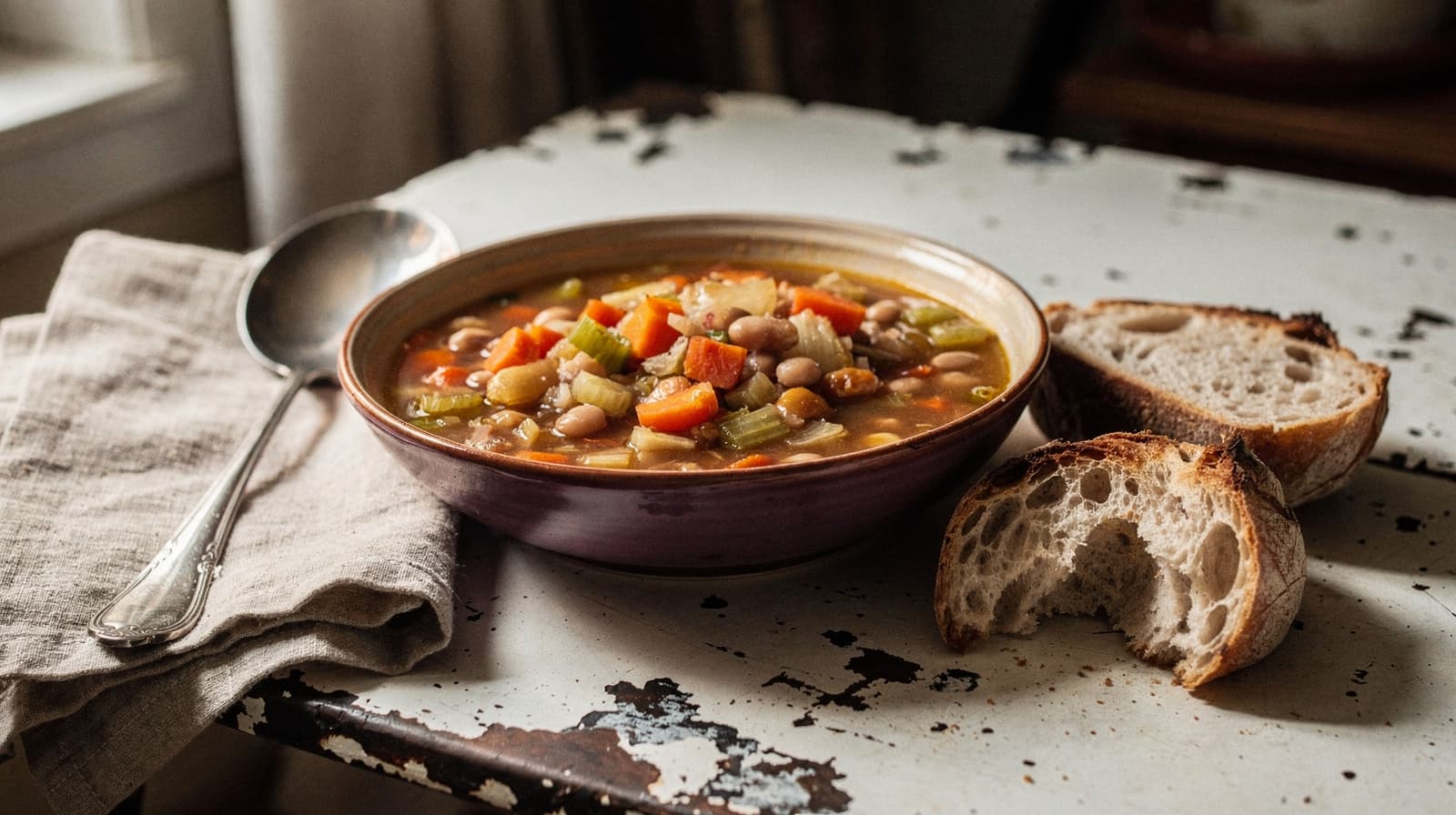
Soup fatigue isn't a willpower problem. It's a variety problem. Most rotations change the vegetables and keep everything else identical: same broth base, same protein, same finishing texture, same bowl every night from October to February. Fix the mechanism, not the recipe list, and soup season runs four months without repeating itself.
Build from four variable axes, not a recipe list
Instead of collecting 12 soup recipes and cycling through them, think of soup as four swappable parts: broth base, protein, starch or legume, and topping. Change two of the four each time you cook and the bowl reads as a different meal even when the technique underneath is nearly the same.
- Broth base: chicken stock, beef stock, vegetable stock, dashi, a tomato base, or a coconut-milk curry base
- Protein: shredded chicken, ground beef or turkey, white beans, lentils, tofu, sausage, or leftover roast meat
- Bulk: rice, orzo, potatoes, farro, chickpeas, or noodles
- Topping: a fried egg, crushed tortilla chips, grated parmesan, a spoon of yogurt, chili crisp, fresh herbs, or croutons
A chicken stock base with white beans, orzo, and parmesan is a different meal from the same chicken stock with shredded chicken, rice, and a lime-cilantro finish, even though the pot work is nearly identical. Same 20 minutes of chopping, same 25-minute simmer. Nobody at the table connects the two.
The four-week rotation
A practical version of this splits the season into four broth families and rotates through them so no two consecutive weeks share a base.
Week 1: chicken stock. Chicken noodle, chicken and rice with lime, or a lemony chicken orzo soup. This is the base most people already know, so start here.
Week 2: tomato base. Minestrone, a white bean and kale soup with crushed tomatoes, or a tomato-basil with grilled cheese on the side. Buy the 28-ounce cans of whole peeled tomatoes and crush them yourself; the pre-crushed ones cook down thin.
Week 3: coconut curry base. Coconut lentil soup, a Thai-style coconut chicken soup, or a red curry vegetable soup. This is the most different bowl of the month, which is why it lands in the week people start complaining.
Week 4: beef or pork stock. French onion, a beef and barley soup, or a pork and hominy pozole.
Then start over at week 1, but swap the specific recipe within each broth family. Chicken noodle becomes chicken tortilla soup. Minestrone becomes a white bean and sausage soup. The broth base repeats on a four-week cycle; the actual dish never does.
Batch-cook the base, not the whole pot
Separate the batch-cookable part from the part you finish fresh. Broth, beans, and shredded proteins freeze beautifully. Noodles, rice added straight to the pot, and cream do not: pasta comes back slimy and dairy splits into curds the second it hits a simmer.
So batch a double recipe of the broth-plus-protein-plus-vegetable base on a Sunday, freeze it in quart containers, and add the starch fresh when you reheat. A frozen quart of chicken-vegetable base thaws in a saucepan in about 15 minutes, and adding orzo or rice at that point takes another 8-10 minutes. Dinner in under half an hour, without the flavor damage that comes from freezing already-cooked pasta.
This is the same logic behind freezer meal planning generally: freeze the component that holds up, finish the component that doesn't, right before you eat.
Keep toppings out of the pot
Put the toppings on the table, not in the pot. This is the step people skip and it does more work than any recipe swap. A bowl of plain lentil soup and a bowl of lentil soup with a fried egg, chili crisp, and a squeeze of lime taste like two different meals out of the same ladle.
Keep a topping shelf going all season: a jar of chili crisp, a block of parmesan, a lime, a bag of tortilla strips, a tub of plain yogurt. Ten dollars, restocked once a month. It's the fastest way to make the same base taste new four nights running, which is the situation you're in every time you cook a double batch.
Use the freezer as a second menu, not just storage
Most people freeze soup and then forget what's in there until they're digging through a frozen block trying to identify it. Label containers with the broth base and date, not just "soup." Future you needs to know if this is the coconut curry base or the beef barley base to decide what to add when reheating.
A soup freezer stash also solves the no-cook-tonight problem better than takeout does. If you're building a broader system for using what's already in the house before it goes to waste, the ideas in our no-waste meal plan pair directly with soup season. Bruising vegetables, the end of a rotisserie chicken, and the last cup of rice from Tuesday all belong in a soup pot rather than the trash.
Let the vegetable be the headline
Soup is one of the few meals where the vegetable can carry the bowl and nobody registers it as a vegetable dinner. A whole cabbage, quartered and simmered in a beef or pork broth with caraway, costs under $3 a serving and doesn't taste like a diet. We wrote a full rundown of cheap cabbage dinners if you want more of these; cabbage holds up in the pot for 45 minutes without going to mush, which puts it ahead of most leafy greens for soup duty.
Root vegetables do the same job. Carrots, parsnips, and potatoes bulk out a pot for pennies and take on whatever broth they sit in, so the same $2 bag of carrots reads as coconut curry one week and beef barley the next.
Where the plan lives
None of this needs a spreadsheet. You need two facts on demand: which broth base you used last week, and which quarts are in the freezer right now.
A drag-and-drop weekly calendar holds both better than a sticky note, because you see the whole month's rotation at once instead of trying to remember what Tuesday was three weeks ago. RecipeClip's meal-plan calendar lets you drop soup recipes onto specific days and tag the broth family, so the four-week cycle is on screen instead of in your head.
If you're also trying to prep components ahead for the rest of the week, not just soup, the weekly meal prep guide covers the same batch-and-reassemble logic applied to grain bowls and sheet pan dinners, which rotates in nicely on the nights you don't want soup at all.
Buy a second set of quart containers before the season starts. Eight is not enough once the rotation is running; twelve is about right for a household of four.