How to Cook for One Person (Without the Waste, Boredom, or Sad Desk Lunch Energy)
Cooking for one doesn't have to mean sad salads or half-eaten takeout. Here's how to cook real meals for yourself, efficiently and cheaply, without the waste.
Cooking for one gets a bad reputation. The assumption is that it's either sad — a bowl of cereal at 9pm — or impractical: you buy a head of cabbage, use two leaves, and watch the rest slowly die in your fridge.

Neither of those has to be true. Cooking for one is actually one of the best cooking situations there is. You only have to please yourself. You can eat at whatever time you want. There's no negotiating over whether tonight is pasta or stir fry.
Here's how to make solo cooking work without waste, without boredom, and without burning through your grocery budget.
The core problem: recipes are written for four people
Almost every recipe you encounter is written to serve 4–6 people. This is the root of why cooking for one feels hard. You either make a massive batch and eat the same thing for five days straight, or you try to quarter the recipe and end up with "⅜ of an egg."
The solution isn't to suffer through scaled-down math every time. It's to build a smarter approach around a handful of flexible techniques.
Build around "modular" ingredients
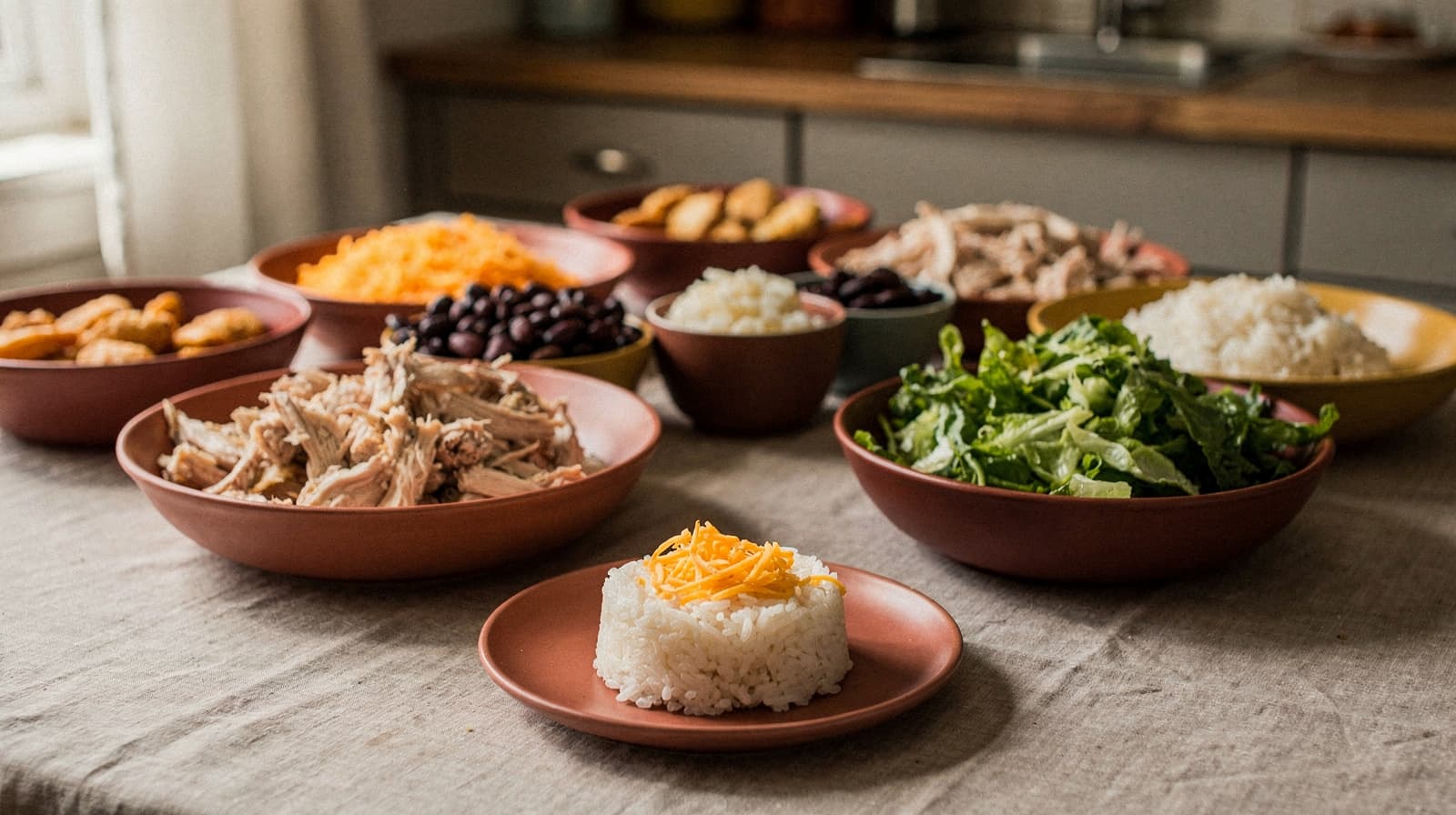
The biggest shift in solo cooking is thinking in components, not complete recipes. Instead of asking "what am I making tonight?", ask "what building blocks do I want to have on hand?"
Good modular ingredients for one:
- A cooked grain. Rice, farro, quinoa. Make a batch on Sunday; it lasts 5 days in the fridge.
- A roasted or seasoned protein. Chicken thighs, a couple of eggs, canned chickpeas, or some pan-seared tofu.
- Fresh vegetables. A mix of ones that last (carrots, cabbage, bell peppers) and ones you'll use fast (spinach, zucchini).
- A versatile sauce. Tahini, miso paste, jarred salsa, or just olive oil with garlic.
With those four things covered, you can assemble a different dinner in 10 minutes every night of the week. Monday is a grain bowl. Tuesday is a wrap. Wednesday is a stir fry with leftover rice. No recipe needed.
Learn to scale recipes correctly
When you do want to follow a recipe, knowing how to scale it down properly is the difference between one good dinner and five days of the same leftovers. Most ingredients scale linearly. If a recipe for 4 calls for 2 cups of broth, you use ½ cup for one. But a few things don't:
- Seasonings. Don't quarter the salt and spices directly. Start at half, taste, and adjust. Over-salted food is much worse at small scale.
- Baking. Don't try to quarter baked goods. Make the full recipe and freeze extra portions, or find recipes explicitly written for small batches (there are entire cookbooks dedicated to this).
- Aromatics. You rarely need to quarter garlic or onion. Use one clove instead of four, not a quarter clove. Flavor doesn't scale the same way volume does.
If you regularly cook from online recipes, saving them to a recipe library and adding personal scaling notes makes this much easier to manage over time.
Master the freezer
The best solo cooks treat their freezer like a second pantry.
The rule is simple: anytime you're cooking something that freezes well, make extra. This applies to:
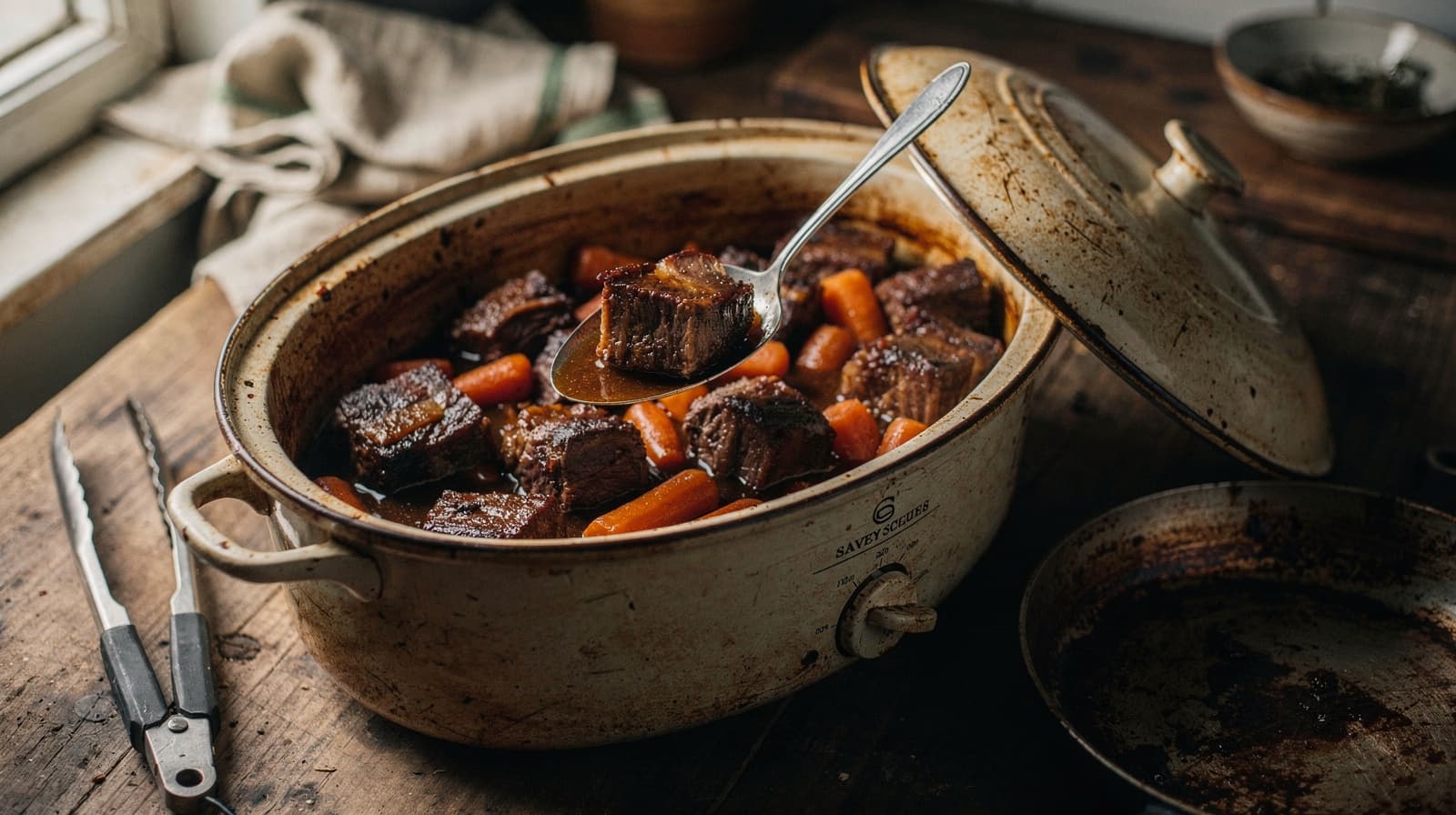
- Soups and stews. Almost all of them freeze perfectly. Make a full pot, divide into single-serving containers, freeze for 2 months.
- Grains and legumes. Cooked rice, lentils, and beans freeze well in small bags. Defrost one portion at a time in minutes.
- Proteins. Cooked chicken or beef can be frozen in portioned bags. Great for quick grain bowls or fried rice later in the week.
- Bread and tortillas. Buy a full loaf or pack, freeze what you won't use in 2-3 days. Pull individual slices as needed.
The goal is a freezer that feels like a collection of individual meal components you can mix and match. Suddenly cooking for one means opening a freezer with options, not starting from zero every night.
Shop smarter for one
Grocery shopping for one is an art. The biggest mistakes:
Buying too much fresh produce. It feels wasteful to buy just one apple or a small bag of spinach, so people buy the big bag and watch half of it go bad. Buy less, more frequently, or pivot to frozen vegetables, which are nutritionally equivalent and never go bad.
Ignoring "awkward" pack sizes. A tray of 8 chicken thighs when you only need 2 feels inefficient. The move: cook all 8, eat 2 tonight, refrigerate 2 for later this week, freeze the other 4 in pairs. One cook, four future meals.
Underusing canned and jarred staples. For solo cooking, canned beans, canned tomatoes, coconut milk, and jarred anchovies or olives are some of your best friends. Zero waste, full flavor, long shelf life.
Overbuying "just in case." Solo kitchens don't need redundant staples. You probably don't need both soy sauce and tamari, or both cumin and ground cumin seed. Keep the pantry tight and use what you have. Meal planning around what's already in your fridge helps significantly with this.
The best meals to cook for one
Not all cooking styles are equally well-suited to single servings. These formats work especially well:
Stir fry
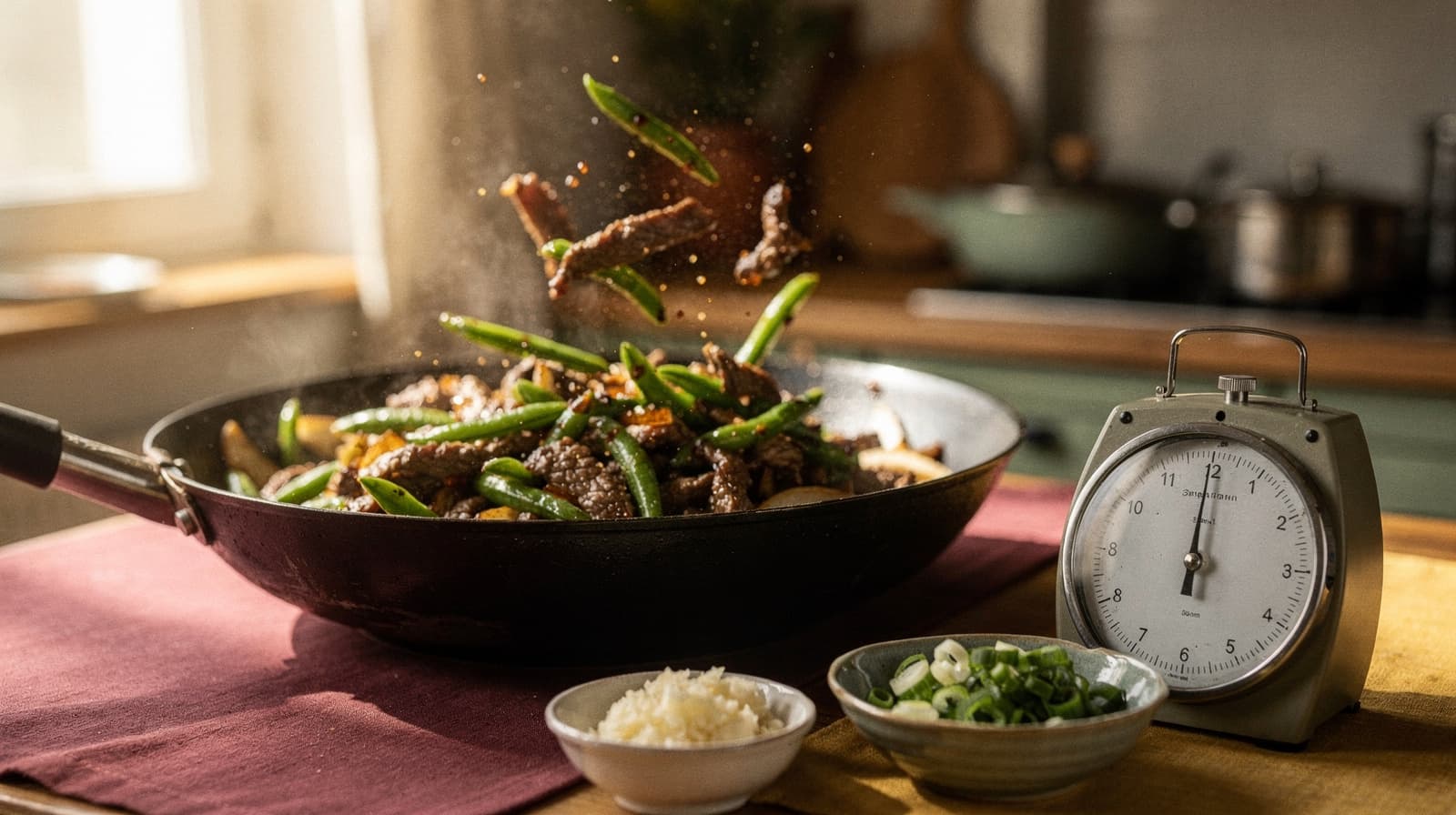
One of the most natural single-serving meals. A wok or large pan, whatever vegetables you have, a protein, soy sauce and sesame oil. Takes 10 minutes. Easy to adjust on the fly based on what needs using up.
Eggs (more than you think)
Eggs are one of the most versatile single-portion proteins in existence. Beyond scrambled or fried: shakshuka (eggs poached in spiced tomato sauce, and it scales down to one easily), egg fried rice, a Spanish tortilla (thick egg-and-potato omelet that reheats well), or soft-boiled eggs over a grain bowl.
Sheet pan meals
Toss protein and vegetables with oil and seasoning on one pan, roast at 400°F for 25-30 minutes. Requires almost zero effort, produces minimal dishes, and the leftovers are good cold the next day.
Grain bowls
Already mentioned above, but worth emphasizing: this is the format. A base, a protein, some vegetables, a sauce. Mix the components on the weekend, assemble at dinner. Endlessly variable.
One-pot pastas and risottos
Both scale down naturally to 1-2 portions and don't require hours of work. A single-serving pasta with olive oil, garlic, and parmesan takes 15 minutes. Risotto for one takes the same 25-30 minutes as for four — just with smaller quantities.
Keeping track of what you have (and what works)
One of the underrated challenges of solo cooking is memory. You make a great stir fry, improvise a solid sauce, forget what you did, and can never replicate it. Or you keep buying the same ingredient not realizing you have it at home.
Keeping a simple recipe library — especially for the meals you cook on rotation — solves both problems. You can note your personal scaling tweaks, flag what worked, and build up a repertoire rather than starting from scratch every week. RecipeClip is built specifically for this: save recipes from anywhere on the web, tag them, and add your own notes so your version of the recipe is always one tap away.
You're not missing out
The last thing worth saying: cooking for one doesn't have to feel like a lesser version of "real" cooking. You're not making compromises. You're making exactly what you want, exactly when you want it, with no one else's preferences in the equation.
That's actually pretty great.
Next time you improvise a stir fry that works, write down what you did before you forget it. That note is the start of your solo repertoire, and RecipeClip is a decent place to keep it.