How to Write Your Own Recipes
Learn how to write your own recipes with clear steps, proper formatting, and tips that make them easy to follow and share.

How to Write Your Own Recipes
You've made that dish a hundred times. Friends ask for the recipe and you say, "Oh, I just wing it." But winging it means the dish never tastes exactly the same twice, and you can never share it properly.
Writing your own recipes isn't about being a professional chef or cookbook author. It's about capturing what you already know so you can repeat your best dishes, share them with people you love, and stop losing great meals to memory.
Here's how to do it, even if you've never written a recipe before.
Why bother writing recipes down?
Most home cooks resist writing recipes because it feels formal and unnecessary. But there are real, practical reasons to start:
- Consistency. You'll be able to recreate that perfect soup from last Tuesday.
- Sharing. When someone asks "how do you make that?", you'll have a real answer.
- Improvement. Once a recipe is written down, you can tweak it intentionally instead of guessing what you changed.
- Legacy. Family recipes disappear when they live only in someone's head.
You don't need to write like a food magazine. You just need a system that works for you.
Step 1: Cook the dish and take notes in real time
The biggest mistake people make is trying to write a recipe from memory after the fact. You'll forget quantities, skip steps, and underestimate timing.
Instead, cook the dish with a notepad (or your phone) nearby. As you go:
- Measure everything. Even if you usually eyeball it, measure this one time. Write down "about 2 tablespoons" rather than "some."
- Note the order of operations. When did you add the garlic? Before or after the onions softened?
- Track timing. How long did you sauté? When did you know it was done?
- Record sensory cues. "Cook until the edges are golden brown" is more useful than "cook for 7 minutes" because every stove is different.
One cook-through with notes gives you 80% of a finished recipe.
Step 2: Structure your recipe clearly
A good recipe has a predictable structure that readers can follow without re-reading paragraphs. Here's the format most people expect:
Recipe title
Make it descriptive. "Chicken" tells you nothing. "Crispy Lemon Chicken Thighs with Roasted Garlic" tells you exactly what you're making.
Headnote (optional but valuable)
A sentence or two about what makes this dish special, what to expect, or when to serve it. This is where your personality goes — not buried in the instructions.
Yield and timing
Include servings, prep time, and cook time. Be honest. If your "15-minute meal" takes 15 minutes only after 20 minutes of chopping, say so.
Ingredient list
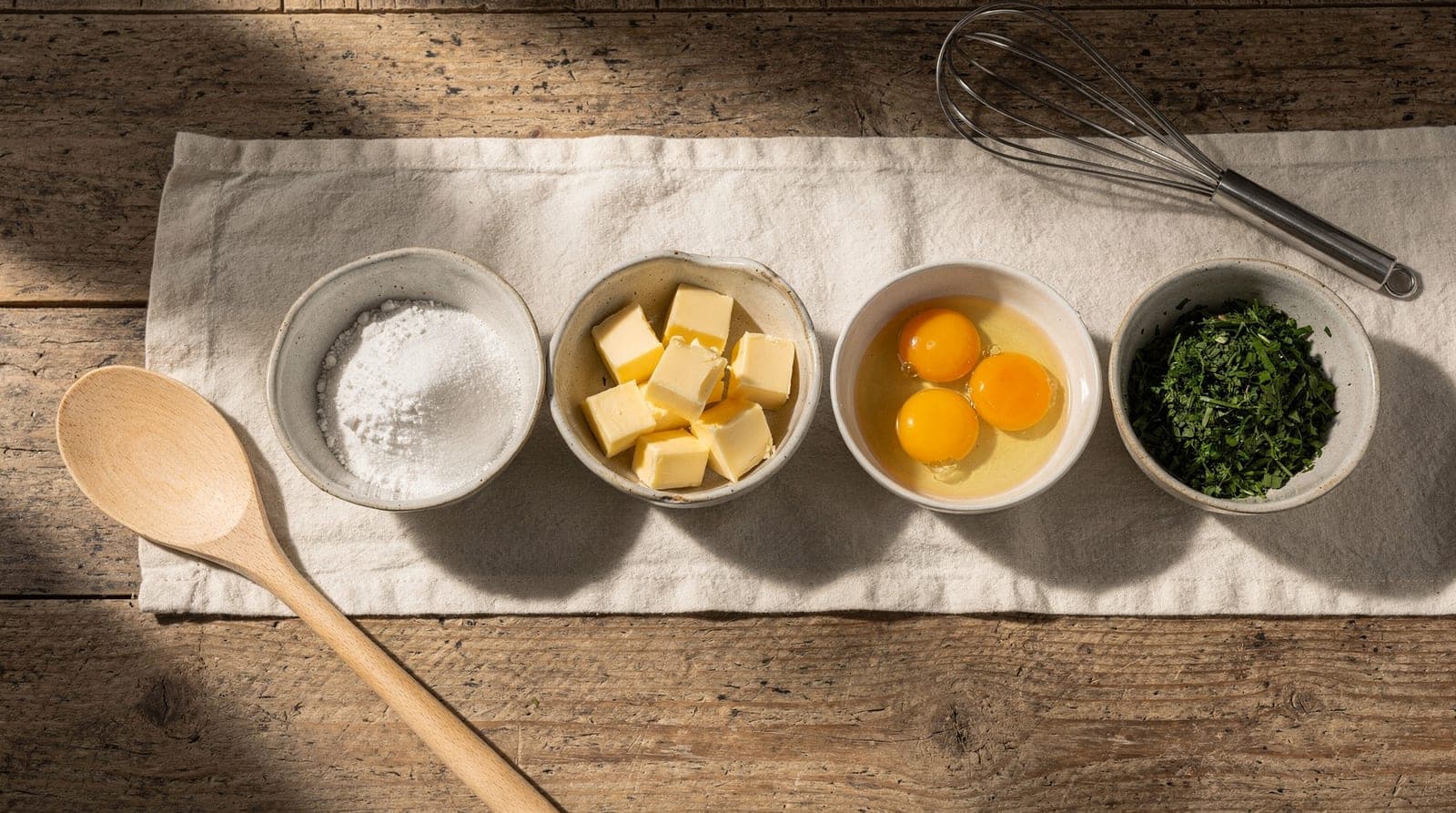
List ingredients in the order you'll use them. This is the single most helpful thing you can do for the person following your recipe.
A few formatting rules:
- Quantity first, then ingredient, then preparation. Write "1 medium onion, diced" — not "dice 1 medium onion."
- Be specific about forms. "1 cup spinach" could mean raw or cooked, packed or loose. Clarify: "1 cup fresh spinach, packed."
- Group by section if the recipe has multiple components (like a sauce and a main).
Instructions
Number your steps. Each step should cover one action or a closely related set of actions. Avoid cramming three techniques into a single paragraph.
Good step: "Heat olive oil in a large skillet over medium-high heat until shimmering, about 2 minutes."
Bad step: "Heat oil then add chicken and cook it and while it's cooking chop the vegetables and make the sauce."
Step 3: Test it at least twice
Your first written version is a draft. Cook it again following your own instructions — literally reading from the page as if you've never made it before.
You'll catch things like:
- Missing ingredients (you used butter but forgot to list it)
- Vague instructions ("add seasoning" — which seasoning? how much?)
- Wrong timing ("simmer for 10 minutes" when it actually takes 20)
- Steps out of order
If possible, have someone else cook it from your written recipe. They'll find gaps you can't see because you already know what you meant.
Step 4: Write for someone who isn't you
This is where most home cooks struggle. You know your kitchen, your stove, your pans. The person reading your recipe doesn't.
A few tips:
- Specify pan sizes. "Use a large skillet" means a 12-inch, not an 8-inch. Say so.
- Define doneness. Don't just say "cook until done." Say "cook until the internal temperature reaches 165°F" or "until the center is no longer translucent."
- Explain uncommon techniques. If you're deglazing a pan, briefly describe what that means.
- Mention substitutions. If the dish works fine with chicken thighs instead of breasts, say so. Your readers will appreciate it. For more on this, check out our guide on how to substitute ingredients in a recipe.
Step 5: Add the details that make a recipe great
The difference between a functional recipe and a genuinely useful one is context. Add:
- Storage instructions. How long does it keep? Can it be frozen?
- Make-ahead notes. Can the sauce be made the night before?
- Serving suggestions. What goes well alongside this dish?
- Scaling notes. Does the recipe double well, or does it need adjustments? If scaling feels unfamiliar, our post on how to scale a recipe walks through the math.
- Equipment notes. If a specific tool matters (like a cast iron skillet or a blender), mention it.
These details turn a recipe from "instructions" into something genuinely helpful.
Step 6: Organize and save your recipes
Writing a recipe is only useful if you can find it later. A notebook works, but it doesn't let you search, tag, or access recipes from your phone at the grocery store.
This is where a digital recipe organizer starts paying off. You can tag recipes by cuisine, meal type, or protein. You can search by ingredient when you need to use up what's in the fridge. And you can share a link instead of typing out instructions in a text message.
In RecipeClip, a recipe you typed yourself lands in the same library as the ones you clipped off the internet. Same tags, same search, same "what do I do with these carrots" lookup.
Common recipe writing mistakes to avoid
Even experienced cooks make these mistakes when writing recipes for the first time:
- Listing ingredients out of order. Match the ingredient list to the instruction order. Always.
- Assuming knowledge. Not everyone knows what "fold" means or how hot "medium-high" is on their stove.
- Forgetting prep in the ingredient list. If carrots need to be peeled and diced, say so in the ingredient list — not just in the instructions.
- Being too vague on salt. "Season to taste" is fine as a final step, but if you add salt at three different points, note that.
- Skipping the yield. People need to know if this feeds two or six before they start cooking.
Start with your best dish
You don't need to document your entire cooking repertoire overnight. Start with one recipe — the dish people always compliment, the one you make on autopilot.
Cook it once with a notepad. Write it up. Test it. Refine it.
Then do another. Before long, you'll have a personal collection of recipes that are truly yours: documented, shareable, and repeatable.
The next time you make that dish, cook with a notepad open. One cook-through is 80% of a written recipe, and you can type it up in RecipeClip while you eat.