Pa Kimchi (Green Onion Kimchi) - Easy Korean Scallion Kimchi Recipe
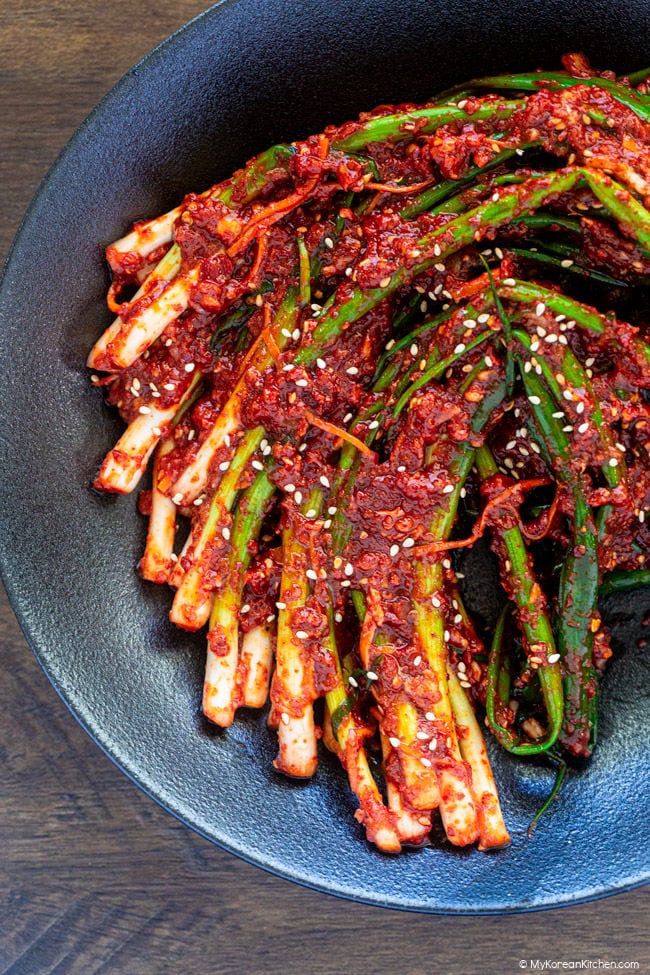
Ingredients
- 530 g green onions ((scallions), (1.2 lb), trimmed, rinsed and drained well (This was about 600 g / 1.3 lb before trimming.))
- 75 g carrot ((2.6 oz), julienned)
- 2 Tbsp toasted sesame seeds
- 1/3 cup Korean anchovy fish sauce (, divided)
- 2 dried Korean red chilies ((optional))
- 45 g garlic cloves ((1.6 oz), peeled, about 12 cloves)
- 175 g sweet apple (or Korean pear, (6.2 oz), cored and roughly chopped)
- 80 g onion ((2.8 oz), roughly chopped)
- 1/2 cup Korean anchovy stock
- 1/4 cup granulated sugar
- 1 cup gochugaru ((Korean chili flakes))
- 1 Tbsp Korean plum extract (or 2 Tbsp Korean corn syrup)
- 1 Tbsp saeujeot ((Korean salted shrimp))
- 1/2 Tbsp minced ginger
- 4 tsp coarse sea salt (, adjust to taste)
- 1 Tbsp all-purpose flour
- 1 cup water
Steps
- 1
Season the white parts of the green onions - Place the green onions in a large bowl. Drizzle about 2 Tbsp of the anchovy fish sauce over the white stem parts. If using the dried red chilies, place them in a small bowl and drizzle about 1 Tbsp of the anchovy fish sauce over them. Set both aside while preparing the seasoning.
- 2
Blend the fruit and vegetable mixture - Add the apple, onion, garlic, and anchovy stock to a blender. Blend until smooth. Add the softened dried chilies (if using) and blend for a few more seconds, leaving small flecks of chili throughout the mixture.
- 3
Prepare the seasoning mixture - In a mixing bowl, combine the remaining anchovy fish sauce, sugar, Korean plum extract, saeujeot, minced ginger, coarse sea salt, and gochugaru. Mix well and let the gochugaru soften briefly in the liquid. This helps create a smoother seasoning paste and gives the kimchi a richer red color.
- 4
Make the flour paste - Combine the flour and water in a small saucepan and mix well. Cook over medium heat, stirring constantly, until the mixture thickens into a paste. Remove from the heat and let it cool slightly.
- 5
Combine the kimchi seasoning - Add the blended mixture and the flour paste to the kimchi seasoning. Mix until well combined. Add the julienned carrot and toasted sesame seeds, then mix again.
- 6
Coat the green onions - Add the green onions to the seasoning and gently coat them thoroughly, paying special attention to the thicker white stem parts.
- 7
Store and ferment - Transfer the pa kimchi to an airtight container. It can be enjoyed fresh right away, when the green onions are crisp and full of fresh flavor, or left at room temperature for several hours to kick-start the fermentation before storing it in the fridge. As it ferments, the flavor will gradually become deeper, tangier, and more savory, while the green onions will soften over time.