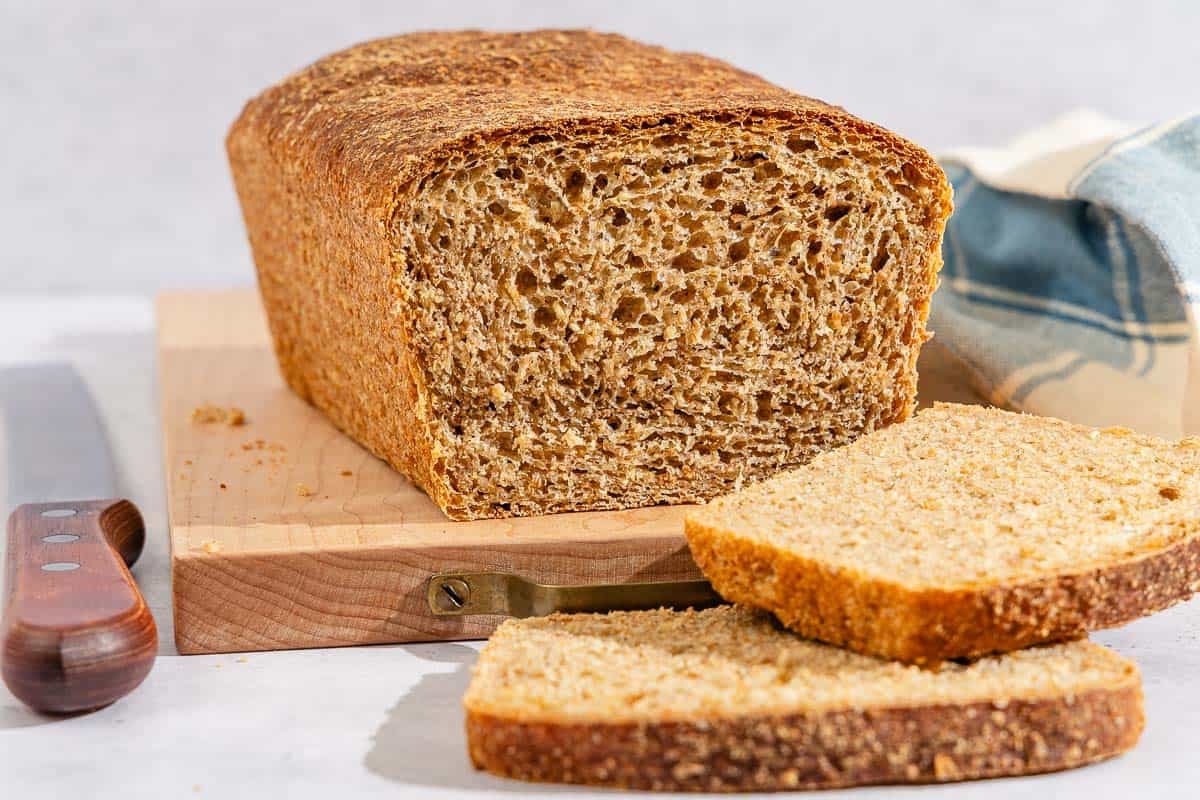
100% Whole Wheat Sandwich Bread
Ingredients
- 3 3/4 cups whole wheat flour ((425g))
- 3/4 cup hot water (105 to 115°F) ((180ml) )
- 1/2 cup milk ((120ml))
- 3 tablespoons honey ((63g))
- 3 tablespoons extra virgin olive oil ((45ml))
- 1 teaspoon apple cider vinegar
- 2 1/2 teaspoons instant yeast
- 1 tablespoon kosher salt ((9g))
Steps
- 1
Mix the dough. To the bowl of a stand mixer fitted with the dough hook attachment or a large mixing bowl, add the flour, water, milk, honey, olive oil, vinegar, yeast, and salt. Mix on low speed until no dry streaks of flour remain. Turn off the mixer and let the dough rest for 20 to 30 minutes.
- 2
Knead the dough. Knead the dough on medium speed (speed 2 on a KitchenAid mixer) until it becomes elastic and somewhat smooth. If kneading by hand, turn the dough out onto a floured work surface and knead for 10 minutes. It will be sticky at the beginning, but avoid adding too much flour, as it will make the loaf dry. If the dough sticks to your hands and the countertop, let it be and reincorporate it into the dough once it loses some of its stickiness.
- 3
First rise. Shape the dough into a taut ball. Grease a clean bowl lightly with olive oil and place the ball of dough in the bowl seam-side down. Cover and leave it in a warm spot to rise until nearly doubled in bulk, about 1 1/2 to 2 hours.
- 4
Shape the dough. Grease an 8 1/2x4 1/2-inch loaf pan with olive oil and set aside. Lightly dust the countertop with flour. Place the dough upside down on the surface so the smooth side is facing down. Gently press and stretch the dough into a square that’s roughly the same length as the loaf pan. Roll the dough into a log and pinch the seam. Place the loaf, seam-side down, in the greased pan.
- 5
Proof the dough. Cover the pan loosely and leave it in a warm place to rise for 1 to 1 1/2 hours until the dough rises to about 1 inch above the rim. Towards the end of the rising time, preheat the oven to 350°F.
- 6
Bake the bread. Bake the loaf in the preheated oven until it’s golden brown. If you have a digital thermometer, the loaf is done when the interior reaches 190°F.
- 7
Cool the bread. Remove the loaf from the pan and place it on a rack to cool. For the best texture, let the loaf cool completely before slicing.